Hunza Valley Travel Guide: District, Population, Area, Tourist Destinations and How to Travel
Hunza Valley is one of the most remarkable tourism destinations in Gilgit-Baltistan, Pakistan, known for its dramatic Karakoram mountains, historic forts, peaceful villages, beautiful lakes, traditional culture and spectacular landscapes. Located in the northern part of Gilgit-Baltistan, Hunza attracts travellers throughout the year who come to explore its valleys, mountain peaks, glaciers, historic
Hunza Valley is one of the most remarkable tourism destinations in Gilgit-Baltistan, Pakistan, known for its dramatic Karakoram mountains, historic forts, peaceful villages, beautiful lakes, traditional culture and spectacular landscapes. Located in the northern part of Gilgit-Baltistan, Hunza attracts travellers throughout the year who come to explore its valleys, mountain peaks, glaciers, historic settlements and natural beauty. For visitors planning a journey to northern Pakistan, Hunza Valley offers a combination of adventure, culture, history and breathtaking scenery that makes it an important destination on any Gilgit-Baltistan travel itinerary.
Hunza Valley is not only a scenic valley but also the centre of Hunza District. The district extends across a large mountainous area and includes Lower Hunza, Central Hunza and Upper Hunza. From Aliabad and Karimabad to Attabad, Gulmit, Passu, Shimshal and the areas approaching the Khunjerab Pass, Hunza District contains a remarkable variety of landscapes and cultural destinations. Visitors can explore more places across the region through the Gilgit Baltistan Tourism Destinations guide, which brings together destinations from different districts of Gilgit-Baltistan.
settlements and natural beauty. For visitors planning a journey to northern Pakistan, Hunza Valley offers a combination of adventure, culture, history and breathtaking scenery that makes it an important destination on any Gilgit-Baltistan travel itinerary.Hunza Valley is not only a scenic valley but also the centre of Hunza District. The district extends across a large mountainous area and includes Lower Hunza, Central Hunza and Upper Hunza. From Aliabad and Karimabad to Attabad, Gulmit, Passu, Shimshal and the areas approaching the Khunjerab Pass, Hunza District contains a remarkable variety of landscapes and cultural destinations. This guide provides an overview of Hunza Valley, including its district, population, geographical area, important tourist destinations, culture and the main ways travellers can reach and explore the region.
Hunza District in Gilgit-Baltistan
Hunza District is one of the districts of Gilgit-Baltistan and its headquarters is located at Aliabad. According to the 2023 population figures reported by the Government of Gilgit Baltistan Planning and Development Department, Hunza District has a population of 65,497 and covers approximately 10,109 square kilometres. The district is divided into three tehsils and includes a large area of high mountains, valleys, villages and remote settlements. These figures are important for understanding the geographical scale of Hunza beyond the better known tourist areas around Karimabad.
The present Hunza District was established in its current administrative form in 2015 after the former Hunza Nagar District was divided into separate Hunza and Nagar districts.
Hunza Valley Mountains and Mountain Tourism
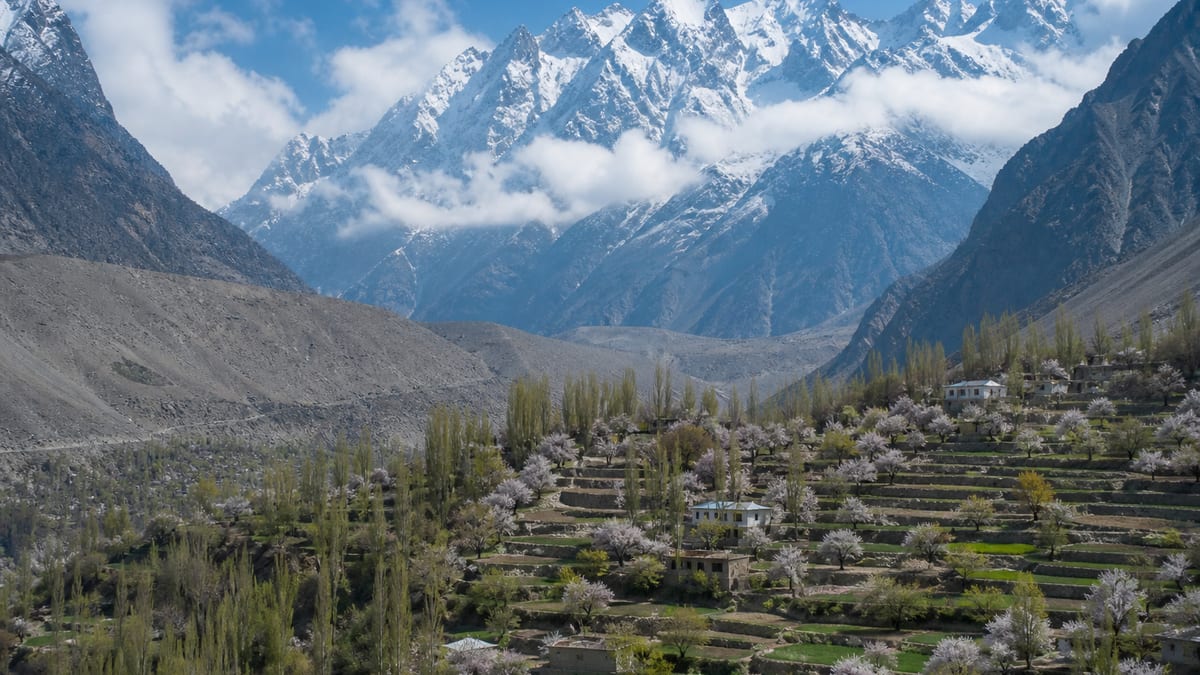
The mountains surrounding Hunza Valley are among the most spectacular landscapes in Gilgit-Baltistan. The region is surrounded by the great mountain systems of the Karakoram, with dramatic peaks, glaciers, steep valleys and high altitude landscapes creating a remarkable environment for tourism. These mountains are an important reason why Hunza attracts photographers, trekkers, climbers, adventure travellers and nature lovers from around the world.
The mountain scenery changes considerably as visitors travel from Central Hunza towards Upper Hunza. The landscape around Karimabad provides wide views of the surrounding peaks, while Passu and Upper Hunza offer some of the most dramatic mountain formations in the region. Travellers interested specifically in the high peaks of Gilgit-Baltistan can also explore the Gilgit-Baltistan Mountains section for more information about the mountains, peaks and mountain destinations of the region.
The district has a long historical connection with the ancient Silk Road and has developed a distinctive cultural identity influenced by its location between the high mountains of Central Asia and the Karakoram region. The Government of Gilgit Baltistan Tourism Department describes Hunza as a land of culture because of its historic settlements, forts, traditional heritage and mountain environment. :contentReference[oaicite:0]{index=0}Where Is Hunza Valley Located?
Hunza Valley is located in northern Gilgit-Baltistan along the Hunza River and the Karakoram Highway. The valley stretches from the lower areas around Aliabad towards the high mountain landscapes of Upper Hunza and Gojal. Its geographical position makes Hunza an important part of the route connecting Pakistan with the Khunjerab Pass and the Pakistan China border.
The landscape changes considerably as travellers move through Hunza Valley. Lower Hunza contains cultivated areas, villages and mountain views, while Central Hunza is home to Karimabad, historic forts and several famous cultural attractions. Upper Hunza presents a more dramatic high altitude environment with glaciers, rugged peaks, traditional villages and some of the most spectacular scenery along the Karakoram Highway.
Population and Area of Hunza District
The 2023 population of Hunza District is recorded as 65,497 people, while its area is approximately 10,109 square kilometres. This gives Hunza a relatively low population density compared with many settled regions of Pakistan because much of the district consists of rugged mountains, glaciers and high altitude terrain. The official tourism information also identifies Burushaski, Shina and Wakhi among the local languages, while Urdu and English are widely used in tourism and communication.
The population of Hunza is distributed across different parts of the district, including Lower Hunza, Central Hunza and Upper Hunza. Each area has its own character, landscapes and cultural traditions. For tourists, this geographical diversity means that a journey through Hunza Valley can provide very different experiences within the same district.
Karimabad Hunza
Karimabad is one of the best known tourist centres in Hunza Valley and is an important base for travellers exploring the surrounding attractions. The town is surrounded by spectacular mountain scenery and provides access to historic sites, local markets, restaurants, guesthouses and traditional cultural experiences.
Karimabad is particularly popular because several important attractions can be explored from the area. Baltit Fort, Altit Fort, Ganish Historical Settlement and Duikar are among the destinations that allow visitors to experience the history and culture of Hunza while enjoying views of the surrounding Karakoram mountains.
Baltit Fort
Baltit Fort is one of the most important historical landmarks in Hunza Valley. Located above Karimabad, the historic fort overlooks the surrounding settlement and mountains. Its architecture reflects the long history of the region and provides visitors with an opportunity to learn about the traditional life and administration of Hunza.
A visit to Baltit Fort can easily be combined with exploring Karimabad. The surrounding area provides beautiful views of the mountains and offers travellers the chance to experience the relationship between the historic settlement and the natural landscape of Hunza Valley.
Altit Fort and Altit Village
Altit Fort is another major heritage attraction in Hunza Valley. Located in the historic village of Altit, the fort is surrounded by traditional houses, cultivated fields and spectacular mountain scenery. The village itself is an important part of the experience because it provides a glimpse into the traditional settlement pattern and community life of Hunza.
Travellers interested in history and culture should allow enough time to explore both the fort and its surrounding village. Altit provides a different atmosphere from the busier tourist areas and demonstrates how generations of local communities have lived and cultivated land in the challenging mountain environment.
Attabad Lake
Attabad Lake is one of the most recognisable tourist destinations in Hunza Valley. The lake is famous for its striking blue water surrounded by steep mountains and has become one of the most photographed landscapes in Gilgit-Baltistan. The area offers a combination of dramatic scenery and recreational opportunities for visitors.
Depending on the season and operating conditions, visitors can enjoy activities on and around Attabad Lake, including boating and other water based experiences. The lake is also an excellent location for photography because the surrounding mountains create impressive views throughout the day.
Ganish Historical Settlement
Ganish is one of the historic settlements of Hunza and provides an opportunity to explore the cultural heritage of the region. The settlement contains traditional architecture and historical structures that reflect the long history of communities living along the ancient trade routes.
Exploring Ganish can add a cultural dimension to a Hunza Valley journey. Instead of focusing only on mountains and scenic viewpoints, visitors can learn about traditional settlements and appreciate the architectural heritage that has survived in the valley.
Duikar and Eagle’s Nest
Duikar is a popular viewpoint above the central part of Hunza Valley and is widely known for its sunrise and sunset views. From the higher viewpoint, visitors can see an extensive mountain panorama and enjoy a different perspective of the Hunza landscape.
Duikar is particularly attractive to photographers because changing light can dramatically transform the appearance of the surrounding mountains. Visitors staying in Karimabad can include Duikar in their itinerary and plan their visit around sunrise or sunset according to local weather conditions.
Passu and the Passu Cones
Passu is one of the most visually impressive destinations in Upper Hunza. The area is famous for the distinctive Passu Cones, a group of sharp mountain peaks that dominate the landscape. The combination of towering mountains, glaciers, river valleys and traditional settlements makes Passu an important destination for photographers and nature lovers.
The journey towards Passu is itself part of the Hunza Valley experience. Travellers can see dramatic changes in the landscape as they move from Central Hunza towards Upper Hunza. Visitors should take time to stop at suitable viewpoints and enjoy the scenery rather than treating the journey simply as transportation between tourist destinations.
Gulmit Valley
Gulmit is another important destination in Upper Hunza and is known for its mountain scenery, traditional culture and proximity to several major attractions. The village provides a peaceful environment where travellers can experience local life while enjoying views of the surrounding Karakoram landscape.
Gulmit can be included in a wider Upper Hunza itinerary together with Passu, Attabad Lake and other destinations along the Karakoram Highway. Visitors interested in culture should spend time exploring the village and learning about local traditions rather than limiting their visit to scenic viewpoints.
Shimshal Valley
Shimshal Valley is one of the more remote destinations associated with Hunza District and is particularly attractive to travellers interested in mountain landscapes, trekking and adventure. The valley is surrounded by high peaks and dramatic terrain and provides a more remote experience than the major tourist centres of Central Hunza.
Travel to remote mountain areas such as Shimshal requires additional planning because road and weather conditions can be different from the main tourist route. Visitors should obtain current local information and use experienced local transport or guides where appropriate.
Misgar Valley and Upper Hunza
Misgar Valley is another destination in the wider Upper Hunza region. The area is known for its mountain environment and remote location near the northern parts of Hunza. Travellers exploring Upper Hunza can consider destinations such as Misgar when planning a longer itinerary focused on nature, culture and mountain scenery.
Upper Hunza contains some of the most dramatic landscapes in the district. The combination of high peaks, glaciers, traditional villages and open mountain valleys makes this part of Hunza particularly attractive for adventure travellers and photographers.
Khunjerab Pass
Khunjerab Pass is one of the most famous destinations reached through the upper part of the Hunza region. Located at a very high elevation, the pass is associated with the Karakoram Highway and the Pakistan China border. The journey towards Khunjerab provides travellers with increasingly dramatic high mountain scenery.
Because of the high elevation and changing weather conditions, visitors should prepare carefully before travelling towards Khunjerab Pass. Cold temperatures can occur even when conditions in lower Hunza are comfortable, and travellers should check current road and weather information before beginning the journey.
How to Travel to Hunza Valley
Hunza Valley can be reached by road and by combining air travel with road transportation. The main road route follows the Karakoram Highway, which connects Hunza with Gilgit and other parts of northern Pakistan. Travellers arriving from Islamabad can travel north by road, while visitors who prefer to reduce the initial road journey can consider flying to Gilgit and continuing towards Hunza by road.
The route from Gilgit to Hunza passes through spectacular mountain scenery and connects travellers with Aliabad and other parts of the district. According to the Gilgit Baltistan Tourism Department, Aliabad has road connections through the Karakoram Highway and can also be reached by flying to Gilgit Airport or Skardu Airport followed by road travel. Local transport, taxis and private vehicles are available for continuing the journey within the Hunza region. :contentReference[oaicite:1]{index=1}
Travelling to Hunza by Road
Travelling to Hunza Valley by road is one of the most popular ways to experience the region. The Karakoram Highway provides access to Hunza from Gilgit and continues through the valley towards Upper Hunza and Khunjerab. The road journey allows visitors to experience changing landscapes, mountain rivers, villages, bridges and some of the most spectacular scenery in northern Pakistan.
Travel time can vary depending on the starting point, weather, traffic, road conditions and stops along the journey. Mountain travel should not be planned only according to estimated driving time. Visitors should allow flexibility in their itinerary and check local road conditions before travelling, particularly during periods of heavy rain, snowfall or other weather related disruptions.
Travelling to Hunza by Air
Travellers can reduce the initial road journey by taking a domestic flight to Gilgit and then continuing to Hunza by road. Gilgit Airport is the most practical air gateway for travellers continuing towards Hunza. From Gilgit, visitors can hire a private vehicle, taxi or use local transport to continue towards Aliabad and other destinations in Hunza District.
Flight schedules in mountainous regions can be affected by weather, so travellers should keep some flexibility in their travel plans. Visitors should also confirm current flight schedules and road conditions before departure because mountain weather can change quickly.
Best Time to Visit Hunza Valley
The best time to visit Hunza Valley depends on what travellers want to experience. Spring brings blossoming fruit trees and fresh green landscapes, making it a popular season for photography and nature tourism. Summer generally provides favourable conditions for exploring many tourist destinations and travelling through Upper Hunza.
Autumn is especially attractive because trees across parts of the valley develop golden and orange colours. The combination of autumn foliage and high mountain scenery creates excellent photography opportunities. Winter brings snow and a quieter atmosphere, although cold temperatures and changing road conditions require additional preparation.
Hunza Valley Culture and Local Life
Culture is one of the defining features of Hunza Valley. Traditional villages, historic forts, local languages, agricultural terraces, music, food and community traditions form an important part of the visitor experience. Burushaski, Shina and Wakhi are among the languages spoken in different parts of the district, reflecting the cultural diversity of Hunza.
Visitors can support local communities by choosing locally operated guesthouses, restaurants, guides, drivers and shops. Respecting local customs, private property and community spaces is also an important part of responsible tourism. A respectful approach helps protect the cultural character that makes Hunza Valley special.
Hunza Valley for Nature and Adventure Tourism
Hunza Valley provides opportunities for many forms of nature and adventure tourism. Mountain photography, trekking, village walks, sightseeing, camping and seasonal recreational activities attract different types of travellers. The district’s high mountains and remote valleys also provide opportunities for more demanding adventure experiences.
Travellers should choose activities according to their experience, physical preparation, weather conditions and available local guidance. Remote mountain environments can be challenging, and visitors should avoid taking unnecessary risks simply to reach a viewpoint or destination.
Why Hunza Valley Is Important for Gilgit Baltistan Tourism
Hunza Valley plays an important role in the tourism identity of Gilgit-Baltistan because it brings together natural landscapes, cultural heritage and adventure tourism within one district. Attractions such as Baltit Fort, Altit Fort, Attabad Lake, Passu Cones, Duikar, Gulmit, Shimshal and Khunjerab provide visitors with a wide variety of experiences.
The official Gilgit Baltistan Tourism Department identifies Hunza Valley as a major attraction and lists destinations including Baltit Fort, Altit Fort, Ganish Historical Settlement, Karimabad, Duikar, Aliabad, Hussaini Village, Passu Cones, Shimshal Valley and Misgar Valley among the district’s tourist destinations. :contentReference[oaicite:2]{index=2}
Plan Your Hunza Valley Journey with Gilgit Baltistan Tourism
Gilgit Baltistan Tourism is designed to provide useful information for travellers who want to explore the mountains, valleys, cultural heritage and tourist destinations of the region. Hunza Valley deserves more than a short visit to one famous viewpoint. A well planned journey can include historic forts, traditional villages, mountain lakes, Upper Hunza, scenic viewpoints and cultural experiences.
Before travelling to Hunza Valley, check the current weather, road conditions, accommodation availability and transportation situation. Mountain travel can be affected by changing conditions, so flexibility is important. Travellers should also keep the environment clean, respect local communities and support responsible tourism throughout their journey.
Final Thoughts
Hunza Valley is one of the defining destinations of Gilgit-Baltistan and offers an extraordinary combination of mountains, culture, history and natural beauty. From the historic streets of Karimabad and the ancient forts of Altit and Baltit to the blue waters of Attabad Lake and the dramatic Passu Cones, the valley provides memorable experiences for travellers of many interests.
Understanding Hunza as a complete district rather than only a single tourist town makes the destination even more fascinating. Its large geographical area, diverse communities, historic settlements, remote valleys and spectacular mountain landscapes provide countless opportunities for exploration. Whether travelling by road from Gilgit, arriving through the regional air network and continuing by road, or planning a longer journey towards Upper Hunza and Khunjerab, travellers can discover a different side of Hunza at every stage.
For anyone planning a trip to northern Pakistan, Hunza Valley is a destination worth exploring slowly and respectfully. With careful planning, responsible travel and enough time to experience both its famous attractions and lesser known communities, Hunza Valley can become one of the most rewarding journeys through Gilgit-Baltistan.