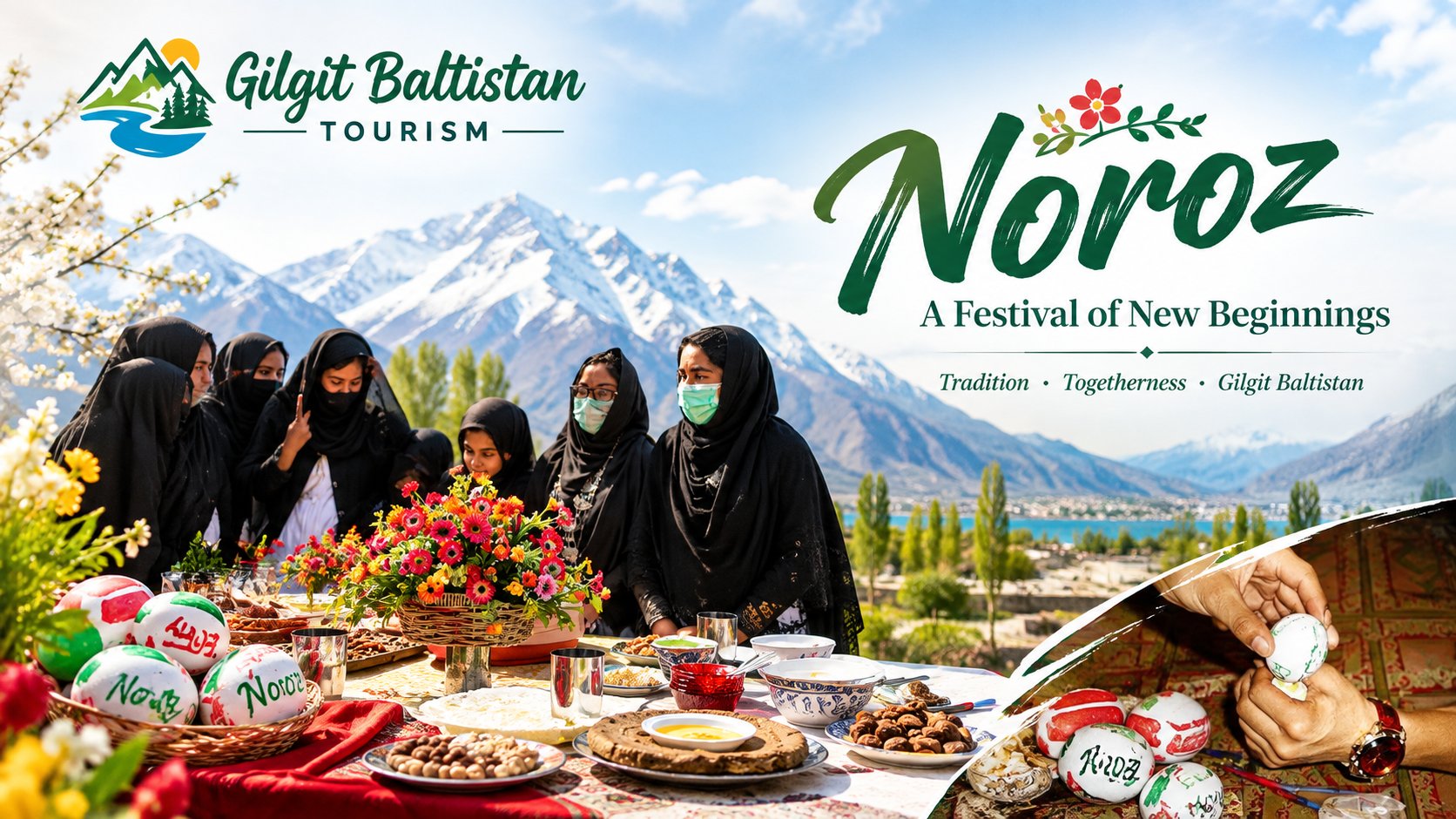
Noroz is a traditional spring celebration observed in parts of Gilgit-Baltistan. Our festival page describes it as reflecting the region’s cultural heritage, community traditions and the spirit of seasonal renewal that marks the arrival of spring. For many communities it’s a time to honour local cultural identity and share goodwill.
This page keeps to that record. It explains what visitors can reasonably expect, how Noroz differs from other named celebrations on this site, and how to plan a spring trip without treating community events as a fixed tourist schedule. Dates, venues and public activities vary by year and place — confirm locally before you travel.
Department-facing festival material used here was accessed on 27 August 2026. Broader spring timing sits on our best time to visit guide.
What our Noroz page records
From the live festival stub and the festivals hub, the following points are grounded:
- Noroz is observed in parts of Gilgit-Baltistan, not claimed for every valley.
- It is linked to spring and seasonal renewal.
- Gatherings, hospitality, shared meals and other traditional forms of celebration are named as ways communities mark it.
- Exact customs differ by community and locality.
- Visitors should approach celebrations respectfully, follow local guidance, and treat community events as invitations to learn rather than as fixed tourist schedules.
- Festival dates, venues and public activities can vary by year and locality; check current local information, official tourism notices and community updates, and confirm whether events are open to visitors.
We don’t add a single “Noroz day” for the whole region, a mandatory ritual list, or a claim that every community celebrates in the same way.
Spring on the travel calendar
The best-time guide divides the year into four practical windows. Spring (roughly April–May in that guide) is described as a valley-focused window: towns become pleasant, while the named high passes — Khunjerab, Babusar and Shandur — are only just opening or still closed. That matters if you hoped to combine Noroz with a China-border day or a Shandur crossing. On present guidance, spring is a better fit for valley bases than for a full high-pass circuit.
Summer (June–August) is when all three named passes are more reliably open together, and when the Shandur Polo Festival falls. Winter belongs to ice events such as the Khalti Ice Hockey Festival and the Sevendays Winter Feast. Noroz sits with the spring cultural calendar — not with those sports weekends.
Elevation still shapes the feel of a spring day. The best-time guide stresses that a mild valley morning and a cold high stop can share the same drive. Pack for that swing; see packing for Gilgit-Baltistan.
Community participation and living culture
Noroz is presented as community participation — local gatherings, shared meals, cultural activities or other traditional forms of celebration. Our culture hub makes a related point that applies here: music, dance and hospitality in Gilgit-Baltistan are part of everyday and ceremonial life, not only a show put on for visitors.
That shapes visitor behaviour:
- Arrive as a guest, not as an audience expecting a start time.
- Follow the host on seating, food and whether photography is welcome.
- Dress modestly; remove shoes before entering a mosque or a local house (visitor customs and dress).
- Remember that languages and customs differ by valley. Our languages section and district pages are the right place for that background.
Hospitality may include tea or a meal. Our food pages explain how traditional dishes are recorded; ask politely about ingredients if you have dietary limits.
Noroz and other celebrations — keep the names apart
Several celebrations appear on this site. Mixing them creates false dates:
| Name | What our sources say | Season note |
|---|---|---|
| Noroz | Spring celebration in parts of GB | Spring |
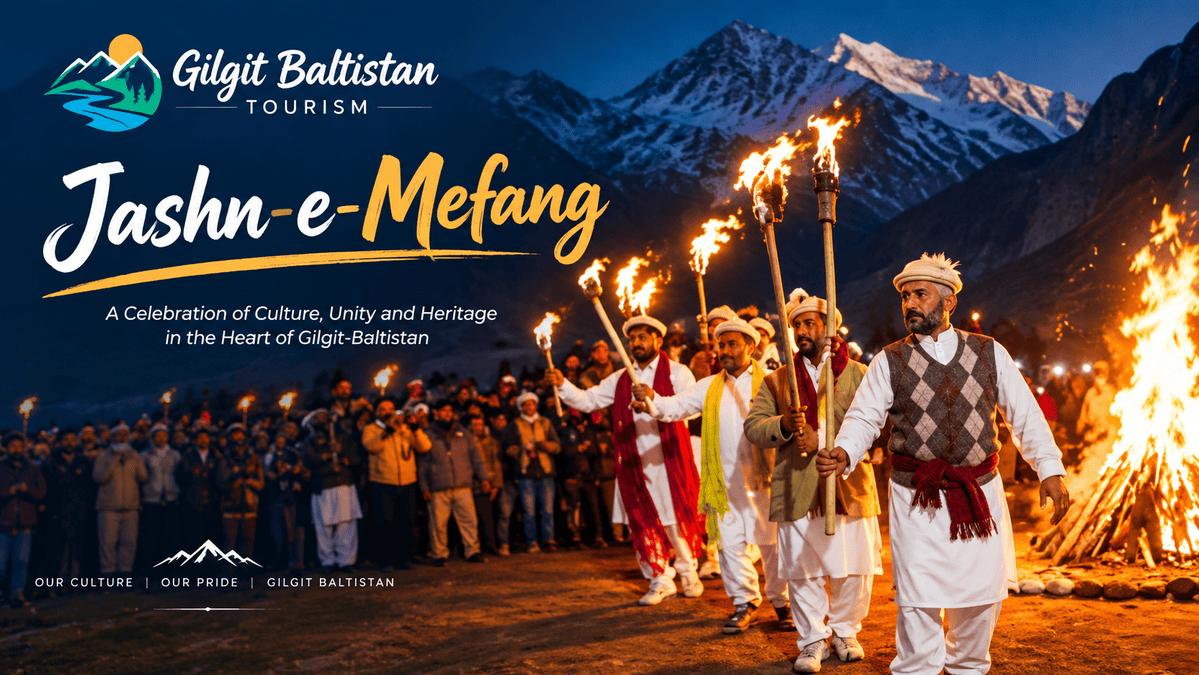
| Jashn-e-Mefang | Cultural celebration; community-led | No season published |
| Ginani | Associated with the start of the harvest season in Hunza on the cultural-heritage article | Harvest-linked, not equated with Noroz |
| Woolyo | Yak race and festival at Shimshal Pass pastures (Shimshal Valley) | Late July or early August on that place page |
| Ghanche festival dances | Mandoq Taimo and Ragi Taimo — festival dances, not a weekly show (dances of Ghanche) | Ask locally |
| Shandur polo / Khalti ice hockey / Sevendays feast | Named sports festivals | Summer / winter |
If a host explains that a local spring gathering is called something other than “Noroz” in their language, that’s useful local knowledge. It doesn’t let us rename the festival page.
Planning a spring visit around Noroz
- Decide on valley bases first. Use destinations to pick Gilgit, Hunza, Skardu or another district that matches the rest of your trip.
- Treat Noroz dates as local. Ask whether public activities are planned in the places you’ll stay, and whether visitors are welcome.
- Don’t force a high-pass day. Confirm pass status separately; spring isn’t the reliable all-passes window.
- Book flexible transport and beds. Prefer a licensed operator when you need a package, and confirm lodging directly (accommodation options overview).
- Carry cash. See local currency and cash.
- Watch alerts. Road and weather notices sit under alerts.
- Camp only legally. Designated areas, tourism department permit, leave-no-trace (camping regulations).
Getting there still follows the usual options: airports, road approaches, buses and getting to Gilgit-Baltistan.
Where spring travellers usually base themselves
Noroz doesn’t come with a published venue list, so base choice follows ordinary spring travel rather than an event map:
- Gilgit works as a logistics hub for cash, licensed operators and day trips, including toward Naltar when the road allows.
- Hunza is a common spring valley base for culture, forts and village walks; read cultural heritage of Hunza for living-heritage context that sits beside — not inside — the Noroz page.
- Skardu and neighbouring Baltistan districts suit travellers whose spring plan is Baltistan-first rather than KKH-north.
- Ghizer is better known on this site for summer polo and winter ice hockey than for a published Noroz calendar; don’t assume a Ghizer spring gathering is listed unless someone local confirms it.
Whatever base you pick, leave room in the day. Spring weather still closes or slows high roads, and community timings aren’t airport clocks.
Shared meals, tea and guest conduct
Hospitality is named on the Noroz page and throughout our culture materials. A few practical notes from elsewhere on the site apply when a spring gathering includes food or tea:
- Carry cash for small purchases if you buy anything yourself (local currency and cash).
- Licensed restaurants follow tourism-department and food-safety rules (restaurant regulations); a home meal is different — follow the host.
- If you stay with a family, the host needs a tourism department licence to run a homestay (homestay regulations).
- Traditional dishes have their own food pages; don’t assume every spring table serves the same named dish.
Photography indoors needs the same care as outdoors. Ask first. Restricted belts and sensitive sites still apply; see photography restrictions.
Pairing Noroz with heritage sights
A spring cultural trip often combines community time with forts, carvings or old villages. That’s fine — as long as you separate the purposes:
- Forts and related Hunza heritage sit under heritage forts of Hunza and the history hub.
- Kargah and early Buddhist Gilgit sit under Kargah Buddha and early Buddhism.
- At cultural sites, the FAQ asks tourists to respect local customs and suggests hiring a local guide to learn a site’s history (visiting cultural sites).
A fort ticket window isn’t a Noroz invitation, and a community meal isn’t a museum tour — plan each on its own terms.
Being a good guest at a spring gathering
A compact checklist from our customs, culture and festivals pages:
- Respect local culture; dress modestly.
- Shoes off in mosques and local houses.
- Ask before photographing people, especially indoors or at private gatherings.
- Don’t walk into a private celebration uninvited.
- If you’re unsure whether an event is public, ask once and accept the answer.
- Hire a local guide when you want context at cultural sites (visiting cultural sites).
This website doesn’t sell Noroz tickets or host community invitations.
What this page will not invent
- A single region-wide Noroz date
- A claim that every district celebrates identically
- A programme of dances, sports or ceremonies presented as mandatory
- Ticket prices, venue addresses or phone numbers
- An equation of Noroz with Ginani, Jashn-e-Mefang or any winter festival
If you have an official notice that names public Noroz activities for a given year and place, send it through our contact page. We’ll credit the source if we add it.
Frequently asked questions
What is Noroz in Gilgit-Baltistan?
A traditional spring celebration observed in parts of the region, reflecting cultural heritage, community traditions and seasonal renewal.
Is Noroz celebrated everywhere in Gilgit-Baltistan?
Our page says “parts of” the region. Customs differ by community and locality.
When is Noroz?
It is a spring celebration. Exact dates, venues and public activities vary by year and place — confirm locally.
How do people mark it?
Our sources mention gatherings, hospitality, shared meals and other traditional forms of celebration. Exact customs differ.
Can visitors attend?
Sometimes, when events are open to visitors. Ask locally and follow community guidance. Treat gatherings as invitations to learn, not as fixed tourist schedules.
Is Noroz the same as Jashn-e-Mefang?
No. They’re separate festival pages. Jashn-e-Mefang has no published season in our source.
Is Noroz the same as Ginani?
Not on our pages. Ginani is associated with the start of the harvest season in Hunza on the cultural-heritage article.
How should visitors dress and behave?
Dress modestly; remove shoes before entering a mosque or a local house; ask before photographing people. See visitor customs and dress.
Can I buy Noroz tickets here?
No. This website doesn’t sell tickets, rooms or transport.
What else should I read for a spring cultural trip?
The festivals hub, culture, best time to visit, and the destination page for the district you’ll base in.