The tourism department FAQ says homestays are regulated by the tourism department. It says homeowners must obtain a licence before offering accommodation, and that operators must follow department guidelines on guest safety and comfort. That sentence is the published rule, and this page explains what it covers.
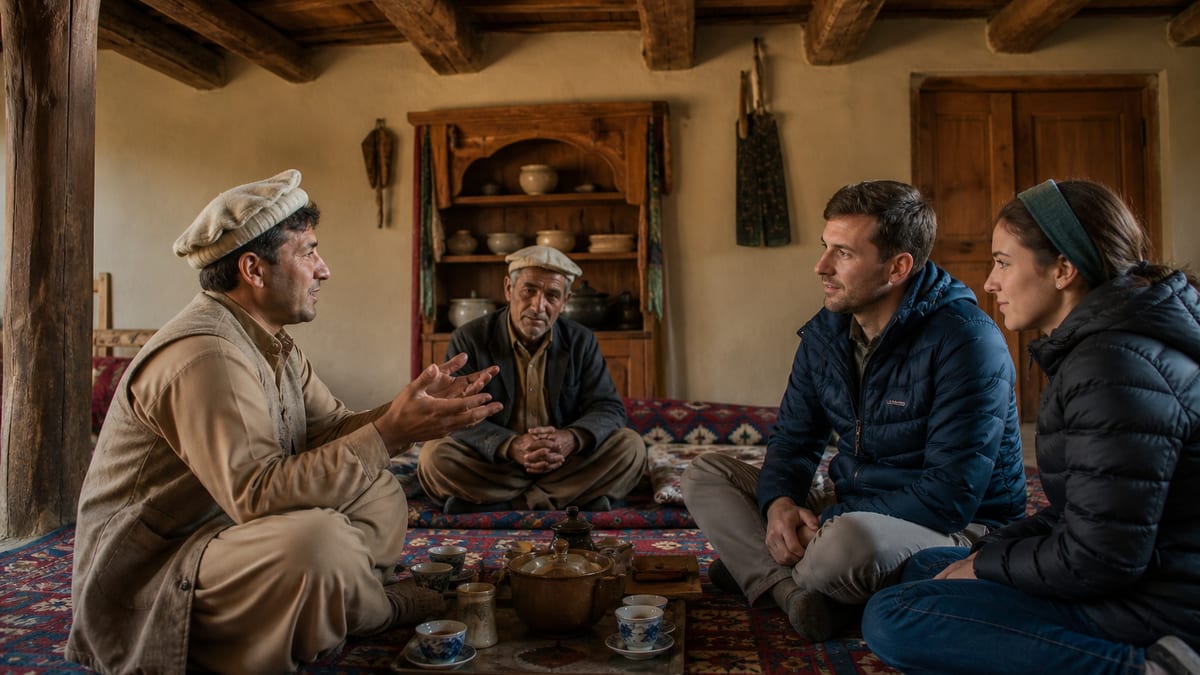
Homestays are one of the most personal ways to see Gilgit-Baltistan. You sleep in a family home, eat what the household eats and see village life from the inside. The rule exists because that closeness brings responsibilities on both sides. This page explains the rule for travellers and for homeowners, and it’s honest about what the FAQ doesn’t say.
We don’t add licence fees, nightly rates, room standards or inspection schedules. The FAQ doesn’t publish them. This site also doesn’t list homestay vacancies or take bookings.
The rule in three parts
1. Regulated by the tourism department. Homestays fall under the tourism department, the same department the FAQ names for hotels and guest houses. That’s different from restaurants, which our pages describe under local government.
2. A licence before offering accommodation. The timing is the important part. The FAQ says the licence comes first, before a homeowner starts offering rooms to guests. It doesn’t say what the licence costs, how long it lasts or what documents are needed.
3. Department guidelines on guest safety and comfort. Operators must follow them. The FAQ names the two themes, safety and comfort, but doesn’t list the guidelines themselves. We won’t guess at room sizes, bathroom rules or fire equipment.
Homestay, guest house or hotel?
The three are easy to confuse. Our pages treat them as related but separate.
| Type | What the FAQ says | Page |
|---|---|---|
| Homestay | Tourism department regulates; licence before offering accommodation; guidelines on guest safety and comfort | This page |
| Hotel or guest house | Tourism department licence; safety and hygiene standards; regular department inspections | Hotel and guesthouse regulations |
| Restaurant | Local government licence and inspections | Restaurant regulations |
| Camping | Covered by its own FAQ line | Camping regulations |
Notice the differences in wording. The hotel sentence mentions hygiene and regular department inspections. The homestay sentence mentions safety and comfort and doesn’t mention inspections at all. We don’t assume the homestay rule includes inspections just because the hotel rule does. Likewise, hotel inspections by the department aren’t the same as restaurant inspections by local government.
Our accommodation options overview page explains the wider range, from budget guest houses to luxury hotels.
What the site does and doesn’t say
The thin version of this page told readers to confirm details “with the office named in that sentence”. The homestay sentence names the tourism department, but not a specific office or desk. Here is what our pages cover.
The site does say:
- the tourism department regulates homestays;
- a homeowner needs a licence before offering accommodation;
- operators must follow department guidelines on guest safety and comfort;
- licensing for accommodation runs through the Directorate of Tourist Services in three broad stages, as our obtaining DTS licences guide explains.
The site doesn’t say:
- what a homestay licence costs;
- how long it lasts or how it’s renewed;
- what the safety and comfort guidelines contain;
- whether homestays are inspected, or how often;
- what a guest should pay per night;
- which households currently hold a licence.
For anything in the second list, the tourism department is the authority the FAQ names. This website doesn’t issue licences and can’t confirm a household’s status.
For travellers: choosing a homestay
These questions follow from the published rule. They’re good practice, not extra legal requirements.
- Ask whether the homestay is licensed. The FAQ says it should be, before it takes guests.
- Ask how the household handles safety. Heating, cooking fuel and stairs matter in mountain homes in winter.
- Agree the price and what it includes before you arrive: meals, tea, hot water, transport.
- Check location and access. Some villages sit at the end of rough tracks. Our NATCO and private bus access page explains where public transport runs out.
- Ask about meals and diet. Say early if there’s anything you can’t eat.
- Carry cash. Our local currency and cash page explains why small notes help.
If you book through an operator, the operator’s own rule sits on tour operator regulations. Ask them whether the homestay they’ve arranged is licensed.
For travellers: being a good guest
A homestay licence covers the host’s duties. Guests have duties too, though they’re about courtesy rather than law. The FAQ’s conduct advice, gathered on visitor customs and dress, asks visitors to respect local culture, dress modestly and remove shoes before entering a mosque or a local house. In a homestay that last point applies at the front door.
A few further courtesies make a stay easier:
- Watch what your hosts do and follow their lead.
- Ask before photographing family members, especially women and children. Our photography restrictions page covers the places where photography is prohibited outright.
- Accept tea graciously. Our namkeen tea page describes one traditional cup you may be offered.
- Keep noise down at night and respect prayer times.
- Leave the room as you found it.
For homeowners: what the rule asks
If you’re thinking of opening your home to guests, the FAQ’s message is short: get a licence first, and follow the department’s guidelines on guest safety and comfort. Our obtaining DTS licences guide explains the general stages of application, document verification and approval. It doesn’t publish homestay-specific forms or fees, and neither does this page.
Our tourism sector acts and regulations page lists the 2020 laws the FAQ names. It doesn’t say which act covers homestays, so we don’t assign one.
Questions about your own application belong with the tourism department. You can reach the site team through our contact page, but we can’t process licences.
Homestays and responsible tourism
Homestays spread visitor spending into villages and let families share their culture directly. That’s part of why the rule focuses on safety and comfort rather than luxury. A homestay isn’t expected to look like a hotel. It’s expected to be safe and comfortable for the guest.
Visitors can help by respecting the household’s routines, paying the agreed amount and leaving honest feedback. Our cultural heritage of Hunza and culture of Gilgit-Baltistan pages give background on the hospitality and traditions you’ll likely meet.
Homestays across the seasons
Gilgit-Baltistan’s seasons change what a homestay feels like. In summer, villages are busy with fields, orchards and visitors, and rooms in popular valleys can fill. In winter, many households live around one heated room, roads can close and some families stop hosting altogether. The FAQ’s focus on guest safety and comfort applies all year, but what it means in practice shifts with the weather.
Our best time to visit guide explains the seasons in more detail, and our packing guide lists the warm layers you’ll want in a mountain home. If you’re planning a winter stay, ask your hosts directly how the house is heated and whether the road to the village stays open. Don’t assume a summer arrangement carries over to January.
Festival periods are another pressure point. Families may host relatives as well as guests, and plans can change at short notice. Book early, confirm again a few days before arrival, and be flexible.
Safety in remote homes
Homestays are often farther from help than hotels in town. Before you go, read our travel safety guidance page and save the department’s emergency numbers from our guide to contacting the tourist police. Tell someone where you’re staying. In winter, ask your hosts about heating and road conditions before you commit to a remote village.
Frequently asked questions
What does the FAQ say about homestays?
It says homestays are regulated by the tourism department, homeowners must obtain a licence before offering accommodation, and operators must follow department guidelines on guest safety and comfort.
When does a homeowner need the licence?
Before offering accommodation, according to the FAQ. The licence comes first.
Are homestays inspected like hotels?
The FAQ’s hotel sentence mentions regular department inspections. The homestay sentence doesn’t mention inspections, so we don’t assume them.
Who licenses homestays?
The tourism department, according to the FAQ. Restaurants are different: our pages describe them under local government.
Does this site list homestays I can book?
No. This site doesn’t list homestay vacancies or take bookings.
Does this page give nightly rates?
No. The FAQ doesn’t publish rates or licence fees. Agree the price directly with your host before you arrive.
What are the safety and comfort guidelines?
The FAQ names the two themes but doesn’t list the guidelines. Ask your host how they handle safety, and contact the department for the official guidelines.
Should I remove my shoes in a homestay?
Yes. The FAQ asks visitors to remove shoes before entering a local house. Follow your hosts’ lead.
Can I photograph my host family?
Ask first, especially before photographing women and children, and respect a “no”. That’s a courtesy, not a published rule.
Which act covers homestays?
Our pages list the 2020 tourism acts but don’t say which one covers homestays. We don’t assign one.
Source
Frequently Asked Questions (Gilgit-Baltistan Tourism Department) · Tourism, Sports, Culture, Archaeology & Museums Department, Government of Gilgit-Baltistan · Accessed 2026-08-27


