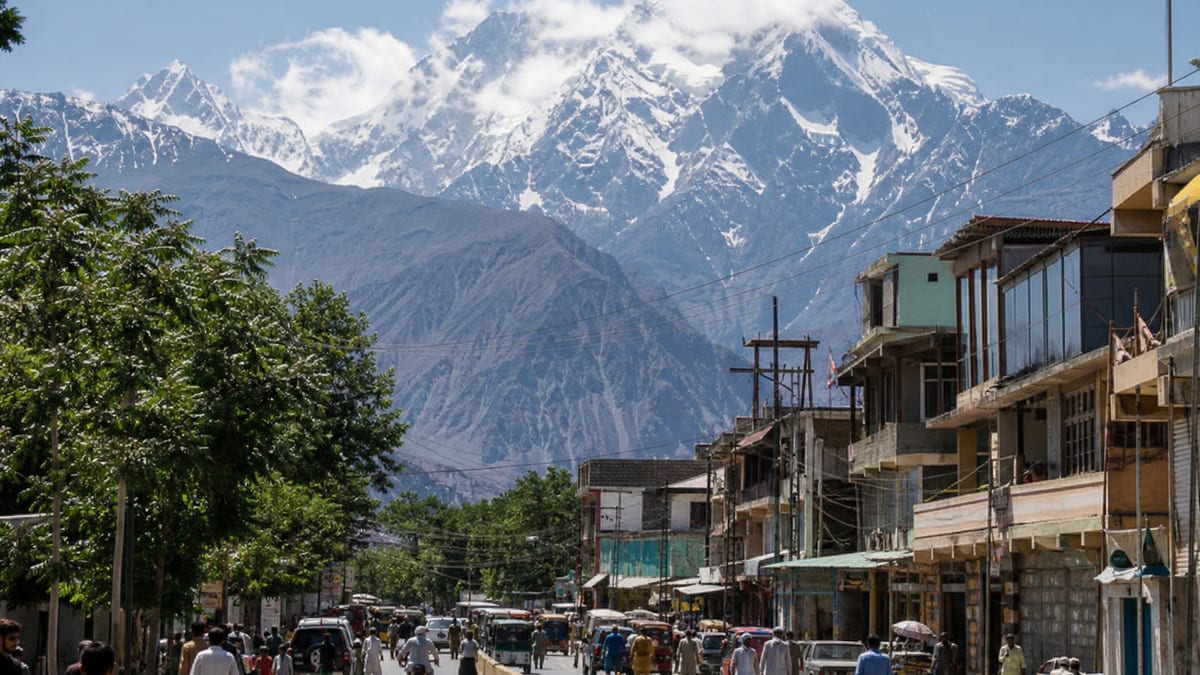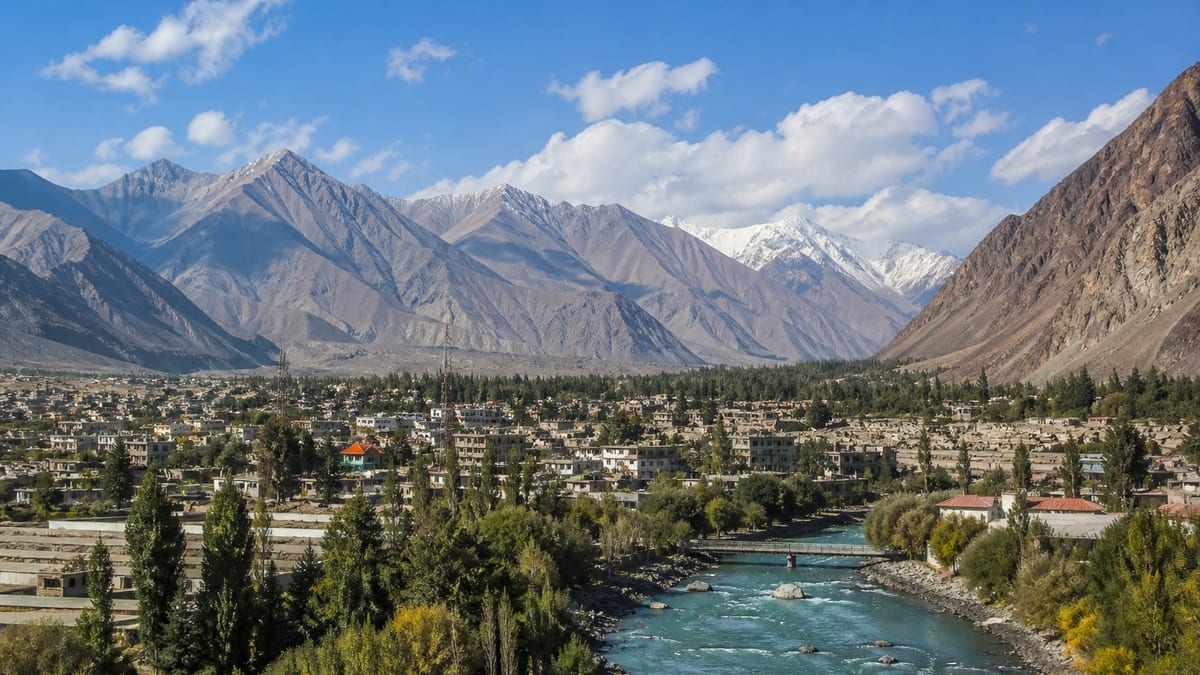
Gilgit is the airport-city travel hub of Gilgit-Baltistan. Kargah Buddha (locally Yshani) is a rock-carved standing Buddha estimated to the 4th–7th century A.D., about 6 miles (9.7 km) outside Gilgit City, with nearby monastery and stupa remains. Gilgit was also a significant early Buddhist centre from the 3rd to the 11th century. That measured outing is the cleanest first day here: short, close to town, and easy to do after you land.
Gilgit District is the administrative unit behind this travel hub. The city is also the usual air and bus gateway for Hunza, Nagar, Ghizer, Astore, and Diamer. Use it as a base: land, sleep, do Kargah, then decide the next valley. Land, sleep, do Kargah, then decide the next valley — that is the cleanest first day here.
District Gilgit has long been a trade centre in the Karakoram Range, on the historical Silk Route. That story is summarised on Silk Route legacy in Gilgit; you do not need it to plan the first two nights.
Getting there
Gilgit Airport is one of two airports serving the region — the other is Skardu International Airport — and the city is the usual NATCO and private-bus hub from Rawalpindi and Islamabad. Flight schedules, airlines, and fares change; see airports serving Gilgit-Baltistan.
You can come by bus or private car from cities such as Islamabad or Lahore. Private companies and NATCO run daily buses from Rawalpindi and Islamabad to Gilgit and other districts. If you drive, use the KKH, Babusar Pass, or Shandur Pass. Read Getting to Gilgit-Baltistan, NATCO and private bus access, and KKH, Babusar, and Shandur. Mountain roads close with the seasons — check current bulletins.
From the city, Naltar Valley and Naltar Lakes are the listed valley and lake pair. Jeep rules and road time from Gilgit City to Naltar change with weather — confirm both locally or with your operator. Use licensed taxis (Excise & Taxation Department Gilgit-Baltistan) or a DTS-listed operator — Hiring a tour operator.
Best time to visit
Exact opening months for Gilgit City, Kargah, and Naltar are not published, but the region’s four seasonal travel windows are explained in Climate and best time to visit Gilgit-Baltistan. The region-wide Sevendays Winter Feast promotes winter sports such as ice hockey across districts (a 2025 Hunza edition is documented; ask locally whether Gilgit has dates in the year you travel).
Kargah is a short outing and is less dependent on a high pass than Naltar. If Naltar is the point of the trip, confirm the valley road before you fly. Pack from Packing for Gilgit-Baltistan.
Ask your operator whether Naltar’s listed lakes are reachable on your dates, and whether any winter sports operate there in that year. Road time from town changes after snow, so leave slack in the day.
What to do and see
Four Gilgit places are listed — Gilgit City, Kargah Buddha, Naltar Valley, and Naltar Lakes — enough for a two- or three-night base without borrowing Hunza forts.
- Gilgit City — the airport and NATCO/bus hub, and a practical first night.
- Kargah Buddha — 6 miles (9.7 km) outside the city; see also Kargah Buddha and early Buddhism in Gilgit. At cultural and archaeological sites, respect customs. An archaeological-survey NOC is a researcher process (Rs.10,000 fee to the Director Archaeology & Museums), not a tourist ticket.
- Naltar Valley and Naltar Lakes — the named valley and lakes associated with Gilgit District.
Shina is the local language, with English and Urdu also widely spoken. Outdoor activities follow the usual regional list. Restricted-area treks need registration, permits, and a licensed guide and porter — permit guide.
If you add a second destination from this base, Hunza and Nagar sit on the KKH corridor and have their own trip plans. Do not collapse them into “greater Gilgit” on the same day unless your operator has timed it.
Where to stay
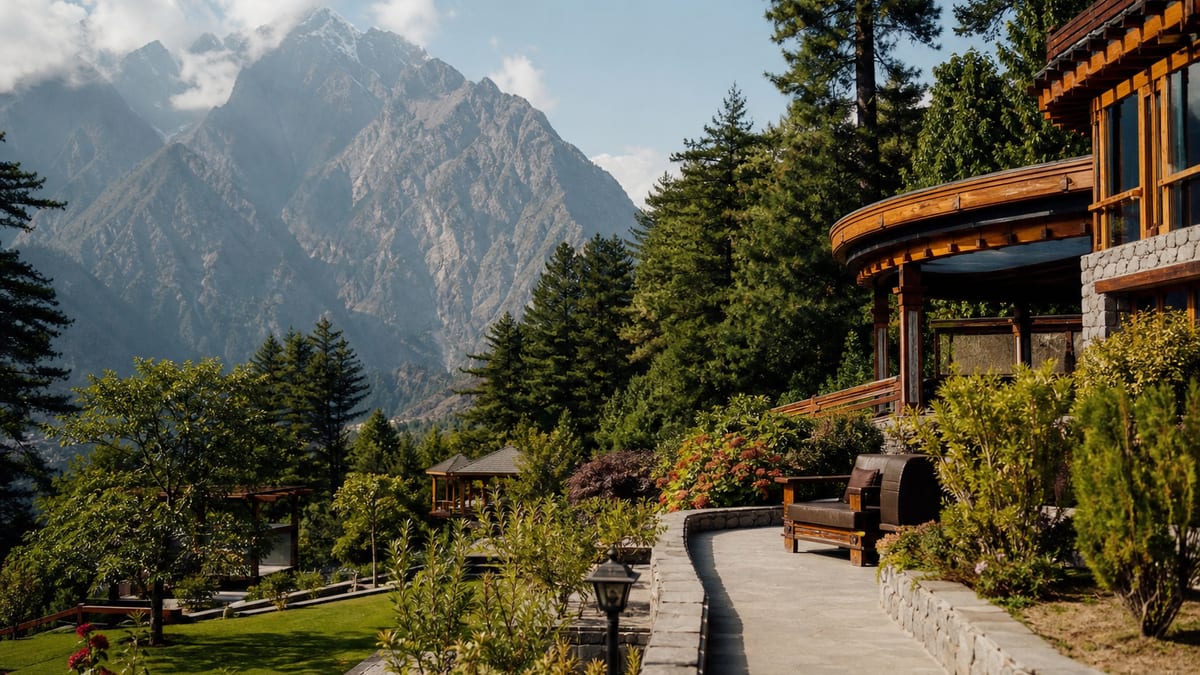
Two properties are named for Gilgit: Serena Hotels Gilgit (also named among regional accommodation examples) and Turgil Green Resort Naltar (Naltar locality). Prices, phones, and room counts are not published. Confirm licence and availability directly.
Beds run from budget guesthouse to luxury hotel. More names appear under Hunza and Skardu if you continue the road. Use the accommodation options overview and the Stay hub. Hotels, guesthouses, restaurants, and homestays need Tourism Department licensing; restaurants also face Local Government food-safety inspection.
Camping: designated sites only, permit first, Leave No Trace. No camping grounds are listed for Gilgit yet.
Practical tips
Withdraw or bring Pakistani rupees; cards are not widely accepted. Dress modestly; shoes off in mosques and houses. Photography is banned in the stated restricted belts, at military installations, and in sensitive border areas — still ask before photographing people or installations near the city.
Tourist Police: 1422 inside GB; 05811-930055 from outside — Contacting Tourist Police. The region is considered a safe destination; still check advisories and hire a local guide or reputable operator.
Use Gilgit as the logistics night: airport, cash, licensed operator, Kargah half-day, then decide whether Naltar is a second night or a day return. Leave the Silk Route story for later; you do not need it tonight.
A three-night Gilgit base
Gilgit has enough named places for a short stay without borrowing from other districts. A comfortable pattern, adjusted to whatever your operator confirms:
- Night one: land or arrive by bus, check in, and deal with logistics: cash, a local SIM, a licensed operator and any missing kit.
- Day two: Kargah Buddha in the morning, while it’s cooler, and the city in the afternoon.
- Days three and four: Naltar Valley and Naltar Lakes as an overnight, or as a long day out if the road and your energy allow.
- Leaving: carry on up the KKH, or head home, with a spare half-day for a delayed flight.
If you only have one night, do Kargah and move on. If you have more, Naltar is the place to slow down.
Choosing the next valley from Gilgit
Gilgit is where many travellers decide what comes next. Each onward destination has its own page and its own reasons:
| If you want | Look at |
|---|---|
| Forts, Attabad and the road to Khunjerab | Hunza |
| A glacier, a valley and the Pissan ground | Nagar |
| Shandur polo or Khalti ice hockey | Ghizer |
| Rama Lake and Domail Valley | Astore |
| Fairy Meadows | Diamer |
Decide which one before you leave Gilgit. That way the operator, the vehicle and the first night are lined up, rather than arranged on the roadside.
When flights don’t go to plan
Mountain flights are sometimes delayed or cancelled because of weather. If you’re flying out of Gilgit, build in a buffer: don’t plan an international connection for the same day. If an inbound flight is cancelled, ask your operator whether the road is a realistic alternative, and how long it will take on that day. The bus and private-car routes from Rawalpindi and Islamabad are the usual fallback.
Naltar: overnight or day return?
Naltar is the part of a Gilgit trip that most often goes wrong when rushed. A day return can work in good conditions, but it leaves little time at the lakes and none for a change in the weather. An overnight, at the named Naltar resort or another licensed bed, gives a slower day at the lakes and an easier drive back. Ask your operator which suits the season, and confirm the jeep arrangements beforehand.
Travelling with family
Gilgit works well as a family base because it combines short outings with city facilities. Kargah is a manageable half-day, and the city offers food, shops and medical services. Naltar needs more planning with children: warm layers, snacks and a vehicle you’re comfortable with. Keep children close near water and on rough ground at the lakes.
Frequently asked questions
What is Gilgit as a destination?
Gilgit is the airport-city hub of Gilgit-Baltistan. The cleanest first outing is Kargah Buddha, about 6 miles (9.7 km) outside Gilgit City. Naltar Valley and Naltar Lakes are the listed valley pair.
Which airport do I use for Gilgit?
Gilgit Airport. Skardu International Airport is the other named airport in the region. NATCO and private buses also run daily from Rawalpindi and Islamabad to Gilgit and other districts.
How far is Kargah Buddha from Gilgit City?
About 6 miles (9.7 km). The carving is a standing Buddha estimated to the 4th–7th century A.D., locally called Yshani, with nearby monastery and stupa remains.
Where should I stay in Gilgit?
Two properties are listed: Serena Hotels Gilgit and Turgil Green Resort Naltar. Confirm licence and availability. More hotel names appear if you continue to Hunza or Skardu.
Is an archaeological NOC a tourist ticket?
No. An archaeological-survey NOC is a researcher process. The fee is Rs.10,000 to the Director Archaeology & Museums. Ordinary visitors to Kargah should respect customs; they do not buy that NOC as a ticket.
How many nights should I spend in Gilgit?
One night covers logistics and Kargah. Three nights allow Kargah, the city and a Naltar overnight.
Which destination should I visit after Gilgit?
It depends on your interests: Hunza for forts and Khunjerab, Nagar for the glacier, Ghizer for festivals, Astore for Rama Lake, or Diamer for Fairy Meadows.
What if my flight to Gilgit is cancelled?
Ask your operator whether the road from Rawalpindi or Islamabad is a realistic fallback that day, and keep a buffer before onward connections.
Should I do Naltar as a day trip or overnight?
An overnight gives more time at the lakes and room for weather changes. Ask your operator what suits the season.
Who do I call for help in Gilgit?
Tourist Police on 1422 inside Gilgit-Baltistan, or 05811-930055 from outside.