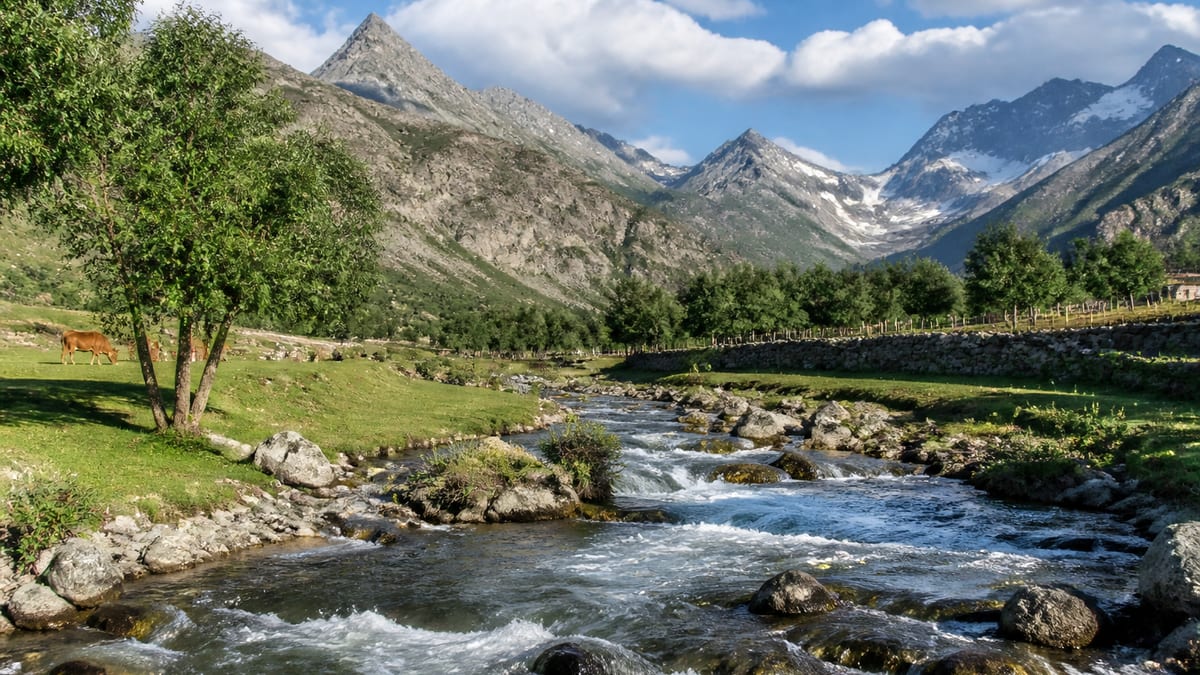
Astore is a lake-and-valley travel hub in Gilgit-Baltistan, built around Rama Lake, Domail Valley, and Blinkd Lake (also called Blind Lake). It is also one of the few destinations with a hotel that carries the Deosai name: The Brown Bear Hotel Deosai. Travellers often assume that hotel sits on the plateau itself — confirm the actual overnight with your operator, because Deosai access and Astore lake days are not always the same road.
If you need the administrative map and offices, start with Astore District. For a wider briefing on the mountain region, read the Gilgit-Baltistan travel overview. Three named lakes and valleys, plus one Deosai-named hotel to confirm on the ground, make Astore a careful first plan.
Deosai National Park sits between planning areas. Treat Deosai first as a Skardu-side wildlife day, while The Brown Bear Hotel Deosai stays listed under Astore. Confirm with your operator which road and which overnight you will use. Treat Blinkd Lake and Sheosar Lake (also called Blind Lake in Deosai writing) as two different named places.
Getting there
You reach Astore overland after flying into Gilgit Airport or Skardu International Airport — Astore has no airport of its own. Road times from Gilgit City or Skardu to Rama, Domail, or a Deosai gate change with the season, so confirm timings locally or with your tour operator before you travel.
Gilgit-Baltistan is reached by air or by road. The two named airports are listed on airports serving Gilgit-Baltistan. You can also come by bus or private car from cities such as Islamabad or Lahore. Private companies and NATCO run daily buses from Rawalpindi and Islamabad to Gilgit and other districts.
If you drive yourself, the named approaches are the Karakoram Highway (KKH), Babusar Pass, and Shandur Pass. Babusar is listed as a pass, not as an Astore sight. Mountain roads here close with snow and slides — check current bulletins rather than assuming a pass is open. The full access note is in Getting to Gilgit-Baltistan.
Licensed transport
Taxi and transport services must hold a licence from the Excise & Taxation Department Gilgit-Baltistan. Drivers need a valid driving licence and must follow traffic rules. For a packaged itinerary, hire a DTS-listed operator. See Hiring a tour operator.
Best time to visit
Exact opening months for Rama Lake, Domail Valley, and Blinkd Lake are not published, but the region’s four seasonal travel windows — and when Babusar and Shandur typically open — are explained in Climate and best time to visit Gilgit-Baltistan.
If your plan includes Deosai, you need a Wildlife Department permit, you must not litter, and you must not disturb wildlife. The park was designated in 1993 to protect the Himalayan brown bear. Ask your operator when the plateau road is passable in the year you are travelling, and whether your Astore-side hotel is open on those dates.
Pack warm clothes, sturdy shoes, sunscreen, sunglasses, insect repellent, a first-aid kit, a water bottle, and energy bars. Detail sits on Packing for Gilgit-Baltistan.
What to do and see
The three Astore stops to plan are Rama Lake, Domail Valley, and Blinkd Lake; Deosai is an optional add-on, not an automatic same-day trip. Stick to those named places rather than adding extra lakes on hearsay.
Rama, Domail, and Blinkd
- Rama Lake — a named lake in Astore, and a natural first outing if you are staying near Rama.
- Domail Valley — a named valley on the same list of places. Domail Rainbow Lake is listed separately and is not tied to a district; ask locally whether it is the same visit as Domail Valley or a second stop.
- Blinkd Lake — a named lake (also Blind Lake) in Astore. Keep it distinct from Sheosar / Blind Lake on the Deosai wetland notes.
Trekking, parks, and permits
Across Gilgit-Baltistan you will find trekking, mountaineering, rock climbing, white-water rafting, paragliding, skiing, ski traversing, and ice skating. Operator schedules and grades vary — ask a licensed operator. Trekking and mountaineering must be registered with the tourism department. Permits are required before activity in restricted areas. A licensed guide and porter are mandatory in those areas. Application steps are on Applying for trekking and mountaineering permits.
If you add Deosai, read the Himalayan brown bear of Deosai note and the national park visit regulations before you go. Wildlife viewing is allowed in designated areas only, with a wildlife-department permit.
Where to stay
Two properties are named for Astore: The Brown Bear Hotel Deosai and Rama Bayak & Restaurant. Prices, amenities, phone numbers, and whether rooms are open on your dates are not published — confirm directly with the property or your operator.
Beds in the region run from budget guesthouses to luxury hotels, with named examples in Gilgit, Skardu, and Hunza if you need a hub night. See the accommodation options overview and the Stay hub. Hotels and guesthouses must hold a Tourism Department licence under the GB Hotel & Restaurant Act, 2020, and are subject to inspection. Homestays need a department licence before taking guests.
Camping is allowed only in designated camping areas, needs a tourism-department permit before tents go up, and must follow Leave No Trace and proper waste disposal. No camping grounds are listed for Astore yet, so do not assume a marked site will be waiting.
Practical tips
Pay in Pakistani rupees and carry cash: credit cards are not widely accepted. Dress modestly, respect local culture, and remove shoes before entering a mosque or a local house. Photography is strictly prohibited in restricted areas — described as 5 miles along the Line of Control and 10 miles along the Wakhan corridor — and at military installations and sensitive border areas.
Gilgit-Baltistan is considered a safe destination for tourists, but you should still check travel advisories and hire a local guide or a reputable operator. For help inside Gilgit-Baltistan jurisdiction, Tourist Police is 1422; from outside GB, 05811-930055. Steps are on Contacting Tourist Police.
Astore’s listed stops are lakes, a valley, and two hotels — not a city-break. If you need more beds or a flight the same day, plan Gilgit or Skardu as the logistics hub and keep Astore as the nature block of the itinerary.
How Astore fits a longer itinerary
Astore works best as its own block of two or three nights, not squeezed between other stops. Gilgit sits at one end of the road and the Deosai plateau at the other. Most travellers come in from the Gilgit side, spend a day on Rama, then decide whether to head up toward Domail or climb onto Deosai. Going the other way also works if your operator confirms the plateau road is open. Pick your direction before you book the Gilgit or Skardu flight, because that choice decides which airport you need for the return.
If you only have a day, choose one lake and keep the rest for another trip. Rama Lake and the Deosai side are very different outings. Trying to see both in one day mostly means a lot of time in a vehicle and very little time outside.
Choosing between the three named stops
- Rama Lake: the most straightforward of the three and the one most travellers do first. The Rama Lake guide has the meadow, walk and season detail.
- Domail Valley: the furthest from the main road and the most remote-feeling. Read Domail Valley before you commit a day to it, and ask locally whether the track is open.
- Blinkd Lake: the Blinkd Lake guide explains why this listing almost certainly means Sheosar on the Deosai plateau, and what that means for permits and altitude.
Money, signal and supplies
Treat Astore as a place where you bring what you need. Carry enough rupees for transport, food and any park fees, because card payment is unreliable and you should not count on a cash machine near the lakes. Mobile coverage can drop out on the higher roads, so download offline maps and leave your plan with someone in Gilgit or Skardu. Snacks, water and a warm layer belong in the vehicle on every lake day, even in midsummer.
Travelling respectfully in Astore
Astore’s valleys are lived-in places, not empty scenery. Pastures and fields belong to families, and herders move livestock along the same tracks visitors use. Give way to animals, close any gates you open, and ask before photographing people. Take all your rubbish back to town, since lake shores and meadows have no collection.
Frequently asked questions
Does Astore have its own airport?
No. Astore has no airport of its own. Fly into Gilgit Airport or Skardu International Airport, then continue overland. Confirm road times to Rama, Domail, or a Deosai gate with your operator.
Is The Brown Bear Hotel Deosai on the Deosai plateau?
The hotel is listed under Astore, while Deosai National Park is not assigned to one district. Confirm the actual overnight and access road with your operator rather than assuming a plateau address.
Are Blinkd Lake and Sheosar Lake the same place?
No. Blinkd Lake (also called Blind Lake) is a named Astore lake. Sheosar Lake is also called Blind Lake in Deosai writing. Treat them as two different named places.
Do I need a permit for Deosai from Astore?
Yes, if you enter the national park. Visitors need a Wildlife Department permit, must not litter, and must not disturb wildlife. The park was designated in 1993 to protect the Himalayan brown bear.
Where can I stay in Astore?
Two properties are listed: The Brown Bear Hotel Deosai and Rama Bayak & Restaurant. Confirm prices and open dates directly. Hotels and guesthouses must hold a Tourism Department licence.
How many days should I plan for Astore?
Two to three nights works well. That gives you a day for Rama, a day for Domail or the Deosai side, and some slack for weather or road delays.
Can I visit Rama Lake and Deosai on the same day?
It is possible on paper but rarely worth it. They are separate outings in different directions, so most travellers give each its own day.
Is Domail Rainbow Lake the same trip as Domail Valley?
The site lists them as separate places. Ask locally whether your driver treats them as one visit or two stops before you agree a day plan.
Should I carry cash in Astore?
Yes. Pay in Pakistani rupees and carry enough for transport, food and fees, because cards are not widely accepted in the region.
Who do I call for help while travelling in Astore?
Inside Gilgit-Baltistan, call Tourist Police on 1422. From outside GB, the number is 05811-930055.