There’s no animal more closely tied to Deosai than this one. The Himalayan brown bear is the reason Deosai is a national park. Tourism department materials state that Deosai National Park was designated in 1993 to protect the critically endangered Himalayan brown bear, described as a keystone species of the park. For many visitors, the chance of seeing one, even at a distance, is the most memorable part of a summer trip to the plateau.
This page explains what our sources say about the bear, how it fits into Deosai’s wider wildlife, and how to visit in a way that protects it. It isn’t a field guide or a scientific survey. We don’t restate population totals or survey figures, because they were deliberately left out of the source note we use. Instead, we focus on the department’s own wording and on practical, responsible visitor advice.
What the department materials state
The department’s description is short and clear:
- Deosai National Park was designated in 1993.
- The designation was to protect the Himalayan brown bear.
- The bear is described as critically endangered.
- It’s called a keystone species of the park.
A keystone species is one whose presence shapes the wider ecosystem. Protecting it means protecting the habitat it depends on, which in Deosai means the grasslands, streams and high-altitude wetlands across the plateau.
The other wildlife named for Deosai
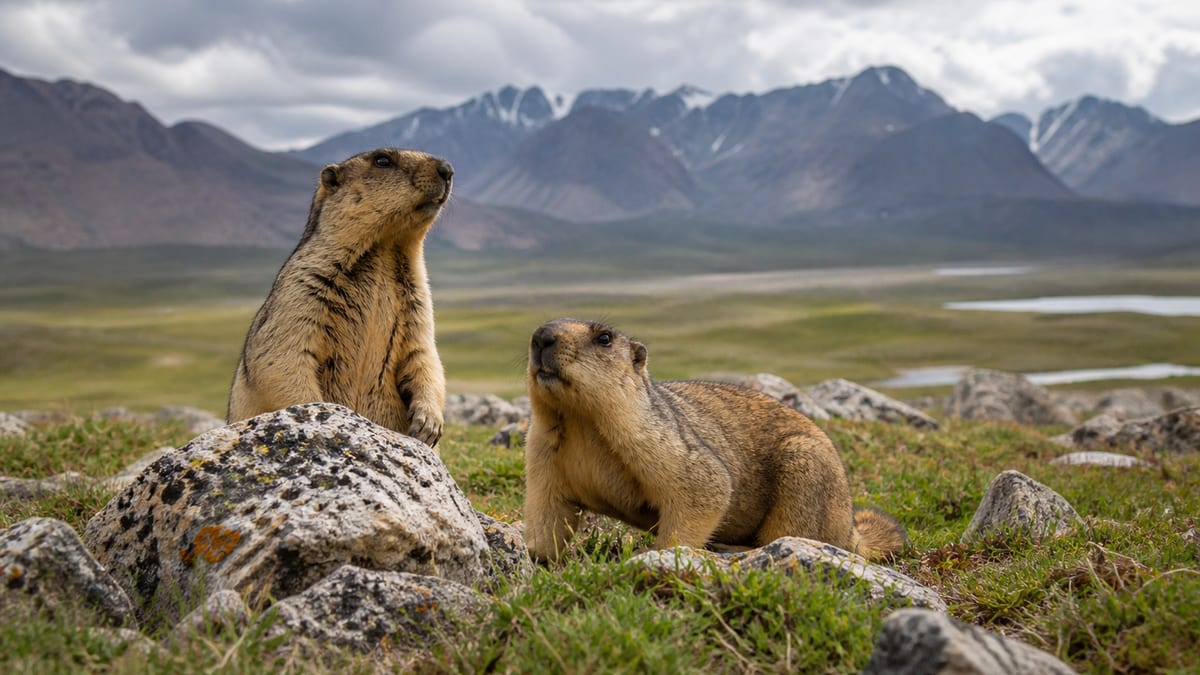
The department’s Deosai tourist page says the park is famous for diverse wildlife dominated by Himalayan marmots and brown bear. That’s the species pair our pages use for visitors. The Himalayan marmots are much easier to see, often right beside the track. Bears are rarer sightings.
Our Deosai National Park page adds that more than 124 bird species have been recorded on the plateau, including golden eagles and lammergeiers, and that the wetlands support them. The department describes Sheosar Lake, also called Blind Lake, among the world’s highest freshwater wetlands, and notes the park’s role in high-altitude wetland biodiversity.
Why the bear needs protection
The department calls the bear critically endangered. We don’t publish numbers, but the reasons a large mammal becomes vulnerable in a high mountain landscape are easy to understand: a short summer growing season, a limited area of suitable habitat and pressure from human activity. A protected plateau gives the bear space to feed, roam and raise young.
That’s why the park rules matter. Every visitor who stays on the track, keeps their distance and takes rubbish home helps keep the plateau suitable for bears.
The bear and the plateau’s seasons
Deosai’s Balti name, Ghbiarsa, means “summer’s place”, according to our park page, and the name fits the bear’s year too. The plateau sits at an average altitude of 4,114 m (13,497 ft), and for most of the year it’s under snow. The short summer is when the grasses, flowers and wetlands come alive, and it’s the season when the plateau’s animals are most active and visible.
That short window explains why disturbance matters so much. Animals that have only a few months to feed well can’t afford to be pushed off good ground by vehicles, noise or people on foot. A careful visitor gives them room to make the most of summer.
A visitor’s role in conservation
Protection isn’t only the job of rangers and officials. Every visitor makes small choices that add up. Choosing a driver who stays on the track, refusing to chase wildlife for photos and leaving no rubbish behind all help. So does sharing the right message. If you post photos of Deosai online, avoid encouraging others to approach animals, and mention the park rules when you can.
Responsible tourism can also support conservation by showing that a protected, well-kept plateau has real value. The more visitors respect Deosai, the stronger the case for keeping it that way.
When you might see a bear
Deosai is only open in summer. Our park page says it opened on 10 June in 2026 and usually closes in late October when snow returns. From roughly November to May the plateau is snowbound.
Bear sightings are never guaranteed. If you do see one, it’s likely to be at a distance, often across open grassland. Early morning and evening are generally quieter times on the plateau, with fewer vehicles. A pair of binoculars or a long lens is far more useful than trying to get closer.
How to visit without adding rules that aren’t here
The national park FAQ says visitors must obtain a permit from the Wildlife Department and must follow park rules such as not littering and not disturbing wildlife. The wildlife viewing FAQ says viewing in designated areas needs a permit from the wildlife department and that visitors should follow department guidelines and respect habitat. Those are the rules to read next, on our national park rules and wildlife viewing regulations pages.
Our park page adds that most visitors don’t need an advance permit and buy an entry ticket at the checkpoint, and that anglers need a fishing licence. Confirm current requirements with your driver or operator.
Safe and respectful bear watching
These practical habits protect both you and the bear:
- Stay in or near your vehicle if you see a bear.
- Keep a long distance. Never approach on foot.
- Don’t follow or block a bear’s path with a vehicle.
- Never feed wildlife. Food teaches animals to approach people, which ends badly for them.
- Store food securely if you’re camping, and don’t leave scraps.
- Take all rubbish out of the park.
- Keep noise down and don’t try to attract a bear’s attention.
- Respect guides’ instructions. Drivers and guides who know the plateau will tell you when to move on.
If a bear approaches, calmly move away in your vehicle. Don’t run.
Camping in bear country
Our park page names camping spots at Bara Pani, Kala Pani and Sheosar. If you camp, treat the whole plateau as bear habitat:
- Cook and store food away from your tent.
- Pack food in sealed containers.
- Carry all waste out with you.
- Keep a torch handy at night.
- Camp with others rather than alone.
Our camping regulations page covers general rules for camping in the region.
Getting to Deosai
According to our park page, the entrance is about 30 km from Skardu, roughly 1.5 to 2 hours by 4×4 via Sadpara Lake. You can also come from the Astore side via Chilam, about 70 km and three to five hours. See our Astore destination page for that approach and our Skardu International Airport page if you’re flying in.
The track is rough and the weather changes quickly, so most visitors hire a 4×4 with an experienced driver.
Photography
Bears are best photographed from a distance with a long lens. Don’t leave the vehicle or walk toward a bear for a better shot. Our photography restrictions page covers wider photography and drone rules. Flying a drone near wildlife is a clear form of disturbance, so don’t.
What to bring
Deosai is high, exposed and cold, even in summer. Pack warm layers, waterproofs, sun protection, water, food and binoculars. Mobile signal is patchy, so tell someone your plans before you set out.
What this page won’t include
To stay accurate, we leave out:
- population totals or survey figures
- claimed sighting rates or “best spots” for bears
- guided bear-watching products or operator recommendations
- any advice to approach, feed or track bears
Related pages
- Deosai National Park
- Deosai high-altitude wetlands
- Himalayan marmots of Deosai
- National park rules
- Astore destination
- Kachura Lake
Frequently asked questions
Why was Deosai made a national park?
Department materials say it was designated in 1993 to protect the critically endangered Himalayan brown bear.
When was the park designated?
In 1993.
What does “keystone species” mean here?
It means the bear plays a central role in the park’s ecosystem, so protecting it protects the wider habitat.
Is a bear population number given?
No. Population totals were deliberately left out of the source note we use.
Will I definitely see a bear?
No. Sightings aren’t guaranteed and are usually at a distance.
What other wildlife is named for Deosai?
Himalayan marmots and brown bear are the named pair. Our park page also notes more than 124 recorded bird species.
What permit is mentioned for the park?
The national park FAQ mentions a permit from the Wildlife Department. Our park page says most visitors buy an entry ticket at the checkpoint.
What should I do if I see a bear?
Stay in or near your vehicle, keep a long distance and never approach or feed it.
Is it safe to camp on Deosai?
Visitors do camp at named spots. Store food securely, carry out all waste and camp with others.
When is Deosai open?
Generally from mid-June to late October. In 2026 it opened on 10 June.
Source
Deosai National Park (Tourism Department blog) · Tourism, Sports, Culture, Archaeology & Museums Department, Government of Gilgit-Baltistan · Accessed 2026-08-27 · https://visitgilgitbaltistan.gov.pk/categories/posts/1/2