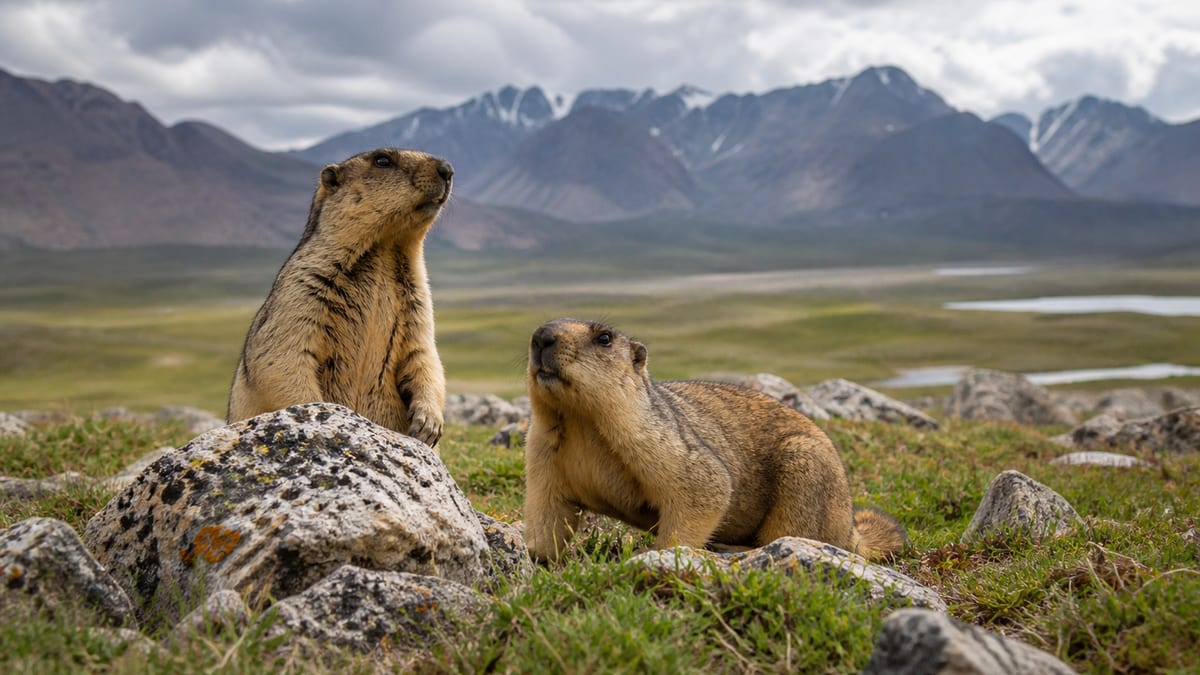
Marmots are the plateau’s easiest wildlife to spot. If you visit Deosai in summer, the first wild animal you see will almost certainly be a marmot. These stocky, golden-brown burrowers sit up beside the track, whistle a warning and dive underground as vehicles pass. The tourism department’s Deosai tourist page says the park is famous for diverse wildlife dominated by Himalayan marmots and brown bear, and for many visitors, the marmots are the easiest of the two to see.
This page explains what our sources say about Deosai’s marmots, when and where you’re likely to see them, and how to watch them without causing harm. It isn’t a field guide. We don’t print population figures, breeding data or behavioural studies that aren’t part of our source record. We stick to what the department and our existing Deosai pages already say, and we add practical, common-sense visitor advice.
What the department names
The Deosai tourist detail page from the tourism department states that the park is famous for diverse wildlife dominated by Himalayan marmots and brown bear. That’s the species pair our pages use. The Himalayan brown bear has its own article because the park’s 1993 designation is described around that animal. The marmots have this one because they’re the wildlife most visitors actually meet.
We don’t publish a longer species list on this page. Our Deosai National Park page adds that more than 124 bird species have been recorded on the plateau, including golden eagles and lammergeiers, but marmots and brown bears remain the two mammals named for visitors.
What our park page says about marmots
Our Deosai park page describes golden Himalayan marmots whistling from their burrows beside the track. It also notes that July is the month when marmots are everywhere, alongside the peak of the wildflowers.
There’s a curious story attached to them, too. The park page mentions that the French ethnologist Michel Peissel argued that Himalayan marmots inspired Herodotus’s ancient story of gold-digging ants. It’s a theory, not settled fact, but it’s a lovely thing to think about while you’re watching marmots dig on the plateau.
When to see marmots
Deosai is only open in summer. Our park page says the park opened on 10 June in 2026 and usually closes in late October when the snow returns. With the park closed outside summer, that’s the only season visitors can look for them.
- Mid to late June: the plateau is just opening, snow lingers in patches and marmots are emerging and active.
- July: the best month for marmots, according to our park page. Wildflowers peak and the light is good for photography.
- August: still green and still busy, though monsoon rain can affect the Skardu approach.
- September to early October: activity tapers as the season cools.
Early morning and late afternoon are usually the liveliest times, and they’re also when the light is best for photographs.
Where to look
You don’t have to go far. Marmots live in burrows across the grassy parts of the plateau, and many are visible right beside the main track. Scan the slopes and open meadows for a small upright figure, listen for the high whistle and watch for movement near burrow mouths.
Most visitors see them on the drive between the park entrance and Sheosar Lake, and around camping areas. Our park page puts the entrance about 30 km from Skardu via Sadpara Lake, roughly 1.5 to 2 hours by 4×4, with Sheosar about 60 km from Skardu.
How visitors should treat marmots and their habitat
The department’s wildlife viewing FAQ allows viewing in designated areas with a permit from the wildlife department, and asks visitors to follow guidelines and respect wildlife and habitat. The national park FAQ adds that visitors must not litter and must not disturb wildlife. Neither page is a field guide to approaching a marmot, and that’s the point: you shouldn’t approach them at all.
In practice, that means:
- Don’t feed marmots. Human food harms them and teaches them to approach vehicles, which puts them at risk on the track.
- Keep your distance. Use a zoom lens or binoculars instead of walking up to a burrow.
- Don’t block burrows or stand right over them for a photo.
- Stay on tracks so you don’t collapse burrows or crush vegetation.
- Drive slowly. Marmots often dash across the track without warning.
- Take all rubbish out. Litter can harm animals that investigate it.
- Keep noise down. Shouting or chasing to get a reaction is disturbance.
Our wildlife viewing regulations and national park visit regulations pages cover the rules in more detail.
Photographing marmots
Marmots are patient subjects if you are too. Pull over safely, switch off the engine and wait. A marmot that’s dived underground will often reappear within a few minutes if nothing threatens it. Stay low and still, and let it come back to its lookout.
A telephoto lens is ideal. If you’re using a phone, accept a slightly wider shot rather than getting closer. Early and late light gives warm tones and softer shadows. Our photography restrictions page covers wider photography rules in the region.
Watching with children
Marmots are often the highlight of a family trip to Deosai. Children love spotting them and hearing the whistle. It’s a good chance to teach the basics of respectful wildlife watching: stay quiet, stay back, and never chase or throw food. Keep children close to the vehicle, especially near the track, and make sure they’re dressed warmly. The plateau is cold and windy even on sunny days, and the altitude can tire young travellers quickly.
A pair of binoculars for each child makes a big difference. It turns waiting into a game and keeps everyone at a safe distance.
Marmots and bears together
The department pairs marmots with brown bears for a reason. Marmots are part of the plateau’s food web, and the brown bear is the animal the park was created to protect in 1993. A healthy marmot population is part of a healthy plateau. We don’t print predation figures or bear population totals, but it’s fair to say that disturbing one part of this ecosystem affects the rest.
If you’re lucky enough to see a bear, stay in your vehicle and keep a long distance. See our brown bear page for more.
Getting there and practical planning
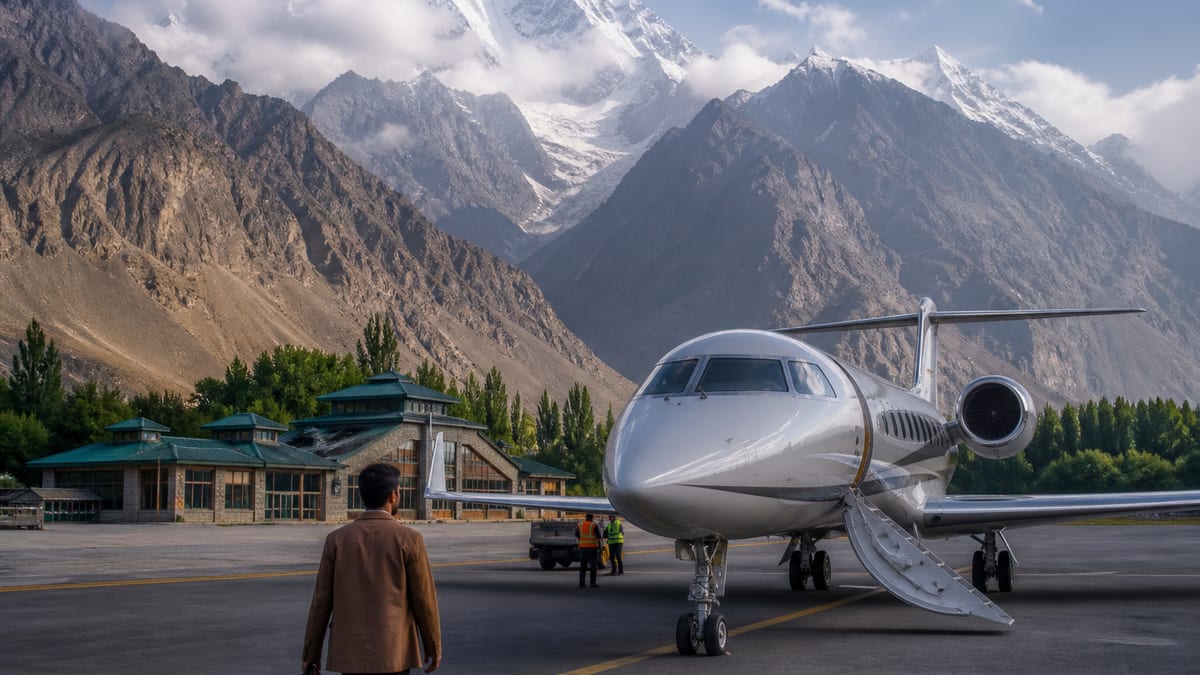
Most visitors reach Deosai from Skardu by hired 4×4. Our park page also describes an approach from the Astore side via Chilam, about 70 km and three to five hours. Travellers from Islamabad usually fly to Skardu, weather permitting. See our Skardu International Airport page for that leg.
Our park page says most visitors don’t need an advance permit and buy an entry ticket at the checkpoint, while anglers need a fishing licence. The national park FAQ refers to a Wildlife Department permit. Ask your driver or operator to confirm what’s needed on the day.
Bring warm layers, rain gear, sun protection, water and food. Deosai is high, exposed and cold at night, even in July.
What this page won’t include
To keep things accurate, we leave out:
- Marmot population counts or density figures
- Breeding seasons, litter sizes or lifespan data
- Scientific classification beyond the common name used by the department
- Guided “marmot tour” products or operator recommendations
- Feeding, handling or close-approach advice of any kind
If a source we use publishes those details, we’ll add them with a citation.
Related pages
- Deosai National Park for season, access and planning
- Deosai high-altitude wetlands
- Himalayan brown bear of Deosai
- Wildlife viewing rules
- Kachura Lake and the Skardu district page
Frequently asked questions
Are there marmots in Deosai National Park?
Yes. The department’s Deosai page says the park’s wildlife is dominated by Himalayan marmots and brown bear.
Which animals are named together for Deosai?
Himalayan marmots and the Himalayan brown bear.
When is the best time to see marmots?
July, according to our park page, when marmots are everywhere and wildflowers are at their peak.
Where on the plateau can I see marmots?
Often right beside the main track and across grassy meadows, especially between the entrance and Sheosar Lake.
Can I feed the marmots?
No. Feeding harms them and breaks the park rule against disturbing wildlife.
How close can I get to a marmot?
Keep your distance and use a zoom lens or binoculars. The park rules ask visitors not to disturb wildlife.
Is a viewing permit mentioned?
Yes. The wildlife viewing FAQ says viewing in designated areas needs a permit from the wildlife department.
What’s the gold-digging ants story?
Our park page notes that Michel Peissel argued Himalayan marmots inspired Herodotus’s story of gold-digging ants. It’s a theory, not settled fact.
Is a longer species list published here?
No. Our park page notes more than 124 recorded bird species, but marmots and brown bears are the mammals named for visitors.
Do marmots appear in winter?
Not to visitors. The park is closed and snowbound from roughly November to May, so our sources describe no winter viewing.
Source
Deosai National Park tourist detail (Tourism Department) · Tourism, Sports, Culture, Archaeology & Museums Department, Government of Gilgit-Baltistan · Accessed 2026-08-27 · https://visitgilgitbaltistan.gov.pk/tour/id/3