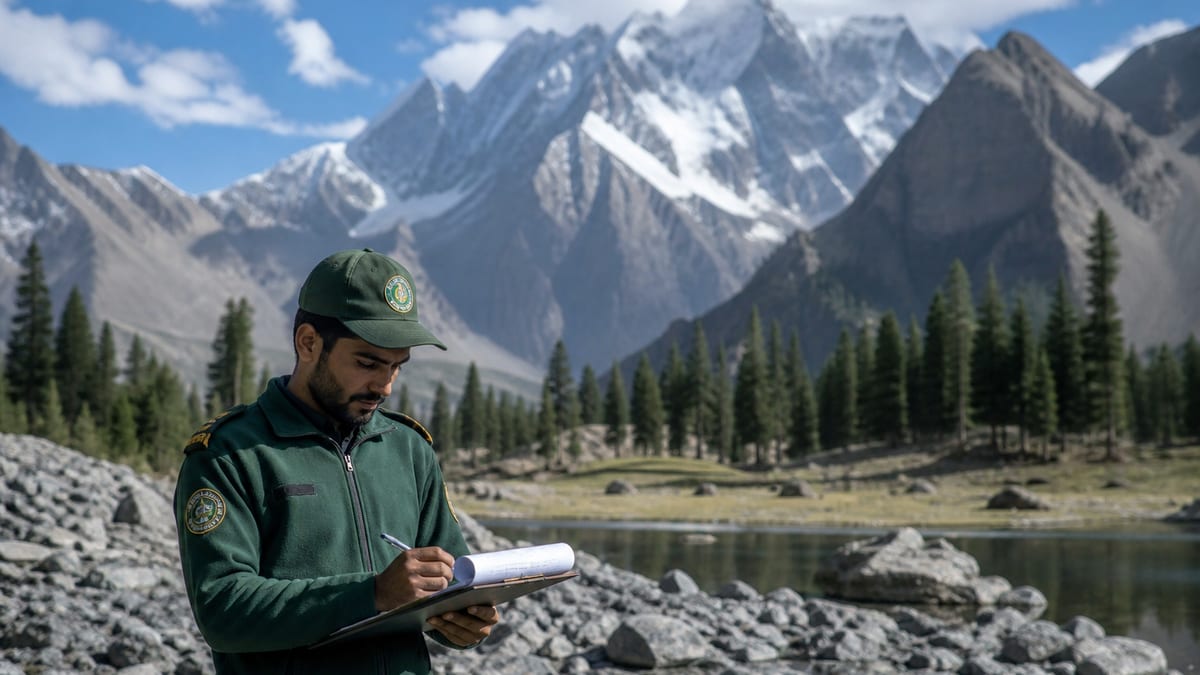
It sounds simple, but once you line it up against the park pages, things get a little less tidy. The tourism department FAQ gives one rule for national parks. It says visitors to national parks must obtain a permit from the Wildlife Department and must follow park rules such as not littering and not disturbing wildlife.
This page explains that rule, shows which parks on this site it applies to, and is honest about where our place pages describe the gate experience differently. It doesn’t publish entry fees, permit forms or opening dates as rules. Those change, and the FAQ doesn’t give them.
The rule in two parts
1. A Wildlife Department permit. The FAQ names the Wildlife Department as the body that issues national park permits. That’s different from most other FAQ rules on this site, which point to the tourism department. The FAQ doesn’t say how to apply, what it costs or how long a permit lasts.
2. Park rules. Visitors must follow park rules. The FAQ gives two examples: not littering and not disturbing wildlife. The words “such as” mean the list isn’t complete. Other park rules may exist, and we don’t claim to know all of them.
Parks covered on this site
Two national parks have detailed place pages here. A third protected area, a wildlife sanctuary, often comes up in the same conversation.
Deosai National Park. The Deosai National Park page describes a high alpine plateau between Skardu and Astore with an average altitude of 4,114 m. It says Deosai was made a national park in 1993 to protect the Himalayan brown bear. The park is open only in summer; the place page says it opened on 10 June in 2026 and usually closes when the snow returns in October. See also the Himalayan brown bear of Deosai, Himalayan marmots of Deosai and Deosai high-altitude wetlands.
Khunjerab National Park. The Khunjerab Pass page says the road to the border climbs through Khunjerab National Park, which was set up on 29 April 1975 to protect Marco Polo sheep and is described as snow leopard country. Visitors pass the park checkpoint at Dih on the way up from Sost.
Naltar Wildlife Sanctuary. The Naltar Valley page says the valley lies inside the Naltar Wildlife Sanctuary, declared on 22 November 1975. A sanctuary isn’t called a national park on that page, so the national park sentence may not apply in the same way. The separate wildlife viewing regulations are relevant there.
Our wildlife hub brings all three together.
Where the sources describe the gate differently
This is the most important part of the page for planning. The FAQ rule and our place pages are different kinds of source, and they don’t use the same words.
- The FAQ says national park visitors must obtain a permit from the Wildlife Department.
- The Deosai place page says most visitors need no advance permit and buy an entry ticket at the checkpoint. It adds that anglers need a fishing licence.
- The Khunjerab place page says you pay the national park fee at the park checkpoint past Sost.
These may describe the same thing from two angles, with the ticket sold at the checkpoint acting as the permit for an ordinary day visit. But the sources don’t say so directly, and we won’t claim it. Treat the FAQ sentence as the published requirement. Then confirm at the checkpoint or with the Wildlife Department what form the permit takes for your visit.
Our place pages report fees from recent visitor sources. Fees aren’t part of the FAQ rule, they change between seasons, and we don’t repeat them here.
What the site does and doesn’t say
The earlier version of this page said to confirm the route “with the office named in that sentence”. In this case the sentence does name an office, the Wildlife Department, so that part was fair. What it missed was the checkpoint wording on our place pages.
The site does say:
- National park visitors need a Wildlife Department permit.
- Park rules include not littering and not disturbing wildlife.
- Deosai and Khunjerab place pages describe checkpoints where visitors pay at the gate.
- Deosai is open only in summer.
The site doesn’t say:
- An official permit fee or application form.
- A full list of park rules.
- Whether every activity, such as camping or drone flying, is allowed in every park.
- Opening dates for future years.
This website doesn’t issue permits or tickets. For general questions to us, use the contact page.
Other rules that often apply in parks
A park visit rarely involves just one rule.
- Camping. The FAQ says camping is allowed in designated areas, needs a tourism department permit before tents go up, and requires leave no trace principles and proper waste disposal. Note that this is a tourism department permit, separate from the Wildlife Department park permit. See camping regulations.
- Wildlife viewing. Allowed in designated areas with a wildlife department permit. See wildlife viewing regulations.
- Photography. Photography is prohibited in restricted areas, at military installations and in sensitive border areas. That matters on the Khunjerab road. See photography restrictions.
- Fishing. The Deosai page says anglers need a fishing licence.
- Operators. If a company provides your jeep, tent or guide, the adventure sports operator regulations and tour operator regulations apply to them.
Why the rules exist
The parks on this site were created to protect particular animals, and the two named park rules follow from that.
Department materials say Deosai was designated to protect the critically endangered Himalayan brown bear, described as a keystone species of the park. The department’s Deosai tourist page says the park is famous for wildlife dominated by Himalayan marmots and brown bear. Department wording also describes Deosai and Sheosar Lake, also called Blind Lake, as among the world’s highest freshwater wetlands.
At Khunjerab, the place page says the park was set up for Marco Polo sheep. It adds that Himalayan ibex are sometimes seen between Barhon and Koksar and that domestic yaks graze across the park.
Animals in places like these live with short summers and long winters. Food left behind, rubbish blowing across a meadow or a crowd pressing towards a bear can change how they behave. That’s the practical reason behind “not littering” and “not disturbing wildlife”.
Following the park rules in practice
The two named park rules are simple. These suggestions follow from them and from our place pages. None is a new regulation.
Carry all rubbish out. Littering is the first named rule. The Deosai page says there’s no fuel, food or cash inside the park, so plan to bring supplies in and take waste back out.
Keep your distance from animals. Not disturbing wildlife is the second named rule. The Deosai page advises staying in or near the vehicle if you see a bear, and never feeding wildlife.
Stay on the track. Driving or walking across wet meadows damages the wetland habitat our Deosai pages describe.
Keep noise down. Loud music and shouting disturb animals and other visitors.
Respect closures. If the park is closed for snow, don’t try to get round the gate.
Practical planning notes
- Altitude. Deosai is above 4,000 m. The place page suggests spending two nights in Skardu first.
- Vehicles. The Deosai page says both approaches need a 4×4.
- Network. Expect no mobile signal on most of the Deosai plateau.
- Fuel. The Khunjerab page says there’s no fuel after Sost.
- Season. Deosai is roughly mid-June to mid-October; Khunjerab sightseeing is realistic from about May to October. See best time to visit and the alerts page.
Frequently asked questions
What does the FAQ require for national park visits?
It says visitors must obtain a permit from the Wildlife Department and follow park rules such as not littering and not disturbing wildlife.
Which office issues national park permits?
The FAQ names the Wildlife Department. That’s different from camping permits, which the FAQ links to the tourism department.
Which national parks does this site cover?
Deosai National Park and Khunjerab National Park have place pages. Naltar is described as a wildlife sanctuary, not a national park.
Do I need a permit in advance for Deosai?
The Deosai place page says most visitors need no advance permit and buy an entry ticket at the checkpoint. The FAQ says a Wildlife Department permit is required. Confirm at the checkpoint what applies to you.
How much is the national park fee?
The FAQ doesn’t give a fee. Our place pages report recent visitor figures, but those change, so we don’t treat them as the rule.
Are there other park rules besides litter and wildlife?
Probably. The FAQ says “such as”, which means its two examples aren’t a complete list.
Can I camp inside a national park?
Only where camping is allowed. The camping rule needs a designated area and a tourism department permit before tents go up.
Can I fish in Deosai?
The Deosai page says anglers need a fishing licence.
Can I take photos on the Khunjerab road?
Follow instructions from border staff. Photography is prohibited in restricted areas, at military installations and in sensitive border areas.
Does this website sell park tickets?
No. This site is an information resource and doesn’t issue permits or tickets.
Source
Frequently Asked Questions (Gilgit-Baltistan Tourism Department) · Tourism, Sports, Culture, Archaeology & Museums Department, Government of Gilgit-Baltistan · Accessed 2026-08-27


