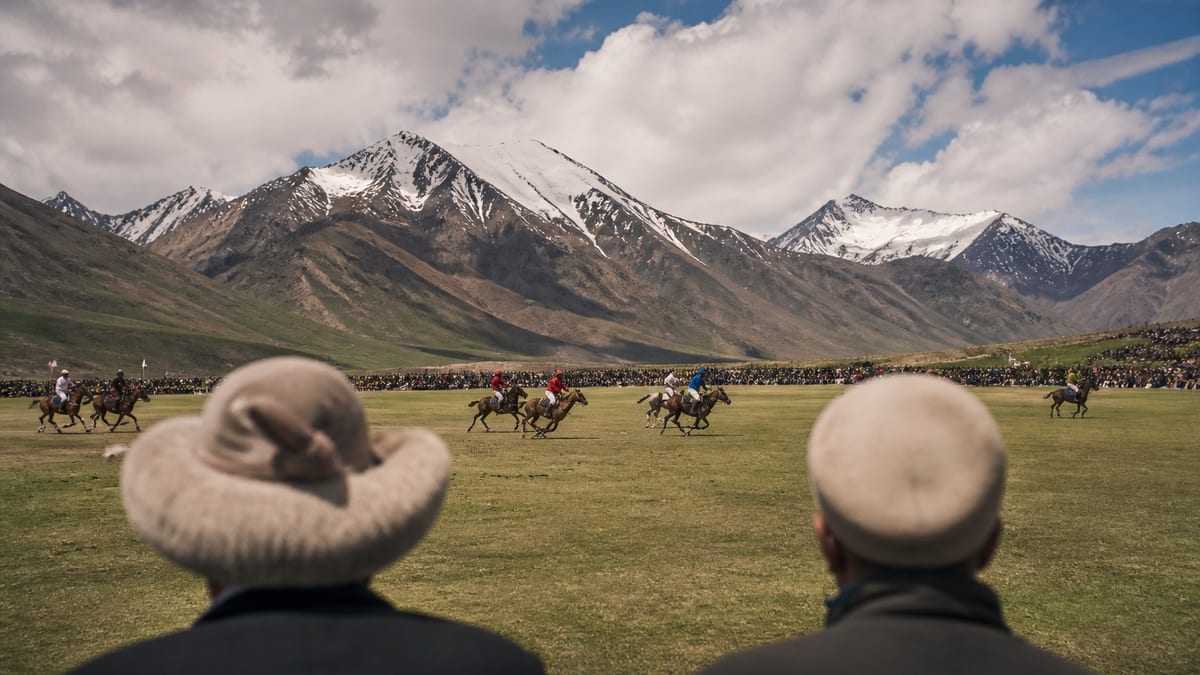
Shandur Pass is a broad, grassy pass at about 3,700 m on the boundary between Ghizer District in Gilgit-Baltistan and Upper Chitral in Khyber Pakhtunkhwa. It’s home to the Shandur polo ground, billed as the highest polo ground in the world. From Gilgit it’s about 210–240 km west through Gahkuch, Gupis and Phander, a long day by road. The road is paved most of the way, but beyond Teru it becomes a rough jeep track. A private jeep from Phander to the pass was quoted at about PKR 6,000–10,000 in 2026, and you don’t need a permit. The pass is open from about mid-June to mid-October. The Shandur Polo Festival is the big event: it ran from 11 to 13 June in 2026 and from 20 to 22 June in 2025.
From the pass, the road continues down to Laspur, Mastuj and Chitral, about 150–170 km away. That makes Gilgit–Shandur–Chitral one of Pakistan’s great road trips. Details were checked in October 2026. Festival dates are set each spring, and floods closed the Gilgit–Shandur road in July 2026, so always check the latest news.
Shandur Pass quick facts
| Fact | Details |
|---|---|
| Altitude | About 3,700 m (published figures range from 3,720 to 3,738 m) |
| Location | At about 36.076° N, 72.520° E, on the Ghizer (GB) and Upper Chitral (KP) boundary |
| From Gilgit | About 210–240 km via Gahkuch, Gupis, Phander and Teru; paved to around Teru, then a jeep track |
| From Chitral | About 150–170 km via Mastuj and Laspur |
| Polo festival | Usually 3 days. 2026: 11–13 June; 2025: 20–22 June. It was traditionally held on 7–9 July |
| Open | About mid-June to mid-October, depending on snow |
| Permit | No NOC for Pakistanis or foreigners; carry ID for checkposts |
| Languages | Khowar and Shina along the route |
Why visit Shandur
Shandur is a wide, flat plateau of grass and small lakes, ringed by snow peaks and with no buildings to speak of. Most of the year it’s empty apart from herders. For a few days each summer it becomes a tent city, when teams from Gilgit-Baltistan and Chitral meet for freestyle mountain polo. Shandur is the high polo ground on the Ghizer–Chitral line, open in summer and closed when the road floods.
Shandur polo is played by teams of six on small mountain horses, on a field of about 200 m by 56 m lined with low stone walls. Players often ride without helmets, there are few rules and the game is fast and rough. Between chukkers, bands from both sides play traditional music. The KP and GB governments organise the festival together, and recent editions have added cultural nights, paragliding and a camping village. Read more on the Shandur Polo Festival page.
How to reach Shandur Pass
- From Gilgit (GB side): drive west up the Ghizer valley through Gahkuch (about 120 km), Gupis (about 160 km) and Phander (about 190 km) to Teru, then climb the last stretch to the pass. Most people break the trip at Phander. See road approaches via the KKH, Babusar and Shandur.
- Public transport: shared jeeps run from Gilgit to Gupis and Phander. A Phander seat cost about PKR 800–1,200 in 2026. There’s no regular shared transport beyond Teru, so hire a jeep in Phander the evening before. NATCO has run a seasonal Gilgit–Chitral service via Shandur; check the current schedule at the Gilgit terminal. See NATCO and private bus access.
- From Chitral (KP side): drive up the Mastuj valley through Mastuj and Laspur to the pass. Allow roughly 4–7 hours.
- From Islamabad: fly to Gilgit, or drive the KKH or Babusar Pass in summer, and then follow the Ghizer route above.
Best time to visit
- Mid-June: the snow has cleared and the meadows are turning green. In 2025 and 2026 the festival fell in June.
- July–August: the pass is fully open, with wildflowers and herders. July rain can bring landslides and floods on the Ghizer road.
- September: often the best month, with clear skies, still air and almost no visitors.
- Mid-October onwards: the first heavy snow usually closes the pass, though Phander and the lower Ghizer valley stay reachable.
Shandur is cold even in midsummer, and nights can fall to around 0°C. For the wider picture, see the best time to visit Gilgit-Baltistan.
Shandur trip costs (as of 2025–2026)
| Item | Typical cost |
|---|---|
| Festival entry | No ticket has been widely reported; check the official announcement |
| Shared jeep, Gilgit to Phander | About PKR 800–1,200 per seat |
| Private jeep, Gilgit to Phander | About PKR 8,000–14,000 |
| Private jeep, Phander to Shandur | About PKR 6,000–10,000 |
| Guesthouse in Phander or Teru | About PKR 1,000–2,500 a night, often with meals |
| Mid-range hotel in Phander | About PKR 3,500–8,000; prices can double in festival week |
Where to stay
There are no hotels on the pass. In festival week a temporary camping village goes up; otherwise you bring your own tent. Phander, with its lake and guesthouses, is the best base on the GB side, and Teru is closer but simpler. On the KP side, plan to stay in Mastuj or Chitral and check what’s open locally. In festival week, every room within about 50 km fills, so book 4–6 weeks ahead or come with a 4-season sleeping bag and tent. Read the camping rules.
Safety and practical tips
- Check the road: floods cut the Gilgit–Shandur road in July 2026 until the NHA reopened it on 24 July. Ask in Gilgit or Gupis about current conditions before you set off.
- 4×4 beyond Teru: the last section is rough and can be impassable for hours after heavy rain.
- Cold and altitude: at 3,700 m, nights are near freezing, even in summer. Bring warm layers, a hat and gloves; see packing for Gilgit-Baltistan.
- Festival crowds: arrive a day early, keep well back from the stone walls during play and keep your valuables close.
- Cash: stock up in Gilgit or Gahkuch, because there are no ATMs on the pass.
- Boundary sensitivities: the exact GB–KP boundary at Shandur has been a matter of dispute. Be respectful, and leave politics to the locals.
Nearby places
- Phander Lake: the turquoise lake and best base on the GB side
- Khalti Lake: a quiet lake near Gupis, and home to a winter ice hockey festival
- Ghizer: the valley destination page for the whole route
- Gilgit City: the starting point and transport hub
People along the route speak Shina in the lower valley and Khowar towards Shandur and Chitral.
Timing a Shandur trip
Shandur is a long drive in either direction, and the days are short at 3,700 m once the sun drops behind the ridges. Leave Gilgit early, plan a night in the Phander area on the way, and save the final climb to the pass for the following morning. It’s easier on the driver, and you reach the polo ground when the light is clear rather than in the late-afternoon wind. Coming from Chitral, Mastuj or Laspur work the same way as a staging point.
If you’re going for the festival, plan everything around it. Beds along the Ghizer road and in Laspur fill quickly, and the jeep track gets crowded on match days. Book transport early, carry your own food and water, and expect the trip to take longer than a normal day.
Shandur outside festival days
Most of the season, the pass is quiet: open grassland, a shallow lake, grazing animals and the empty polo ground under a huge sky. For many travellers this is the better time to come. You can walk across the plateau, sit by the water and watch the weather move over the Hindu Raj without crowds or traffic. Bring a picnic, because there are no services you can count on outside event dates.
Driving the Ghizer approach
The Gilgit side follows the Ghizer River through a string of villages, and the stops along the way are part of the trip. Phander’s lake and the open valleys around Gupis are natural places to break the journey. Above Teru the road turns rough. Let a local jeep driver handle that stretch, check conditions in Gupis or Phander before going up, and don’t attempt the climb in the dark.
Packing for the plateau
Even in midsummer, Shandur can be cold and windy, with sudden rain. Pack a warm jacket, a hat, a waterproof layer, sunglasses and sunscreen. Carry snacks and enough water for the day, plus a bag to take your rubbish back down: the plateau has no collection.
Shandur Pass FAQ
Where is Shandur Pass?
Shandur Pass is on the boundary between Ghizer District in Gilgit-Baltistan and Upper Chitral in Khyber Pakhtunkhwa, at about 3,700 m. It links the Ghizer valley with the Mastuj valley and Chitral.
When is the Shandur Polo Festival 2026?
The 2026 festival was held from 11 to 13 June. In 2025 it ran from 20 to 22 June. Traditionally it was held on 7 to 9 July, so check the official announcement each spring.
How far is Shandur from Gilgit?
About 210 to 240 km via Gahkuch, Gupis, Phander and Teru. It is a long day by road, so most people stop overnight in Phander. The last stretch beyond Teru needs a 4×4.
Is Shandur the highest polo ground in the world?
It is widely billed as the highest polo ground in the world, at about 3,700 m. Freestyle polo matches between Gilgit-Baltistan and Chitral teams are played there every summer.
When is Shandur Pass open?
Usually from about mid-June, when the snow clears, until mid-October, when the first heavy snow closes it. Summer floods can also close the Ghizer road for days, as happened in July 2026.
Do I need a permit to visit Shandur?
No NOC is needed for Shandur Pass, Phander or the Ghizer valley. Carry your CNIC or passport for the police checkposts along the road.
Where should I stay the night before Shandur?
On the Gilgit side, Phander is a sensible staging point for an early climb to the pass. From the Chitral side, travellers usually stage at Laspur or Mastuj.
Is Shandur worth visiting outside the polo festival?
Yes. Outside festival days the pass is quiet, with open grassland, a lake and wide mountain views, though services are limited.
Can an ordinary car reach Shandur Pass?
The road is paved most of the way, but beyond Teru it becomes a rough jeep track, so most visitors hire a local jeep for the last stretch.
How cold is Shandur in summer?
It is often cold and windy at about 3,700 m, even in summer. Bring warm and waterproof layers.


