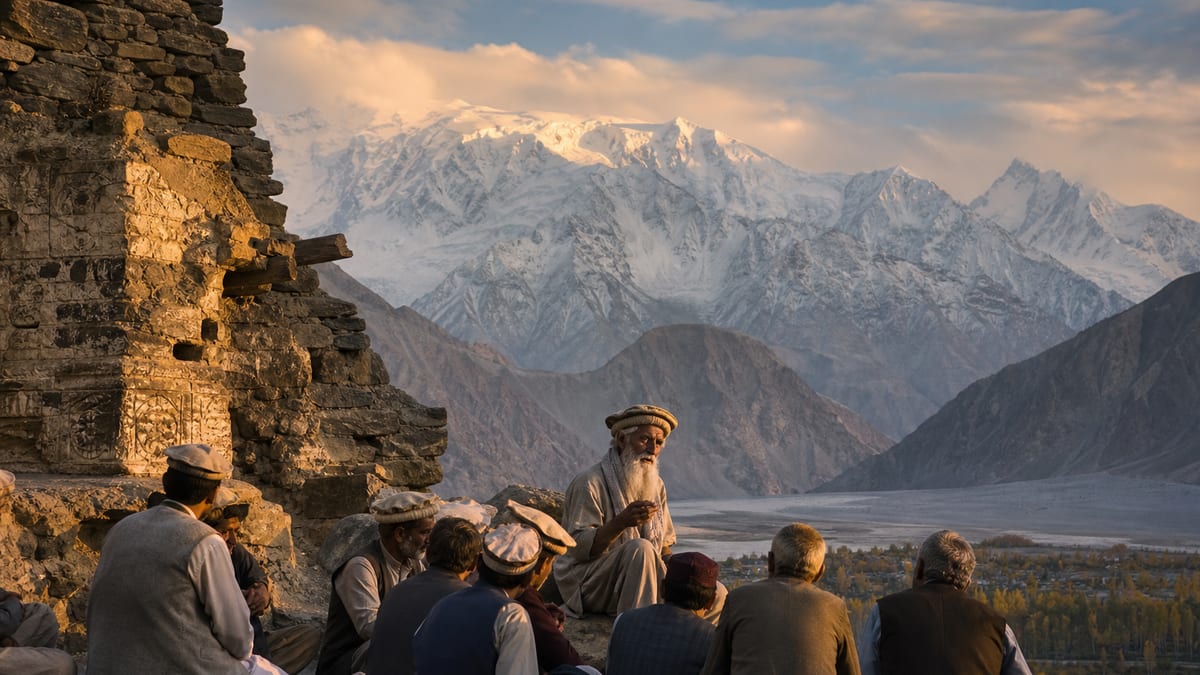
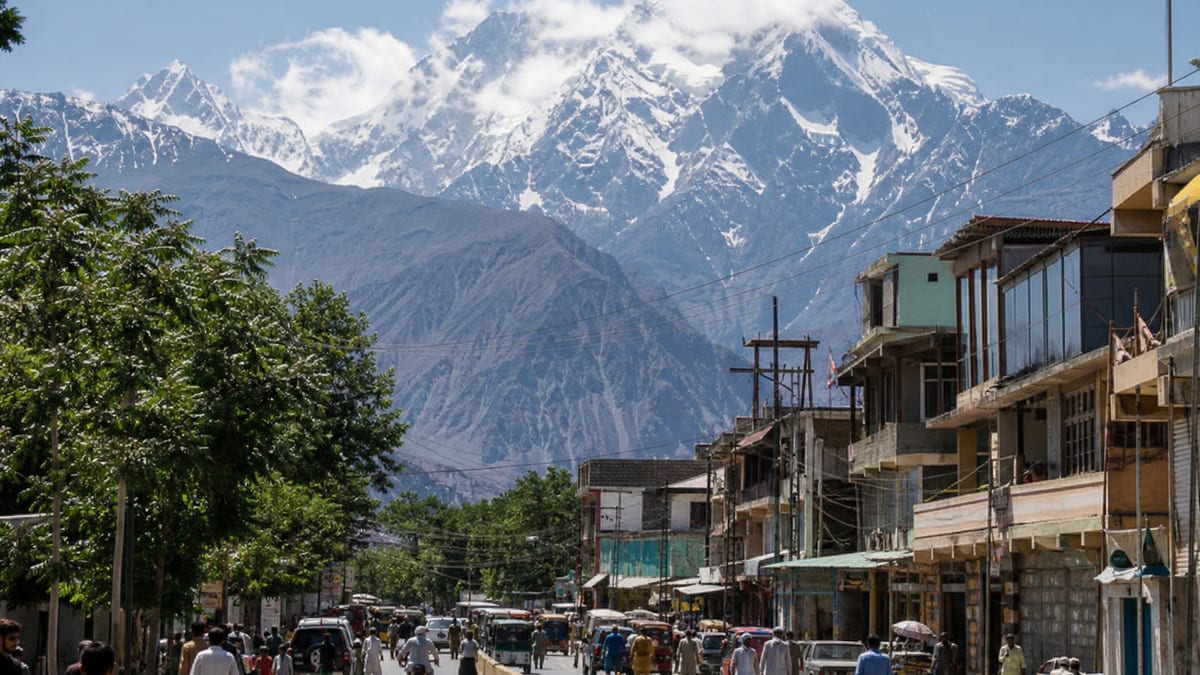
Few sights near Gilgit carry as much history as this one. The Kargah Buddha is the best-known reminder of Gilgit’s Buddhist past. Tourism department materials describe it, locally called Yshani, as a rock-carved standing Buddha estimated to date from the 4th to the 7th century. They place it about 6 miles, also given as 9.7 km, outside Gilgit City, with monastery and stupa remains nearby. The department’s blog note adds that Gilgit was a significant early Buddhist centre from the 3rd to the 11th century.
This page looks at the history behind the carving: what the department says, what our Kargah Buddha place page adds, and how to read the site as a visitor. If you want practical details such as driving time and the best light, the place page is the place to start. This page focuses on context.
What the department materials describe
The department wording is brief and specific:
- Name: Kargah Buddha, locally called Yshani.
- Type: a rock-carved standing Buddha.
- Date: estimated to the 4th to 7th century.
- Location: about 6 miles, or 9.7 km, outside Gilgit City.
- Nearby remains: monastery and stupa remains.
- Wider setting: Gilgit as a significant early Buddhist centre from the 3rd to the 11th century.
Those are the figures and dates this page relies on. Where our place page gives slightly different numbers, we note both rather than choosing one.
What our place page adds
Our Kargah Buddha page gives more visitor detail. It describes the carving in a cliff face in Kargah Nala, about 10 km (6 miles) west of Gilgit city, where the Kargah and Shukogah streams meet. It says the carving is usually dated to around the 7th century, while the department gives the wider range of the 4th to 7th centuries. There’s no dated inscription, which is why the estimate is a range rather than a single year.
The place page also records the local name in other spellings, Yashani and Yachini, and links the name to the ogress of local legend. It notes that sources disagree about size. The department and most references give about 15 m (50 ft), while one detailed 2026 guide argues the figure itself is about 3 m tall and sits around 15 m up the cliff. Either way, you view it from a walkway below.
Gilgit’s Buddhist centuries
The department note gives a long window, from the 3rd to the 11th century, when Gilgit was a significant Buddhist centre. Our place page sets that window in context: Gilgit sat on routes between Kashmir, Central Asia and China, and Tibetan, Kashmiri and Arab powers competed for the region during that period.
That position matters. Monks, pilgrims, traders and officials passed through these valleys, and Buddhist art and texts travelled with them. The carving at Kargah is one visible trace of that world. Our Silk Route legacy in Gilgit page covers the wider historic setting of trade and travel, without claiming that the carving marked a toll point or a particular route stop.
The monastery, the stupas and the Gilgit Manuscripts
The department mentions monastery and stupa remains near the carving. Our place page adds a striking detail: in 1931, at Naupur, about 400 m upstream from the carving, the remains of a Buddhist monastery and three stupas were found to contain the Gilgit Manuscripts. These are birch-bark texts in Sanskrit, among the oldest surviving Buddhist manuscripts anywhere, and they’re now on UNESCO’s Memory of the World register. Most are kept outside Pakistan.
For visitors, that’s a reminder that Kargah wasn’t an isolated carving on a cliff. It was part of a wider religious landscape with buildings, communities and libraries. Little of that is visible today, which is exactly why a knowledgeable guide can make the visit more rewarding.
How to read the carving
Our place page describes the Buddha standing in a shallow carved niche high on a grey cliff, one hand raised, with robes falling in simple folds. It notes that the style is similar to other Buddhist rock carvings in Gilgit-Baltistan.
Look at the rock around the figure. The place page points out a rough frame of square holes that once held the beams of a wooden shelter protecting the carving from weather. The shelter has gone, but the sockets remain. It’s an easy detail to miss, and it says a lot about how the site was once cared for.
Visiting with history in mind
The place page covers the practical side, but a few points are worth repeating:
- It’s a short outing from Gilgit, around 20–30 minutes’ drive each way.
- 2026 visitor guides reported no ticket office or entry fee, but access arrangements can change, so carry some cash.
- A visit to the carving takes 20 minutes to an hour, or one to two hours with a walk up the nala.
- It’s low and close to town, so it can be visited all year. Morning light and October’s autumn colours are best.
The department’s travel answers suggest hiring a local guide if you want the history explained, and Kargah is a good example of a place where that helps. A guide can point out the beam sockets, explain the local legend and show you where the monastery remains lie.
Why the dates differ
Visitors are sometimes confused by the different dates they read for Kargah. The explanation is simple. Without an inscription, a carving like this is dated by its style and by comparison with other Buddhist art in the region. That gives a range, not a fixed year. The department’s 4th to 7th century estimate is the wider range, and the 7th-century date many references use falls inside it. Both are honest estimates. Neither is wrong.
The same caution applies to size and distance. Small differences between 9.7 km and 10 km, or between measurements of the figure and its height on the cliff, come from different sources measuring different things. We show both so you can see where the figures come from.
Respecting the site
Kargah is a heritage site tied to a living community. The department answers ask visitors to respect local customs at cultural sites. In practice:
- Don’t climb the cliff or touch the carving.
- Don’t add marks, graffiti or stones to the site.
- Take rubbish away with you.
- Ask before photographing local people.
- Dress modestly. See our visitor customs and dress page.
Our visiting cultural sites page covers wider etiquette.
Researchers and the NOC
If you’re planning survey or research work at Kargah or any other recorded site, that’s different from a visit. The department FAQ describes an NOC application to the Director of Archaeology and Museums Gilgit-Baltistan. Our applying for an archaeological survey NOC guide explains the steps. Ordinary sightseeing doesn’t need one.
Where Kargah fits a Gilgit trip
Kargah is often the first heritage stop for travellers who land in Gilgit. Combine it with time in Gilgit City before heading on to Hunza, Naltar or the western valleys. Our Gilgit district page sets out the wider area, and the heritage forts of Hunza page covers the next big chapter of the region’s history if you’re travelling north.
For lodging, the Gilgit district record names Serena Hotels Gilgit. We don’t add other properties here.
What this page won’t include
To stay accurate, we leave out:
- a single precise date for the carving, since there’s no inscription
- a settled height, since sources disagree
- opening hours, which aren’t in either source
- claims that the carving marked a toll point or particular route stop
- guide or tour operator recommendations
Related pages
- Kargah Buddha place page
- Silk Route legacy in Gilgit
- Heritage forts of Hunza
- Tourism Department background and history
- Gilgit district
Frequently asked questions
What is the Kargah Buddha?
A rock-carved standing Buddha in Kargah Nala near Gilgit, described by the tourism department as estimated to the 4th to 7th century.
What local name is recorded?
Yshani, also written Yashani or Yachini on our place page.
How old is the Kargah Buddha?
The department gives an estimate of the 4th to 7th century. Our place page notes it’s usually dated to around the 7th century, with no dated inscription.
How far is it from Gilgit City?
The department gives about 6 miles, or 9.7 km. Our place page says about 10 km west of Gilgit city.
How long was Gilgit a Buddhist centre?
The department note gives the 3rd to the 11th century.
What are the Gilgit Manuscripts?
Birch-bark Sanskrit texts found in 1931 at Naupur, about 400 m upstream from the carving, now on UNESCO’s Memory of the World register.
How tall is the carving?
Sources disagree. The department gives about 15 m (50 ft), while one 2026 guide argues the figure is about 3 m and sits 15 m up the cliff.
Is there an entry fee?
2026 visitor guides reported no ticket office or fee, but arrangements can change, so carry some cash.
Do I need a guide?
It’s not required, but the department suggests a local guide if you want the history explained.
Do I need a permit to visit?
No. Sightseeing doesn’t need a permit. Survey or research work requires an archaeology NOC.
Source
Kargah Buddha (Tourism Department blog) · Tourism, Sports, Culture, Archaeology & Museums Department, Government of Gilgit-Baltistan · Accessed 2026-08-27 · https://visitgilgitbaltistan.gov.pk/categories/posts/1/4