Shigar Valley: History, Culture, Heritage and the Cold Desert
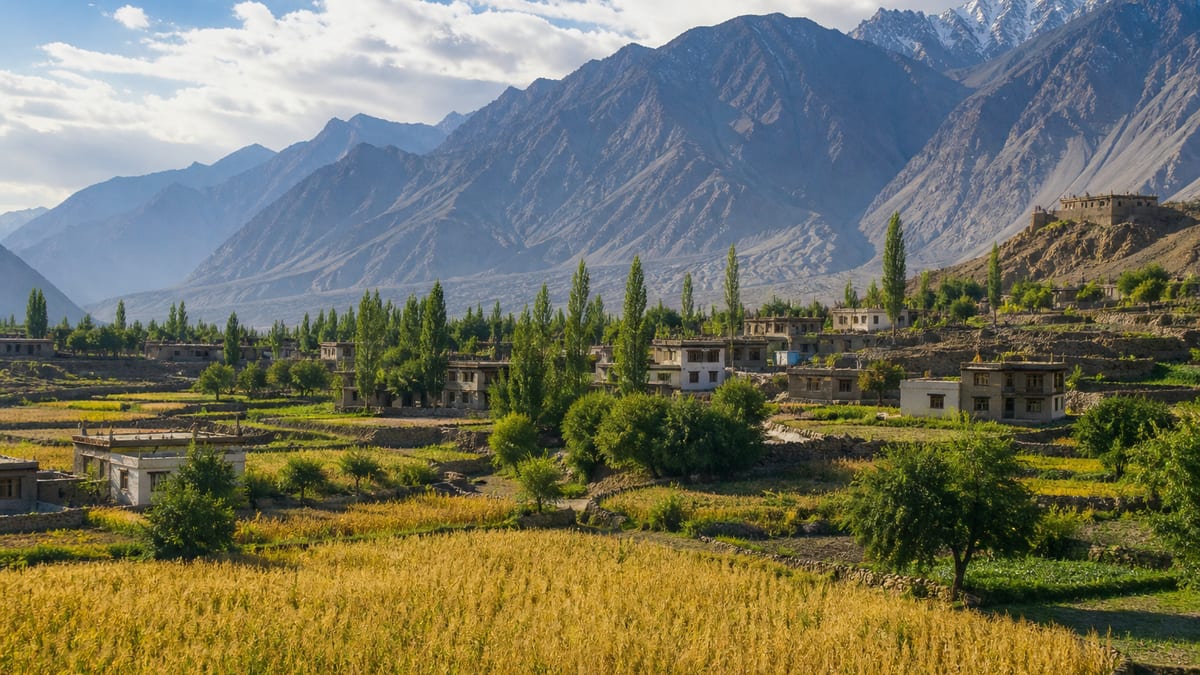
Shigar Valley is one of the most fascinating destinations in Gilgit-Baltistan, Pakistan. Located near Skardu, this beautiful valley combines dramatic mountains, fertile fields, traditional Balti villages, orchards, rivers, historic buildings and the remarkable Cold Desert. Shigar is much more than a scenic tourist destination. It is a place where history, culture, agriculture and mountaineering come together. The valley also serves as an important gateway toward the great Karakoram mountains, including K2 and the Baltoro Glacier.
About Shigar Valley
Shigar Valley is situated along the Shigar River and extends from the Skardu area toward Askole. The landscape changes dramatically as visitors travel through the valley. Near Shigar town, green fields, fruit trees and traditional settlements create a peaceful atmosphere. Farther north, the landscape becomes increasingly rugged, leading toward the high mountains and glaciers.
This combination of fertile agricultural land and spectacular mountain scenery makes Shigar one of the most distinctive areas of Baltistan. The valley is home to communities with a strong Balti cultural identity, and traditional houses, mosques, agricultural fields and local customs can still be found throughout the area.
History of Shigar
Shigar has a long and important history. For centuries, the valley was connected with trade and movement through the Karakoram. Its geographical location gave it importance as a corridor between different parts of the wider mountain region and Central Asia. Local rulers governed Shigar for generations, and the valley developed its own political, architectural and cultural traditions.
The history of Shigar is strongly connected with the Amacha ruling dynasty. The rulers of Shigar established their authority in the valley and built structures that reflected the traditions of the time. One of the greatest surviving examples of this heritage is Shigar Fort, locally known as Fong Khar. The name Fong Khar is commonly understood as meaning Palace on the Rock.
Shigar Fort dates back to the seventeenth century and served as a royal residence and centre of administration. Its architecture reflects the traditional building techniques of Baltistan, where stone and timber were combined to create strong structures suited to the mountainous environment.
Shigar Fort
Shigar Fort is perhaps the most famous historical landmark in the valley. Built using stone, timber and traditional construction techniques, the fort demonstrates the architectural character of old Baltistan. Its location beside the river, surrounded by orchards and mountains, gives it an especially impressive setting.
The fort was carefully restored as part of a heritage conservation project. The restoration preserved important elements of the original structure while adapting the building for modern visitors. Today, Shigar Fort functions as a heritage site and hotel, allowing visitors to experience traditional Balti architecture, historic rooms, wooden details, gardens and the cultural atmosphere of the former royal residence.
For travellers who want to experience the history of Shigar rather than simply see it, staying at Shigar Fort provides a distinctive opportunity. The fort combines historical surroundings with modern hospitality, making it one of the most memorable accommodation experiences in the valley.
Importance of Shigar Valley
Shigar Valley is important for several reasons. First, it has great cultural and historical value. Traditional Balti villages, mosques, local houses, agriculture and historic buildings reflect a culture that has developed in the mountains over many centuries.
Second, Shigar is agriculturally important. The Shigar River provides water for farming, allowing communities to cultivate fertile land in an otherwise dry mountainous environment. Apricots, apples, peaches, pears, grapes and walnuts are among the fruits associated with the valley. The green agricultural fields create a striking contrast with the surrounding dry mountains.
Third, Shigar is important for mountaineering and adventure tourism. The road through the valley continues toward Askole, which is associated with major trekking and mountaineering journeys toward the Baltoro Glacier and K2. Because of this, Shigar is often considered an important gateway to the great Karakoram.
Xaythang and the Cold Desert
One of the most unusual landscapes associated with Shigar is the Cold Desert, commonly known in the area as Sarfaranga Cold Desert. Locally, the desert is also referred to as Xaythang. The local understanding of the name is connected with the relationship of the people to their land and their traditional sense of ownership and belonging.
The use of the local name Xaythang is important because the land is not simply viewed as a tourist attraction. It is part of the environment, history and community life of the people living around Shigar. The connection between local communities and the land gives the landscape cultural significance in addition to its natural beauty.
The Cold Desert is a high altitude desert where sand dunes exist alongside some of the most dramatic mountains in the Karakoram. Visitors can see golden sand, rocky mountains, the river and snow covered peaks within the same landscape. This unusual combination makes the desert one of the most recognizable natural attractions of the Shigar region.
The Cold Desert is particularly beautiful during sunrise and sunset, when the changing sunlight creates different colours across the sand and surrounding mountains. Visitors come to the area for photography, sightseeing, jeep experiences and adventure activities. The annual Cold Desert Jeep Rally has also contributed to the popularity of the region as an adventure tourism destination.
Amburiq Mosque
Shigar is also home to important examples of traditional Balti religious architecture. Amburiq Mosque is one of the most famous historic mosques in the region. The mosque demonstrates traditional construction techniques using wood and stone and reflects the cultural and religious history of Baltistan.
The mosque is particularly valuable because it provides visitors with an opportunity to understand the architectural traditions of earlier generations. Its preservation has helped protect an important part of Shigar’s cultural heritage.
Other Attractions Around Shigar
Shigar Fort and the Cold Desert are not the only attractions in the area. The valley contains traditional villages, agricultural fields, orchards, rivers and mountain landscapes that are ideal for visitors interested in nature and culture.
Blind Lake, also known as Jarba Zhou Lake, is another scenic destination in the wider Shigar region. Surrounded by mountains and greenery, the lake provides a peaceful setting for photography and sightseeing.
The orchards and villages of Shigar are also worth exploring. During spring, fruit trees create beautiful scenery, while later in the year the valley becomes known for its agricultural produce. Walking through villages allows visitors to see traditional houses, irrigation channels, fields and everyday Balti life.
How to Reach Shigar
The easiest way to reach Shigar is to first travel to Skardu. Skardu can be reached by air from Islamabad, depending on flight schedules and weather conditions. From Skardu, Shigar is approximately 30 kilometres away, and the journey generally takes around 30 to 45 minutes by road, depending on the exact destination and road conditions.
Visitors can travel from Skardu to Shigar by private car, taxi or local transport. The road passes through the spectacular landscape around the Cold Desert before continuing toward Shigar town. The journey itself is part of the experience because travellers can see the contrast between the dry desert landscape, the Shigar River and the surrounding mountains.
Travellers continuing beyond Shigar toward Askole should make additional preparations because the road becomes more challenging and remote. Askole is an important starting point for several trekking and mountaineering expeditions in the Karakoram.
For visitors travelling by road from other parts of Pakistan, Skardu is generally the main access point. Travellers can reach the Skardu region through the road network connecting it with the rest of Gilgit-Baltistan and Pakistan before continuing toward Shigar.
Best Hotel in Shigar
For travellers looking for a heritage experience, Shigar Fort is one of the most distinctive accommodation options in the valley. The historic fort has been converted into a heritage hotel while retaining much of its traditional architectural character.
Staying at Shigar Fort gives visitors an opportunity to experience the atmosphere of a historic royal residence. Traditional architecture, gardens, wooden details and mountain surroundings make the property particularly attractive to travellers interested in history, culture, photography and architecture.
There are also other hotels, guesthouses and local accommodation options in and around Shigar. Visitors can choose accommodation according to their budget, travel plans and preferred level of comfort.
Best Time to Visit Shigar
The most suitable period for general sightseeing in Shigar is generally from spring through autumn, when many roads and attractions are more accessible. Spring is attractive because fruit trees begin to blossom and the valley becomes greener. Summer provides opportunities for sightseeing and mountain travel, while autumn brings changing colours and clear views of the surrounding mountains.
Winter can be extremely cold, and weather conditions may affect transportation and access to some areas. Visitors travelling during colder months should be prepared for low temperatures and changing mountain weather.
Culture and Local Life
The culture of Shigar is closely connected with the mountains, agriculture, religion and community traditions of Baltistan. The Balti people have developed a distinctive cultural identity shaped by the geography and history of the region.
Traditional houses, local food, agricultural practices, handicrafts and village life provide visitors with opportunities to experience a side of Gilgit-Baltistan beyond its famous mountains. Hospitality is an important part of local life, and visitors can often learn about the history and traditions of the valley through conversations with local residents.
Visitors should respect local customs and traditions while exploring the valley. Religious sites should be visited respectfully, and travellers should avoid damaging historic structures or leaving waste in natural areas.
Popular Destinations in Gilgit-Baltistan
Shigar is one of many remarkable places to explore in Gilgit-Baltistan. Travellers interested in discovering more valleys, lakes, mountains, cultural sites and natural attractions can explore the Popular Destinations of Gilgit-Baltistan and find more places to include in their travel plans.
Gilgit-Baltistan Travel Guide
Planning a journey through the mountains requires information about destinations, transportation, weather, accommodation and local travel conditions. For additional information and useful travel resources, visitors can explore the Gilgit-Baltistan Travel Guide before planning their trip.
Why Shigar Should Be on Your Travel List
Shigar offers an unusual combination of experiences within a relatively small region. A traveller can explore a historic royal fort in the morning, visit traditional villages and orchards during the day, and watch the sunset over the Cold Desert in the evening.
The valley also provides access to some of the most spectacular mountain landscapes in northern Pakistan. Its connection with Askole, the Baltoro Glacier and the K2 region makes it particularly significant for trekkers, climbers and adventure travellers.
Conclusion
Shigar Valley is a remarkable destination where the history of Baltistan meets the landscapes of the Karakoram. Its historic Shigar Fort, traditional villages, fertile orchards, ancient cultural sites, dramatic mountains and unusual Cold Desert make it different from many other destinations in northern Pakistan.
The valley is important because it connects community life, cultural heritage, agriculture and some of the world’s greatest mountain adventures. From the peaceful orchards around Shigar town to the golden dunes of Xaythang and the remote route toward Askole and the Baltoro Glacier, the region offers a remarkable variety of experiences.
A journey to Shigar is therefore not simply a trip to see mountains. It is an opportunity to discover Balti culture, understand a historic mountain community, experience traditional architecture and witness a landscape where desert, river, agriculture and snow covered peaks exist together. For anyone travelling through Skardu and exploring Gilgit-Baltistan, Shigar Valley offers a memorable combination of history, culture, nature and adventure.