Shigar Treks & Expeditions is on the registered tour operator list published by the Directorate of Tourists Services (DTS) Gilgit-Baltistan, with licence reference DTS-GB-009. That’s what the official list confirms — and it’s all we’ll say about the company itself. The list doesn’t say which treks or expeditions it runs, whether it’s based in Shigar, what it charges or who its guides are. If you’re considering Shigar Treks & Expeditions, contact the company yourself and get every detail confirmed in writing before you pay.
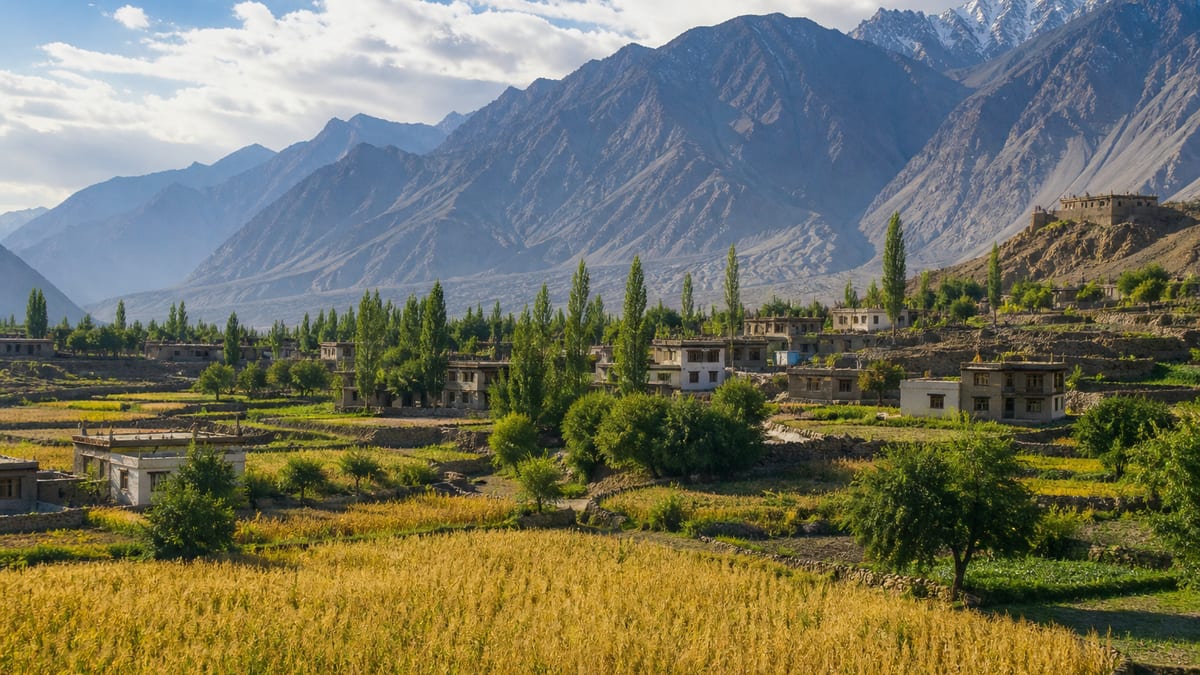
The name ties the company to a place, so this page is about that place first. Shigar is where Baltistan’s road ends and the high Karakoram begins. Every expedition to K2 drives through it — and plenty of travellers rush past without stopping. Below we cover Shigar as a destination in its own right, the road north to Askole, where the permit rules begin, and what to ask any operator who plans a trip through the valley.
What the official listing confirms
The entry is taken from DTS’s Registered Tour Operators list. DTS is part of the Tourism, Sports, Culture, Archaeology & Museums Department, Government of Gilgit-Baltistan, and we read the list most recently on 27 August 2026.
- It confirms: the business name as printed, and that it was on the list with reference DTS-GB-009 when we read it.
- It doesn’t confirm: whether the company is trading today, where its office is, which routes it runs, its prices, safety record or customer experience.
A place name in a company name isn’t proof of where the company works, so ask. The department FAQ says tour operators must hold a tourism department licence, comply with safety standards, provide trained and licensed guides and follow department guidelines; see tour operator regulations. This site doesn’t sell tours, take bookings or endorse operators.
Shigar in brief
Shigar District is one of Gilgit-Baltistan’s ten districts, with its headquarters at Shigar town. Our Shigar destination guide notes that the tourism department describes it as a gateway to the great Karakoram and an ancient trading route between Central Asia and the subcontinent. The guide gives the population as about 84,608. Balti is the main language, Urdu is commonly understood and English is used in tourism services.
According to our Shigar Valley page:
- Shigar town sits at about 2,250–2,300 m, roughly 30–35 km and 45 minutes to an hour by paved road from Skardu.
- The valley runs about 170 km from Skardu to Askole, the last village before the Baltoro Glacier.
- People are Balti-speaking. Most residents are Shia, with Noorbakhshi and Sunni communities.
- Best months are April to October. Blossom comes in late March and April, and the poplars turn gold in October.
What to see before you head for the glaciers
Shigar rewards a day or two on its own, and at about the same height as Skardu it makes an easy acclimatisation stop.
Shigar Fort (Fong Khar)
The “Palace on the Rock” was built against a huge boulder in the seventeenth century. Aga Khan Cultural Service Pakistan restored it between 1999 and 2004. It’s now a museum and a heritage hotel, and it won a UNESCO Asia-Pacific Heritage Award in 2006.
Amburiq Mosque
One of the oldest mosques in Baltistan, linked by tradition to Sayed Ali Hamadani, the 14th-century preacher who brought Islam to the valley. It was restored in 1998–2000 and won a UNESCO Award of Merit in 2005.
Khanqah-e-Muallah
A historic Sufi lodge in Shigar town. Treat it as a place of worship — visit outside prayer times and follow local guidance.
Sarfaranga cold desert
Sand dunes at about 2,300 m where the Shigar Valley meets the Skardu Valley. A jeep rally has been held there every year since 2017. Our cold desert page has more.
Blind Lake, and the other Blind Lake
Our Shigar guide lists a Blind Lake, also called Jarba Zhou or Zharba Tso, between Skardu and Shigar near the Sarfaranga dunes. Don’t mix it up with Sheosar Lake on Deosai, whose name also means “Blind Lake”. Our Sheosar Lake guide explains the difference. If you’re booking a day out, say clearly which one you mean.
The road north: Shigar to Askole
Beyond Shigar, the paved road becomes a jeep track up the Braldu valley to Askole. Our Shigar Valley page says the drive takes 6–8 hours from Skardu. The destination guide notes that the northern part of the district leads towards the Braldo (Braldu) Valley, the Baltoro Glacier and the routes for K2, Broad Peak and the Gasherbrum group.
That track is where an ordinary sightseeing trip becomes something else. Our Shigar guide is clear: travelling towards K2 needs careful preparation, the right equipment, experienced guides and a proper respect for altitude and mountain conditions. In summer, the same page notes, jeeps stream up the valley in expedition season — and rain can bring flash floods on side streams. Ask your operator what vehicle they’ll use on the Braldu track and what happens if a section washes out.
Where the permit rules begin
Our Shigar Valley page says no permit is needed for the valley itself, and that restricted-zone rules start beyond Askole. Under the department FAQ, treks and climbs have to be registered, any activity in a restricted area needs its permit first, and hiring a licensed guide and porter there is compulsory. See trekking and mountaineering regulations.
The permits guide explains the rest. It notes that the Baltoro lies within Central Karakoram National Park, so a national park fee applies on top of the trekking permit. For foreigners, the Baltoro is a restricted zone needing a trekking permit through a licensed operator; Pakistanis register and pay a park fee. Climbers need a climbing permit, a royalty, a registered tour company and insurance. We don’t publish fees, because they change by official notification.
For the trek itself, see our K2 Base Camp page, which covers the route, the season and the camp at about 5,000–5,150 m on the Godwin-Austen Glacier. Peak records for K2, Broad Peak and Gasherbrum I are in the mountains section.
Porters, camping and the people of the valley
The Braldu villages supply much of the labour that makes Baltoro trips work. The FAQ says porter and mule hiring is regulated, needs licensed porters and mule owners, and includes welfare rules such as not overloading animals and providing adequate food and water. See porter and mule hiring regulations. Camping needs a designated site, a permit and leave-no-trace practice; see camping regulations.
Ask any operator how porters are paid, what loads they carry, and what kit and food they’re given. A good operator answers without hesitating.
Culture and conduct in Shigar
Shigar is a conservative valley. Dress modestly, take your shoes off where asked, and ask before photographing people — especially women. As a mainly Shia valley, Shigar observes Muharram with processions and mourning days — plan visits to religious sites around them. Even a few words of Balti go a long way. Read visiting cultural sites and visitor customs and dress before you go. Bring rupees from Skardu — few places take cards.
Questions to ask Shigar Treks & Expeditions, or any operator
- Can you confirm your DTS registration and the licence reference DTS-GB-009?
- Where is your office, and do you work mainly in Shigar or across the region?
- Does my trip stay in the valley, or go beyond Askole into restricted areas?
- Which permits apply for my nationality, and who arranges them?
- Is the trip a trek or a climb, and is royalty involved?
- What vehicle will you use on the Braldu track, and what if it’s blocked?
- Who are the licensed guide and porters, and how are porters equipped and paid?
- How many acclimatisation days are built in before the high ground?
- What insurance is required, and for whom?
- What’s the cancellation and refund policy if a Skardu flight or the road delays us?
The site’s hiring a tour operator guide and hiring registered operators for international visits explain where the official lists live.
Where to go next
- Compare other names on the registered tour operators directory.
- Plan your arrival with Skardu airport access and the Skardu destination page.
- Pack with the packing guide, and save the tourist police contact guide.
Frequently asked questions
Is Shigar Treks & Expeditions a registered tour operator?
Yes, by name: the DTS Gilgit-Baltistan list showed it under DTS-GB-009 when we checked on 27 August 2026. Registrations can lapse, so ask the company to confirm its status before booking.
Is Shigar Treks & Expeditions based in Shigar?
The official list doesn’t give an address, and a place name doesn’t prove where a company works. Ask the company directly.
Which treks does Shigar Treks & Expeditions run?
The list doesn’t say, and we don’t publish services we can’t verify. Ask the company and get the answer in writing.
How far is Shigar from Skardu?
Our Shigar Valley page puts Shigar town about 30–35 km from Skardu, 45 minutes to an hour on a paved road.
Do I need a permit to visit Shigar Valley?
Not for the valley itself. Our Shigar Valley page says restricted-zone rules start beyond Askole, on the way to the Baltoro.
How long is the drive from Skardu to Askole?
About 6–8 hours. The valley runs about 170 km from Skardu to Askole, and beyond Shigar the road becomes a jeep track up the Braldu valley.
What are the main sights in Shigar?
Shigar Fort (Fong Khar), Amburiq Mosque, Khanqah-e-Muallah and the Sarfaranga cold desert, plus village walks among the orchards.
When is the best time to visit Shigar?
April to October. Late March and April bring blossom, summer is expedition season, and October brings golden poplars.
Which Blind Lake is in Shigar?
The Shigar one is Zharba Tso, also called Jarba Zhou, near the Sarfaranga dunes. Sheosar Lake on Deosai also means “Blind Lake” but is a different place.
Can I book a Shigar trip through this website?
No. We publish travel information only. Bookings, deposits and contracts are between you and the operator.
—
Source: Registered Tour Operators (Directorate of Tourists Services, Gilgit-Baltistan), Tourism, Sports, Culture, Archaeology & Museums Department, Government of Gilgit-Baltistan. Accessed 27 August 2026. Valley, route and permit details are from this site’s own guides; confirm current conditions before you travel.