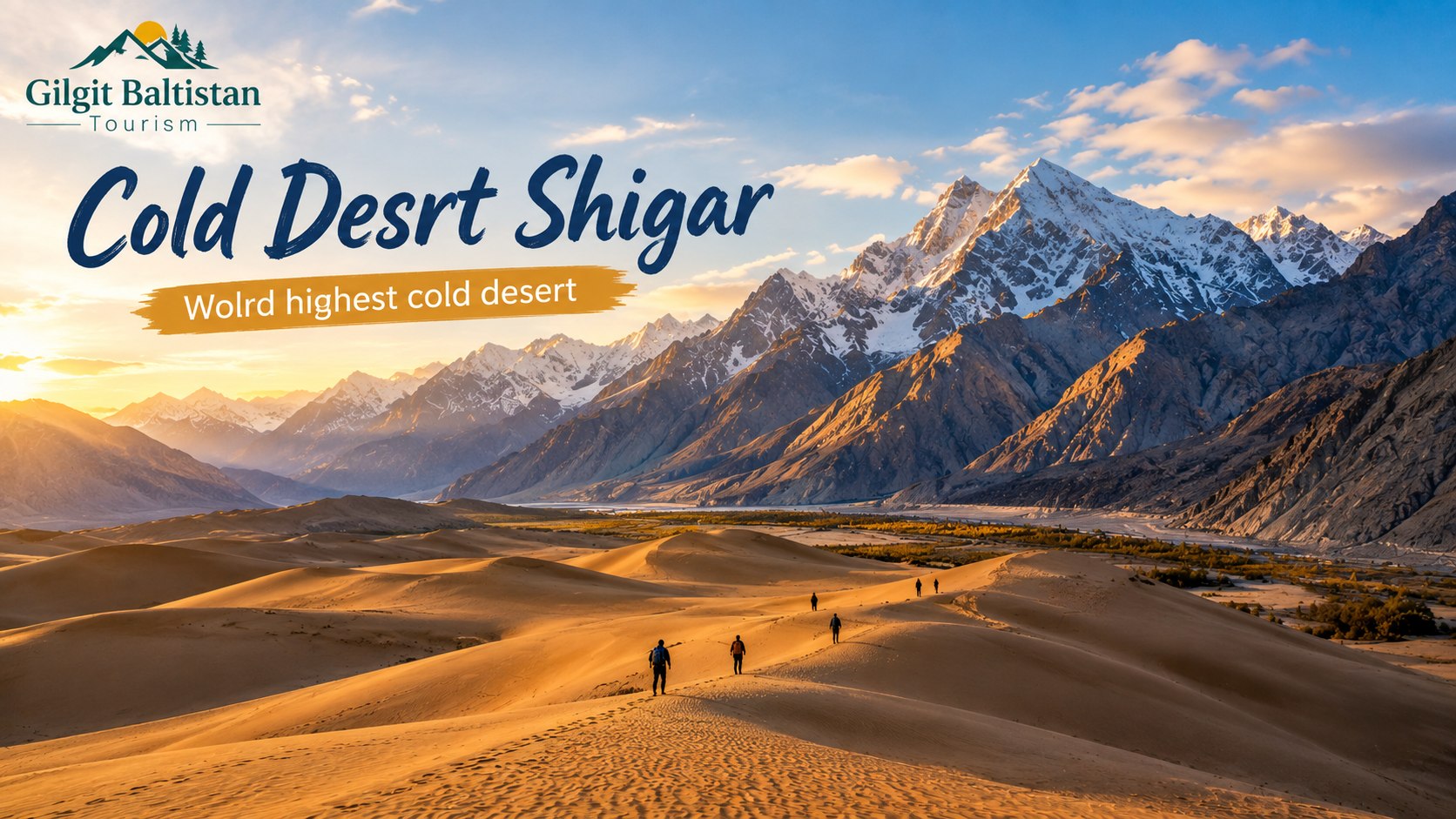
Where Golden Dunes Meet the Mountains of Gilgit-Baltistan
Introduction
When people imagine Gilgit-Baltistan, they usually picture towering snow covered mountains, turquoise lakes, green valleys, glaciers, and winding mountain roads. Shigar offers something wonderfully different. Here, in the high mountain landscape of Baltistan, visitors can discover a striking stretch of golden sand surrounded by rugged mountains. This is the Cold Desert of Shigar, one of the most unusual and memorable landscapes to experience during a journey through the region.
The beauty of Cold Desert Shigar comes from the contrast. Sand dunes spread across the valley while enormous mountains rise in the distance, creating a landscape that seems almost impossible at first sight. It is this meeting of desert and mountain scenery that makes the destination particularly attractive to photographers, nature lovers, road trip travelers, families, and visitors looking for places away from the usual tourist routes.
For anyone planning a trip to Skardu and Shigar, the Cold Desert is an excellent place to add to the itinerary. A visit does not require a long expedition or technical climbing experience. It can instead become part of a wider journey through Shigar Valley, allowing travelers to experience the landscape, culture, history, and natural beauty of Baltistan in a single trip.
Location of Cold Desert Shigar
Cold Desert Shigar is located in Shigar Valley in the Baltistan region of Gilgit-Baltistan, northern Pakistan. Shigar lies to the east of Skardu and is one of the important valleys through which travelers explore the spectacular mountain environment of the Karakoram.
The journey from Skardu toward Shigar gradually introduces visitors to a changing landscape. Urban surroundings give way to villages, agricultural land, mountain slopes, river scenery, and increasingly dramatic views of the surrounding mountains. The appearance of sandy terrain among these high mountains makes the Cold Desert especially distinctive.
The destination is generally visited as part of a Shigar Valley trip rather than as an isolated journey. Its location also makes it possible for travelers to combine the desert experience with historical and cultural attractions in the surrounding area. Visitors should remember that conditions on mountain roads can change according to weather and season, so checking current local travel information before setting out is always sensible.
What Makes Cold Desert Shigar Special
The most fascinating feature of Cold Desert Shigar is its unusual combination of geography. Traditional deserts are normally associated with hot climates and vast lowland plains, but this landscape exists in a high mountain environment where winter temperatures can become extremely cold.
The golden sand creates a beautiful foreground while the surrounding mountains provide an enormous natural backdrop. Depending on the season and time of day, the colors can change dramatically. Morning light can produce soft golden tones across the dunes, while evening sunlight can create deeper shadows and highlight the rugged shapes of the mountains.
For visitors, the experience is not simply about seeing sand. It is about seeing two very different landscapes together. A traveler can look across the dunes and then toward enormous mountain walls rising around the valley. That contrast gives Cold Desert Shigar its identity and makes it one of the more distinctive photographic landscapes in Gilgit-Baltistan.
A Landscape for Photography
Cold Desert Shigar is a natural attraction for landscape photographers. The combination of sand, mountains, open sky, changing light, and seasonal conditions provides countless opportunities for photographs. Early morning and late afternoon are particularly attractive times for photography because the lower angle of the sun creates stronger shadows and brings out the texture of the dunes. On clear days, the mountains can appear sharply defined against the sky, while changing cloud conditions can give the landscape a more dramatic character. Travelers using smartphones can also capture excellent photographs without professional equipment. Wide landscape views, footprints across the sand, mountain silhouettes, and close details of the dunes can all create memorable images. Visitors should take care when choosing photography locations and should avoid damaging vegetation or entering private land. If photographing local residents, it is respectful to ask permission first.
Importance of Cold Desert Shigar for Tourism
Cold Desert Shigar has an important role in the growing tourism appeal of Shigar Valley because it offers a type of landscape that complements the region’s better known attractions. Gilgit-Baltistan is already famous for its mountains and lakes, but destinations such as this show that the region has much greater geographical diversity. The desert can encourage visitors to spend additional time in Shigar rather than simply passing through the valley. Longer stays can benefit local accommodation providers, restaurants, drivers, guides, shops, and other businesses that depend on tourism. The attraction also has potential for photography tourism, family travel, cultural tourism, road trips, and nature based experiences. As more travelers discover lesser known destinations, Cold Desert Shigar can become an important part of the wider tourism story of Baltistan.
At the same time, tourism development should be balanced with environmental protection. The landscape is valuable precisely because it remains largely natural. Careful tourism can help local communities benefit economically without unnecessarily changing the character of the desert.
Facilities for Visitors
Cold Desert Shigar is best understood as a natural attraction rather than a highly developed commercial tourist park. Travelers should not expect extensive facilities directly among the sand dunes. Most accommodation, restaurants, shops, transport services, and other everyday facilities are found in nearby populated areas and especially in Skardu and Shigar. Travelers planning a visit should therefore carry basic necessities with them, particularly drinking water, sun protection, suitable clothing, personal medicines, and any snacks they may need during their outing. Depending on the season, temperatures can vary significantly between daytime and evening, so visitors should dress accordingly.
Shigar and Skardu provide more practical bases for travelers who want comfortable accommodation and access to food and transport. Staying in the area for more than one day also gives visitors the opportunity to explore the surrounding valley instead of rushing through the desert as a short stop.
Visitors who are unfamiliar with mountain roads may find it useful to arrange transportation with someone experienced in the local area. A local driver or guide can also help travelers understand the surrounding landscape and identify other worthwhile places to visit.
Best Time to Visit
The experience of Cold Desert Shigar changes throughout the year. The warmer travel months are generally more convenient for exploring many parts of Gilgit-Baltistan because roads and outdoor conditions are often more suitable for tourism. During this period, visitors can combine the desert with Shigar’s cultural attractions and other destinations around Skardu. Autumn can bring a particularly beautiful atmosphere to the region, with changing colors in the valleys and cooler temperatures. Winter offers a completely different experience because the surrounding mountains may be covered with snow, creating an extraordinary contrast with the sandy landscape.
Winter travel, however, requires more preparation. Temperatures can become very cold and mountain roads may be affected by snow, ice, or changing weather. Travelers should check current conditions before making a journey and should avoid relying on outdated travel information.
How to Reach Cold Desert Shigar
Most visitors reach Shigar after traveling through Skardu. Skardu serves as one of the major tourism centers of Baltistan and is an important starting point for exploring destinations throughout the surrounding region. Travelers can reach the area by air or road depending on their travel arrangements and current conditions. From Skardu, the journey toward Shigar continues by road through a landscape that gradually becomes more rural and mountainous. The journey itself is part of the attraction. The road passes through changing scenery, with mountains, villages, cultivated areas, and river landscapes appearing along the way. Travel time can vary depending on weather, road conditions, traffic, and the exact location being visited. Because mountain travel can be affected by sudden changes in weather and road conditions, visitors should check current local information before beginning their journey.
Shigar Valley and Cultural Tourism
A visit to Cold Desert Shigar becomes even more rewarding when combined with the cultural heritage of the valley. Shigar has a long history and a distinctive local identity that can be seen in its traditional settlements, architecture, agriculture, and community life. One of the most important attractions in the area is Shigar Fort, a historic structure that provides visitors with an opportunity to learn more about the heritage of Baltistan. Exploring the fort and surrounding areas allows travelers to see a different side of the region beyond its mountains and natural scenery. Local villages also offer an opportunity to experience the everyday environment of Baltistan. Travelers should remember that these are living communities rather than tourist displays. Respecting local customs, asking permission before photographing people, and avoiding unnecessary disturbance are important parts of responsible travel.
Things to Do Around Cold Desert Shigar
A visit to the Cold Desert can be combined with several other experiences in the Shigar and Skardu area. Photography is naturally one of the main activities, but visitors can also enjoy scenic drives, walking, sightseeing, cultural exploration, and exploring nearby valleys and villages. Travelers interested in history can include Shigar’s heritage sites in their itinerary, while nature lovers can spend additional time exploring the mountain scenery surrounding the valley. Those interested in adventure tourism can use Shigar and Skardu as bases for more demanding mountain activities, although technical climbing and high altitude expeditions require separate planning and professional support.
The best itineraries are often those that allow enough time to slow down and appreciate the landscape rather than attempting to visit too many places in a single day.
Responsible Tourism in Cold Desert Shigar
The natural character of Cold Desert Shigar is one of its greatest attractions, and protecting that character should be a priority for every visitor. Travelers should take their rubbish with them, avoid leaving plastic or food waste on the sand, and use existing tracks where possible. Driving unnecessarily across fragile natural areas can damage the landscape and disturb the environment. Visitors should also avoid collecting rocks, plants, or other natural materials as souvenirs. Tourism can have a positive impact when visitors support local businesses. Choosing local accommodation, transport, guides, restaurants, and shops where appropriate helps ensure that tourism income reaches communities in the region.
Respect for local culture is equally important. Travelers should dress appropriately for the area, respect private property, and ask before photographing people or entering private spaces.
Safety and Travel Advice
Although Cold Desert Shigar may look peaceful and easy to explore, it is still part of a high altitude mountain environment. Visitors should be prepared for strong sunlight during the day and considerably colder temperatures after sunset. Drinking enough water, protecting yourself from the sun, wearing suitable footwear, and carrying basic personal supplies can make a visit more comfortable. Families traveling with children should keep an eye on changing weather and avoid allowing children to wander into unfamiliar areas. Mountain roads can also present challenges, particularly after heavy rain, snowfall, landslides, or other adverse weather. Travelers should allow extra time for journeys and follow current local advice.
The wider mountains of Gilgit-Baltistan can contain serious hazards such as avalanches, rockfall, sudden storms, and difficult terrain. Visitors should understand the difference between sightseeing and high altitude adventure activities and should use experienced professionals for activities that require specialist skills.
Why Cold Desert Shigar Should Be on Your Travel List
Cold Desert Shigar deserves attention because it offers something genuinely different. A traveler can spend the morning exploring the cultural heritage of Shigar, enjoy the dramatic mountain scenery during the journey, and then find themselves standing among golden dunes with enormous Karakoram mountains rising in the background. The destination also demonstrates why Gilgit-Baltistan cannot be described through a single type of landscape. The region contains green valleys, rivers, glaciers, lakes, forests, rocky mountains, snow covered peaks, and desert like environments. Cold Desert Shigar adds another remarkable chapter to that story. For photographers, it offers unusual compositions. For families, it provides a memorable scenic stop. For road trip travelers, it adds variety to the journey. For international visitors, it provides another reason to explore beyond the most frequently photographed destinations.
Conclusion
Cold Desert Shigar is one of the most distinctive natural attractions in Gilgit-Baltistan. Its golden dunes surrounded by dramatic mountains create a landscape that is both peaceful and extraordinary, offering visitors a completely different perspective on the geography of Baltistan. Its convenient connection with the wider Shigar and Skardu tourism region makes it easy to include in a broader travel itinerary. Visitors can combine the desert with cultural sites, historic places, mountain scenery, villages, and other attractions across Baltistan. The true charm of Cold Desert Shigar lies in its natural setting. There is no need for elaborate attractions to make the place memorable. The sand, mountains, light, open sky, and surrounding valley create an experience that stays with visitors long after they leave. For anyone planning a journey through Gilgit-Baltistan, Cold Desert Shigar is a destination worth discovering. It is a place where the unexpected becomes part of the adventure, and where the golden landscape of the desert meets the powerful mountain scenery of the Karakoram.