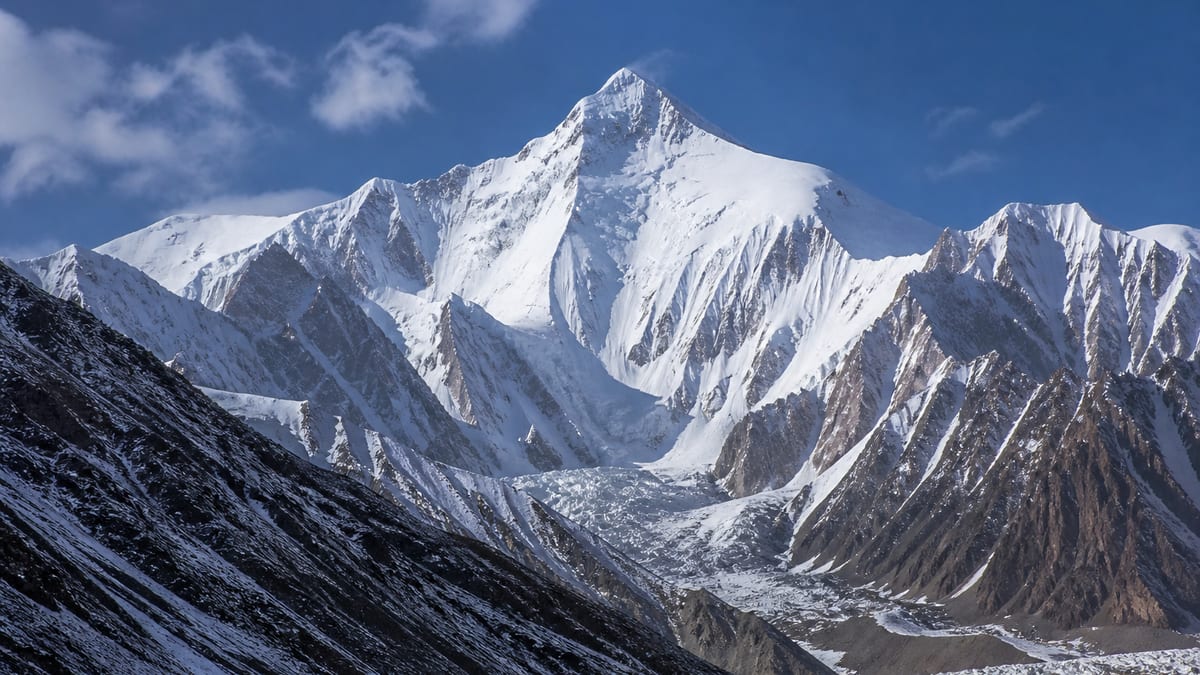
Disteghil Sar Main is one of the tallest entries on the Gilgit-Baltistan permit list that doesn’t reach eight thousand metres. The NADRA List of Peaks, in the snapshot dated 2026-08-26, gives it 7,885 metres. Of the 104 rows that carry a height, only seven sit above it. Ninety-five sit below.
At that height, one question shapes almost every other part of an expedition: will anyone breathe bottled oxygen, and if so, when? It affects weight, porter loads, budget, the summit-day timetable, rescue planning and even how a team talks about success afterwards. This page doesn’t tell you which answer is right. It sets out how to reach a decision deliberately, months before departure, rather than in a tent at the top camp. Oxygen is a planning choice, not a last-minute decision in the top camp.
What the official record says
- Name on the list: Disteghil Sar Main
- Height: 7,885 m
- Rows higher: 7
- Rows lower: 95
- Shares its height with: Distaghil Sar – II (note the different spelling)
- District, route, grade, coordinates: none given
Where it sits among the tallest rows
| Entry | Height | Gap to Disteghil Sar Main |
|---|---|---|
| Gasherbrum-III | 7,952 m | 67 m higher |
| Gasherbrum-IV | 7,925 m | 40 m higher |
| Disteghil Sar Main | 7,885 m | — |
| Distaghil Sar – II | 7,885 m | same figure |
| Kunyang Chhis Main | 7,852 m | 33 m lower |
| Link Sar West | 7,821 m | 64 m lower |
| Baltoro Kangri-IV | 7,800 m | 85 m lower |
Two rows carry 7,885 m, spelled “Disteghil” and “Distaghil”. The list doesn’t explain whether they describe one summit, two summits or a clerical repeat. When you apply, write the name exactly as it appears on the row you mean and quote the height beside it.
Why oxygen becomes a live question at 7,885 m
Most teams on six- and low seven-thousand-metre peaks never consider bottled gas. Near eight thousand metres the calculation shifts. The air holds roughly a third of the oxygen pressure found at sea level, thinking slows, hands and feet chill faster, and small errors take longer to notice. Some climbers manage without any supplement; others judge the margin too thin. Both positions are held by experienced people. What matters is that your team picks one with eyes open.
Four questions to settle at the planning table
1. What is the team’s stated goal? If the aim is to climb in a particular style, say so in writing. If the aim is the safest realistic summit attempt, that may point the other way. Mixed goals inside one team cause friction high on the hill.
2. Who has been this high before, and how did they cope? Past performance near 7,500–8,000 m is the best guide anyone has. A climber who has never been above 7,000 m is guessing about how their body will respond.
3. Will oxygen be held only for emergencies? Some teams carry a small reserve for medical use even when nobody plans to climb on it. If you choose that route, decide who carries it, where it’s cached and who is trained to fit a mask and regulator.
4. Can the logistics support it? Bottles are heavy and must be moved up the mountain by someone. That means extra loads, extra carries and extra days. Ask your operator whether they can supply, transport and retrieve cylinders, and whether import or transport rules apply. We don’t quote cylinder prices or brands.
A simple decision grid
Score each statement 0 (disagree) to 2 (agree), individually first, then compare as a group:
| Statement | Score |
|---|---|
| I have slept above 7,000 m and recovered well | |
| I’ve climbed past 7,500 m without serious symptoms | |
| I’m comfortable turning around if I’m moving too slowly | |
| Our team can carry the extra loads oxygen requires | |
| We have someone trained in mask and regulator use |
Low scores on the first three lines and high scores on the last two lean towards using oxygen. The reverse leans towards climbing without. A split vote is the signal to keep talking, not to let each person decide alone on summit morning.
Getting the hardware right if you use it
Masks freeze, regulators leak and connections crack in cold. If you go with bottled gas, rehearse with the exact kit at home, wearing the gloves you’ll wear on the mountain. Learn how to read flow rates and check pressure. Agree which flow each climber will use on the push and for sleeping, if any. Carry spare O-rings or seals as your supplier advises.
If you choose to climb without it
That decision brings its own homework. Build more acclimatisation days into the calendar, set a firm turnaround time based on pace rather than clock alone, and agree what everyone will do if a partner becomes confused or unsteady. Consider keeping an emergency cylinder at a high camp anyway. Talk to a doctor experienced in high-altitude medicine about the risks, particularly for anyone with heart or lung history.
How the choice changes the schedule
Oxygen plans add carry days on the way up and clean-up days on the way down. Climbing without may add rest days for slower adaptation. Either way, sketch both versions of the calendar early, then see which fits the leave everyone has. Our general guide to the best time to visit Gilgit-Baltistan is a starting point for seasons; the list gives none for this peak.
Talking about success honestly
Teams that climb with bottled gas and teams that climb without both sometimes blur the details later. Agree now how you’ll describe your ascent, whatever happens. Note in your trip log who used oxygen, from which camp and at what flow. That record helps the next party reading your account judge the peak fairly, and it keeps arguments out of the team once you’re home. It also gives your doctor useful information if anyone felt unwell high up and needs follow-up care afterwards.
Revisiting the decision on the mountain
A plan made at home should be reviewed after the first rotations. If someone is adapting slowly, or the weather means fewer, shorter summit windows, the original choice may no longer fit. Agree in advance who calls that review and how the team will settle it.
Permits for a near-eight-thousander
Paperwork follows the same official channel as any big peak in the region. Read applying for trekking and mountaineering permits and the trekking and mountaineering regulations. Because two rows share 7,885 m, pairing the precise name with the height on every form avoids a permit being issued for the wrong entry. Royalty and any liaison requirement are set at the time of application; we don’t restate amounts.
Questions to put to a prospective operator
Use our hiring a tour operator guide, then add oxygen-specific questions. Do you supply cylinders and regulators? Who carries them? What happens to empties? How many high-altitude staff have experience above 7,500 m? A clear, written answer to each is worth more than a glossy itinerary.
Getting there without losing margin
A trip to a peak this tall is long, and early delays tempt teams to cut acclimatisation later. Read getting to Gilgit-Baltistan and keep at least one spare day before the walk-in starts. The list doesn’t name a trailhead, so confirm the approach with your operator. If oxygen is coming from outside the country, also ask how long shipping and clearance usually take, because a late consignment can hold up the whole team at the roadhead.
Clearing the mountain afterwards
Empty cylinders left high are an old problem in the greater ranges. If you carry oxygen up, plan how every bottle comes down. Follow the camping regulations on waste, and agree that retrieval is part of the job, not an afterthought once the summit photos are done.
Emergency contacts
Write a one-page emergency sheet: who decides on descent, where oxygen is cached, and who at home holds your plan. In Gilgit-Baltistan, the Tourist Police answer on 1422 within the region and 05811-930055 from outside it.
Packing beyond the cylinders
Warm sleeping kit and reliable stoves matter as much as gas bottles, because rest and hydration help the body cope at height. Start from our packing for Gilgit-Baltistan list and add mountain-specific gear with your operator.
Frequently asked questions
How high is Disteghil Sar Main on the official list?
7,885 metres, according to the NADRA Gilgit-Baltistan List of Peaks, snapshot 2026-08-26.
How many listed peaks are taller?
Seven of the 104 rows with a height. Ninety-five are lower.
Is Distaghil Sar – II the same peak?
The list gives it a separate row at the same 7,885 m, with a different spelling. It doesn’t say how the two relate, so treat them as separate entries until an official source clarifies.
Do you need supplementary oxygen to climb it?
Nobody can answer that for you. It depends on experience above 7,500 m, team goals and logistics. Use the planning questions above and talk to a high-altitude doctor.
Should a team without oxygen carry an emergency bottle?
Many teams do. Decide in advance who carries it, where it’s kept and who knows how to fit it.
Does oxygen change the length of the trip?
Usually, yes. Moving cylinders up and down adds carries. Climbing without may need extra acclimatisation days. Draw up both calendars.
What happens to empty bottles?
They should come down. Agree with your operator who retrieves them, and follow camping and waste rules.
Does the list give a route or a grade?
No. It lists only the name and height.
Where do I start the permit process?
With the official steps in our trekking and mountaineering permits guide.
Who do I call in an emergency?
The Gilgit-Baltistan Tourist Police: 1422 inside the region, 05811-930055 from outside.
Source
Name, height and rank come from NADRA’s Gilgit-Baltistan List of Peaks (Pakistan Online Visa System), snapshot 2026-08-26, and our live page. The row lists no district, route, grade or coordinates.