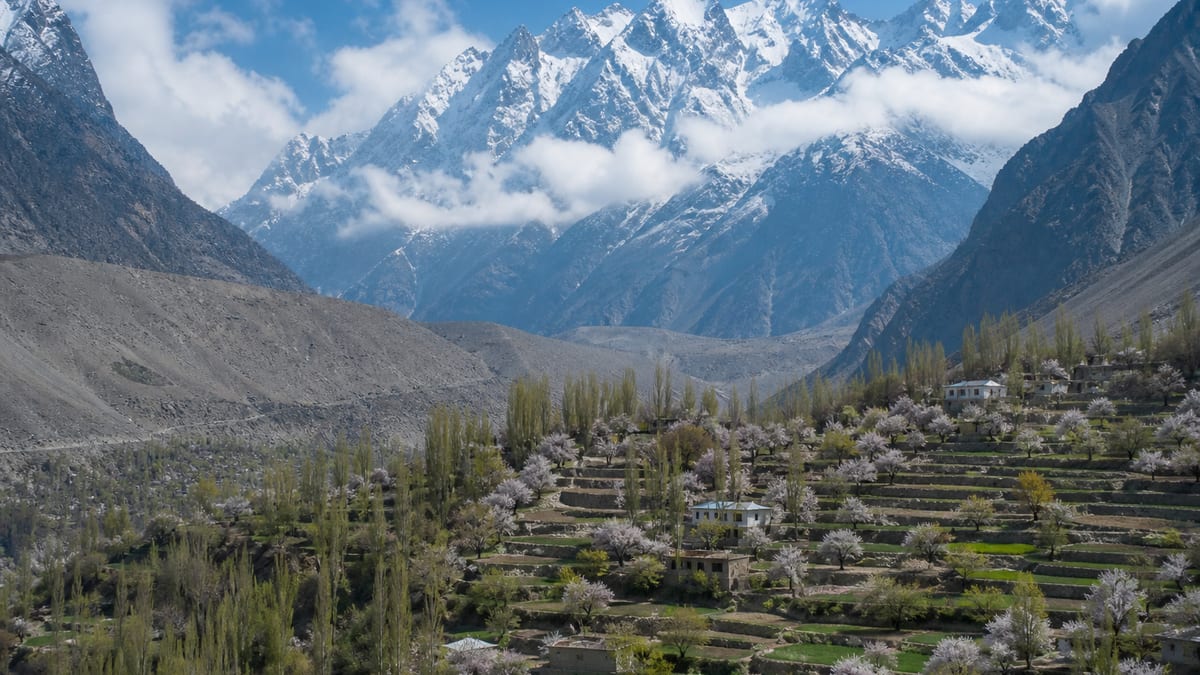
Hunza Valley is the stretch of the Hunza River valley in northern Gilgit-Baltistan that runs from Nagar and Rakaposhi up to the Chinese border at Khunjerab. Its main town, Karimabad, sits at about 2,400–2,500 m, about 100 km and 2–3 hours from Gilgit. To get there from Islamabad, either fly to Gilgit (about 1 hour, weather permitting) and drive on, or take the Karakoram Highway, which is about 600–650 km and 14–20 hours. The best time to visit Hunza is mid-March to April for blossom, or October for autumn gold. June to August gives the fullest access, but it’s also the busiest season.
Details were checked in October 2026. Fort tickets, fares and road status change, so confirm them locally.
Hunza quick facts
| Fact | Details |
|---|---|
| Main town | Karimabad (old Baltit), about 2,400–2,500 m |
| Areas | Central Hunza (Aliabad, Karimabad, Altit, Ganish) and Gojal, or upper Hunza (Gulmit, Passu, Sost) |
| From Gilgit | About 100 km, 2–3 hours on the Karakoram Highway |
| From Islamabad | Fly to Gilgit (about 1 hour), or drive about 600–650 km (14–20 hours, ideally over two days) |
| Languages | Burushaski in central Hunza, Wakhi in Gojal. Urdu is widely spoken |
| Best months | Mid-March to April (blossom), June to August (full access), October (autumn colour) |
| Permits | None for touring. Foreigners need a valid Pakistan visa, and treks into restricted zones need separate permits |
| Money | ATMs in Karimabad and Gilgit. Carry cash for the villages |
How to reach Hunza from Islamabad
By air (fastest)
PIA flies Islamabad to Gilgit in about an hour. The flight is weather-dependent and often cancelled at short notice, so book a morning flight and keep a spare day. From Gilgit airport it’s a 2–3 hour drive to Karimabad. For the other airports, including Skardu, see airports serving Gilgit-Baltistan. Hunza runs from Nagar and Rakaposhi up to Khunjerab, with Karimabad as the usual overnight.
By road
- Karakoram Highway: open all year, via Mansehra, Besham, Chilas and Gilgit. It’s about 600–650 km and 14–20 hours, so most people stop overnight in Besham or Chilas.
- Naran and Babusar Top: shorter and very scenic, but only open in summer (roughly May–October). It joins the KKH near Chilas.
- By bus: NATCO, Faisal Movers and Silk Road run from Rawalpindi and Islamabad. As of 2025 tickets cost about PKR 4,000–8,000 and the trip takes 16–22 hours. See bus access from Rawalpindi and Islamabad.
Landslides close the KKH from time to time, especially in the July–August monsoon. Drive in daylight only, and check road reports before each leg.
Best time to visit Hunza
- Mid-March to April: apricot and cherry blossom reach Aliabad and Ganish first, Karimabad by early April and Gojal by late April. Days are about 10–18°C.
- May–June: green terraces, open trekking routes and fewer crowds than midsummer. Mulberries ripen in June.
- July–August: warm (about 24–28°C) and the busiest time, with higher prices and hazier views. Monsoon landslides are the main travel risk.
- October: poplars, apricot and walnut trees turn gold, nights drop to about 2–5°C and the crowds thin out. Do Khunjerab early in the month.
- November–February: cold (about −5 to 8°C in Karimabad) and quiet, with rates reported 40–50% lower. Most guesthouses stay open.
Places to visit in Hunza
- Baltit Fort: the old palace of the Mirs above Karimabad. It was rebuilt in the 16th century by Balti craftsmen, the Mirs moved out in 1945, and the Aga Khan Trust for Culture finished restoring it in 1996. It’s now a museum and on UNESCO’s tentative list. In 2025 reports, tickets were about PKR 500–1,000 for Pakistanis and PKR 1,200–1,500 for foreigners.
- Altit Fort: its Shikari Tower is about 1,100 years old, which is thought to make it the oldest monument in Gilgit-Baltistan. The restoration won a UNESCO Asia-Pacific heritage award in 2011. The official 2025 rates, guide included, were PKR 650 for Pakistanis, PKR 250 for GB and Chitral residents and PKR 1,650 for foreigners.
- Eagle’s Nest: a ridge above Karimabad with sunrise and sunset views of Rakaposhi, Diran, Golden Peak and Ultar Sar.
- Rakaposhi viewpoint: at Ghulmet, about 70 km from Gilgit, where Rakaposhi (7,788 m) rises straight above the highway.
- Attabad Lake: a turquoise lake formed by the 2010 landslide, about 14 km above Karimabad. You can take boat rides and jet skis on it.
- Passu Cones and Hussaini Bridge: the jagged spires of Tupopdan (6,106 m) and the swaying suspension bridge, rebuilt after 2010. Borith Lake is about 2 km from Hussaini and attracts migratory birds in spring and autumn.
- Ultar Meadows: a steep 4–6 hour return hike from Karimabad to the foot of the Ultar glacier.
- Ganish: an old village with watchtowers, and nearby the Sacred Rock of Hunza with its ancient inscriptions.
- Khunjerab Pass: the border with China at 4,693 m, a long day trip from Karimabad via Sost.
Across the river in Nagar, the black-ice Hoper Glacier is an easy side trip.
Culture and food
Central Hunza speaks Burushaski, a language isolate unrelated to any other. Gojal speaks Wakhi. Most people are Ismaili Muslims, and literacy is high. Dress modestly in villages and ask before you photograph anyone. Try chapshuro (a meat-filled bread), diram phitti (wheat bread with apricot oil) and anything made from apricots. For more on music, crafts and festivals, read about the cultural heritage of Hunza.
Where to stay in Hunza
Karimabad has the most choice and the most to walk to. Aliabad is cheaper and busier, while Gulmit and Passu suit travellers heading for Gojal and Khunjerab. Price ranges in 2025 guides:
| Stay type | Reported cost per night (2025) |
|---|---|
| Budget guesthouse, Karimabad | PKR 3,000–5,000 |
| Mid-range hotel with heating and views | PKR 8,000–15,000 |
| Upscale and heritage hotels | From about PKR 25,000 |
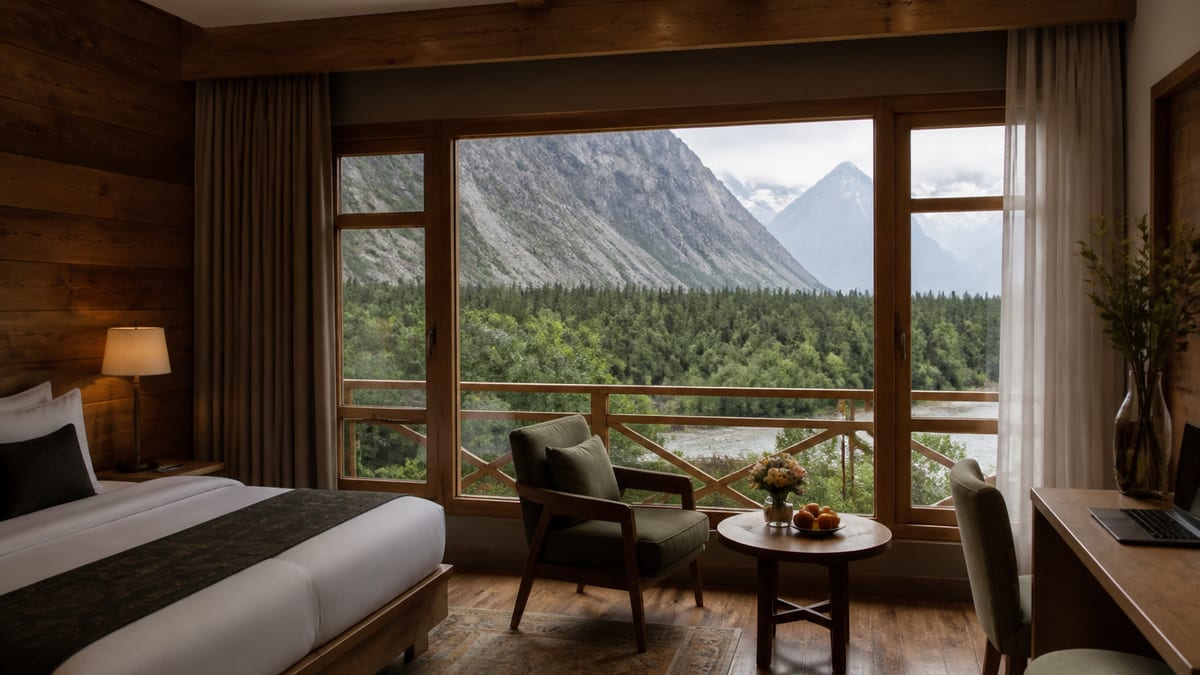
Upscale options include Serena Altit Fort Hunza and the lakeshore resorts at Attabad. Book 3–4 weeks ahead for blossom week and July–August.
Hunza trip costs (as of 2025)
| Item | Reported cost |
|---|---|
| Daily budget, backpacker | PKR 5,000–7,000 |
| Daily budget, mid-range | PKR 12,000–18,000 |
| Daily budget, luxury | PKR 25,000–40,000 |
| Taxi for short local trips | PKR 500–1,500 |
| Bus Islamabad/Rawalpindi to Gilgit or Hunza | PKR 4,000–8,000 |
Suggested 3-day Hunza itinerary
- Day 1: Drive from Gilgit, stopping at the Rakaposhi viewpoint. Walk around Baltit Fort and the Karimabad bazaar, then watch the sunset from Eagle’s Nest.
- Day 2: See Altit Fort in the morning, walk around Ganish, then hike towards Ultar Meadows or rest in a garden café.
- Day 3: Visit Attabad Lake, Hussaini Bridge and the Passu Cones, and go on to Khunjerab if the road is open. Stay in Passu or come back to Karimabad.
With extra days, add Naltar Valley near Gilgit, or break the drive north at Fairy Meadows for Nanga Parbat.
Picking a base in Hunza
Where you sleep changes how a Hunza trip feels. Karimabad puts Baltit Fort, Eagle’s Nest and the bazaar within walking distance, and it is the easiest place to find a driver for day trips. Staying in Gulmit or Passu cuts the driving to Attabad, the Passu Cones and Khunjerab, and the evenings are quieter. On a trip of four days or more, splitting your nights between central Hunza and Gojal saves you from driving the same stretch of highway twice.
Getting around the valley
Short hops between Aliabad, Karimabad and Altit are easy by local taxi. For Attabad, Passu or Khunjerab, most visitors hire a car with a driver for the day. Agree the stops and the price before you set off. Walking is the best way to see Karimabad, Altit and Ganish: the lanes are steep, but distances are short and the views open up at every turn.
Slowing down in Hunza
Hunza rewards unhurried travel. Instead of racing up to Khunjerab and back, give yourself a morning wandering the Altit lanes or an evening sitting under the apricot trees in Karimabad. Spring blossom and autumn colour both look their best in low morning and evening light, so leave space in the day for them.
Hunza Valley FAQ
How do I reach Hunza from Islamabad?
Fly Islamabad to Gilgit in about an hour, then drive 2 to 3 hours to Karimabad. By road it is about 600 to 650 km on the Karakoram Highway, 14 to 20 hours, best split over two days. Buses cost about PKR 4,000 to 8,000 as of 2025.
What is the best time to visit Hunza?
Mid-March to April for apricot and cherry blossom, and October for autumn colour and fewer crowds. June to August gives full access, including Khunjerab, but is the busiest and most expensive period.
What are the top places to visit in Hunza?
Baltit Fort, Altit Fort, Eagle’s Nest, the Rakaposhi viewpoint, Attabad Lake, the Passu Cones and Hussaini Bridge, Ultar Meadows and, in season, Khunjerab Pass.
How many days do you need in Hunza?
Three days covers Karimabad, the forts, Attabad Lake and Passu. Allow four or five to add Khunjerab, a proper hike or a buffer for flight cancellations and road closures.
How much does a Hunza trip cost?
As reported in 2025, budget travellers spend about PKR 5,000 to 7,000 a day, mid-range about PKR 12,000 to 18,000 and luxury about PKR 25,000 to 40,000, plus transport to and from Gilgit.
Is Hunza open in winter?
Yes. The Karakoram Highway is kept open and most guesthouses stay open from November to February, with lower prices. Expect temperatures of about minus 5 to 8 degrees Celsius in Karimabad and closures on high passes.
Where should I stay in Hunza?
Karimabad suits first visits because the forts and Eagle’s Nest are walkable. Gulmit or Passu suit travellers spending more time in Gojal and heading to Khunjerab.
Do I need a car in Hunza?
Not for Karimabad, Altit and Ganish, which you can walk or reach by short taxi. For Attabad, Passu and Khunjerab, hire a car with a driver.
Is Hunza safe for families?
Hunza is generally a welcoming place for families. Plan around monsoon landslide risk in July and August, and check road reports before each leg.
Who can I contact for help in Hunza?
The Contacting Tourist Police guide has the current Tourist Police contacts for Gilgit-Baltistan. Your guesthouse in Karimabad or Gojal is usually the quickest source of local help.