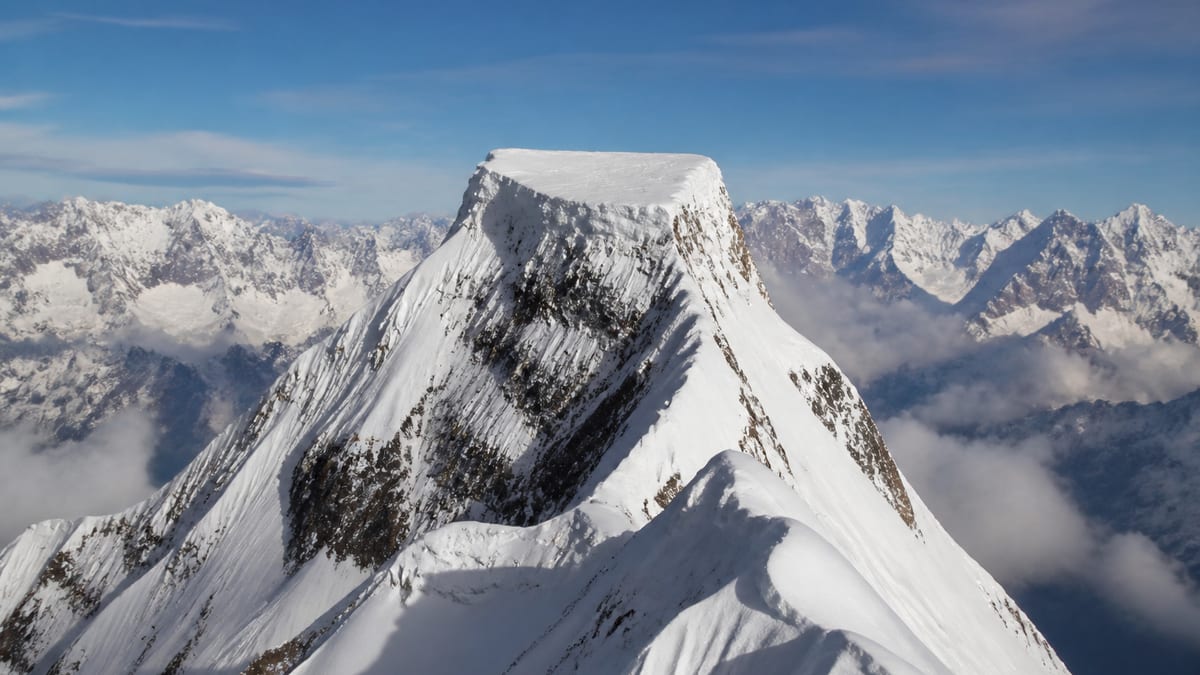
Four separate rows on Gilgit-Baltistan’s official permit list carry the Golden Throne name (NADRA List of Peaks, snapshot dated 2026-08-26). The north-east entry is listed at 7,180 metres. Seventy-six of the 104 rows that give a height stand above it, and twenty-seven stand below.
A modern expedition at that height runs on electricity more than most people admit. Satellite messengers, GPS units, headtorches, phones holding maps and permits, cameras, and sometimes a weather receiver all depend on cells that hate cold. A dead battery at the wrong moment turns a simple problem into a serious one. This page is a practical plan for power: what to bring, how to keep it warm, how to recharge, and what to fall back on when the electronics stop. Cold kills batteries faster than most teams expect, so power needs a plan.
The row, as published
- Listed name: Golden Throne NE (Baltoro Kangri)
- Listed height: 7,180 m
- Taller rows: 76
- Shorter rows: 27
- Family on the list: four Golden Throne rows, plus several numbered Baltoro Kangri rows
- District, route, grade: not given
The Golden Throne entries side by side
| Row | Height | Against the NE entry |
|---|---|---|
| Golden Throne SE (Baltoro Kangri) | 7,240 m | 60 m higher |
| Golden Throne SE (Baltoro Kangri) | 7,225 m | 45 m higher |
| Golden Throne NE (Baltoro Kangri) | 7,180 m | — |
| Golden Throne NW (Baltoro Kangri) | 7,115 m | 65 m lower |
The four rows span 125 metres, and two of them share the “SE” label with different heights. Separately, the official list has a short “recommended” table containing a plain “Baltoro Kangri” row at 7,282 m with an approach through Khaplu and the Kondus valley to a south-east base camp. That row doesn’t mention the NE entry, so don’t assume the same approach applies. Ask the authority which row your permit covers.
Why cold kills batteries
Lithium cells lose usable capacity as they chill, and a phone that read 60 per cent in the tent may switch off a few minutes after you pull it out on a ridge. The charge usually returns once the cell warms, but that’s no help when you need a photo of a map or a message sent now. Very cold charging can also damage some cells, so read the manufacturer’s guidance on charging temperatures before you go.
Listing every device and what it’s for
Before buying anything, write a table of every electronic item the team will carry, who owns it and what job it does. Mark each one as essential (communication, navigation, light), useful (camera, music, e-reader) or nice-to-have. The essential column gets spare power and a backup plan. The rest can go flat without harm. Teams that skip this step usually discover they’ve packed three cameras and one spare headtorch battery.
Warmth: the cheapest power source
Keep phones and spare cells in an inside pocket close to the body during the day. At night, sleep with them in the bag, sealed in a small pouch so condensation doesn’t get in. Carry headtorch batteries the same way. A device kept warm will deliver far more of its rated capacity than one left in a pack lid. Lithium AA cells generally cope with cold better than alkaline ones; check what your devices accept.
Charging at camp
There are two common approaches, and many teams use both.
Power banks. Simple and light, but finite. Work out roughly how many full charges each essential device needs for the trip, then pack enough banks to cover that with a margin. Warm them before use.
Solar panels. A folding panel feeding a power bank can top up charge on clear days at base camp and lower camps. Output drops sharply in cloud and when the panel isn’t facing the sun, so don’t build the whole plan around it. Secure panels against wind. Ask your operator whether base camp has any shared charging and how it’s managed; we don’t assume one exists.
Satellite communicators
If your team relies on a satellite messenger or phone, check the subscription is active before you leave, test sending and receiving from home, and make sure the people at home know what each message type means. Agree a check-in schedule and what happens if a check-in is missed. Our page on trekking and mountaineering regulations and the photography restrictions guidance cover rules that may affect some devices in sensitive zones; follow official advice where it applies.
Navigation that survives a flat battery
Downloaded maps on a phone are convenient. They’re also one cold snap away from vanishing. Carry a paper map and compass where available, know how to use them, and note key bearings and camp positions in a waterproof notebook. On a glacier in poor visibility, a written bearing and a rope team that knows the plan is worth more than an app that won’t switch on.
Light for the long days
Summit days often begin before dawn. Every climber needs a working headtorch plus spare cells or a second light, kept warm. Check lights each evening rather than discovering a problem at the start of the push.
A daily power routine
Habits beat gadgets. Pick one person each evening to run a quick power round: check every essential device, note its charge on a shared card, and decide what gets plugged into which bank overnight. In the morning, the same person hands back warm, charged kit before anyone leaves camp. It sounds fussy. On a long expedition it stops the slow drift where everyone assumes somebody else charged the messenger, and it means a low battery is spotted at camp rather than halfway up a slope.
Cameras and the temptation to film everything
Golden Throne country is photogenic, and cameras drain power fast in cold air, especially when screens are used to review shots. Turn off screen previews, carry a spare battery in an inside pocket, and decide before summit day whether the camera comes at all. If filming would slow the team or divert power from the communicator, leave it.
Testing the whole system before departure
A week before you fly, run a full trial at home: charge every bank, connect every cable, pair every device, send a satellite test message and leave the kit outside on a cold night to see what survives. Problems found on the balcony are cheap. The same problems found at base camp are not.
Permits for one of four Golden Throne rows
Apply through the official process in applying for trekking and mountaineering permits. With four similar names and two sharing a suffix, write “Golden Throne NE (Baltoro Kangri), 7,180 m” in full on every document. Fees and conditions come from the authority when you apply. Keep scanned copies of permits on more than one device and a printed set in a dry bag, so a single flat phone doesn’t leave you without papers at a checkpoint.
Choosing an operator who has thought about power
When you work through our hiring a tour operator guide, ask how they handle communication between camps, what charging they provide, and how staff stay in touch. Agree in writing who carries the team’s primary communicator.
Travel days and electronics
Long road journeys and weather-delayed flights are covered in getting to Gilgit-Baltistan. Use those days to charge everything fully. Airline rules on carrying lithium batteries change; check with your carrier before you pack spares in hold luggage.
Packing the power kit
Our packing for Gilgit-Baltistan list covers clothing and basics. Add cables in duplicate, because they break in cold, plus small sealable bags, spare lithium cells, a compact panel if you choose one, and a written list of what each device needs.
When everything goes dark
Plan for the worst case: no phone, no messenger, no GPS. Who descends to seek help, and where to? The Gilgit-Baltistan Tourist Police can be reached on 1422 inside the region and 05811-930055 from outside. Write those numbers on paper as well as storing them in a phone.
Seasons
The list gives no climbing season for this peak. Read best time to visit Gilgit-Baltistan for general patterns. Colder months make battery management harder still.
Frequently asked questions
What height does the official list give for Golden Throne NE?
7,180 metres, per the NADRA Gilgit-Baltistan List of Peaks snapshot of 2026-08-26.
How many Golden Throne rows are there?
Four: NE at 7,180 m, NW at 7,115 m, and two SE rows at 7,225 m and 7,240 m.
Does the recommended Baltoro Kangri route cover the NE entry?
The recommended row is a separate “Baltoro Kangri” entry at 7,282 m heading to a south-east base camp. It doesn’t name the NE row, so confirm with the authority.
Why do phones die so quickly in the cold?
Cold lowers the usable capacity of lithium cells. Keeping devices warm inside clothing helps a great deal.
Is solar charging reliable?
On clear days, it helps. In cloud or shade, output drops. Use it alongside power banks, not instead of them.
Should I carry a paper map?
Yes, where one is available, along with a compass and written bearings. Electronics can fail.
Can I charge batteries at base camp?
Only if your team brings the means or your operator provides it. Ask before you leave.
Are there rules about devices in border areas?
Some zones have photography and equipment restrictions. Check our photography restrictions page and official guidance.
How should I store spare batteries at night?
Inside your sleeping bag, sealed in a small pouch to keep moisture out.
What’s the emergency number?
The Gilgit-Baltistan Tourist Police: 1422 inside the region, 05811-930055 from outside.
Source
Name, height and rank figures come from NADRA’s Gilgit-Baltistan List of Peaks (Pakistan Online Visa System), snapshot 2026-08-26, and our live page. The row gives no district, route, grade or coordinates.