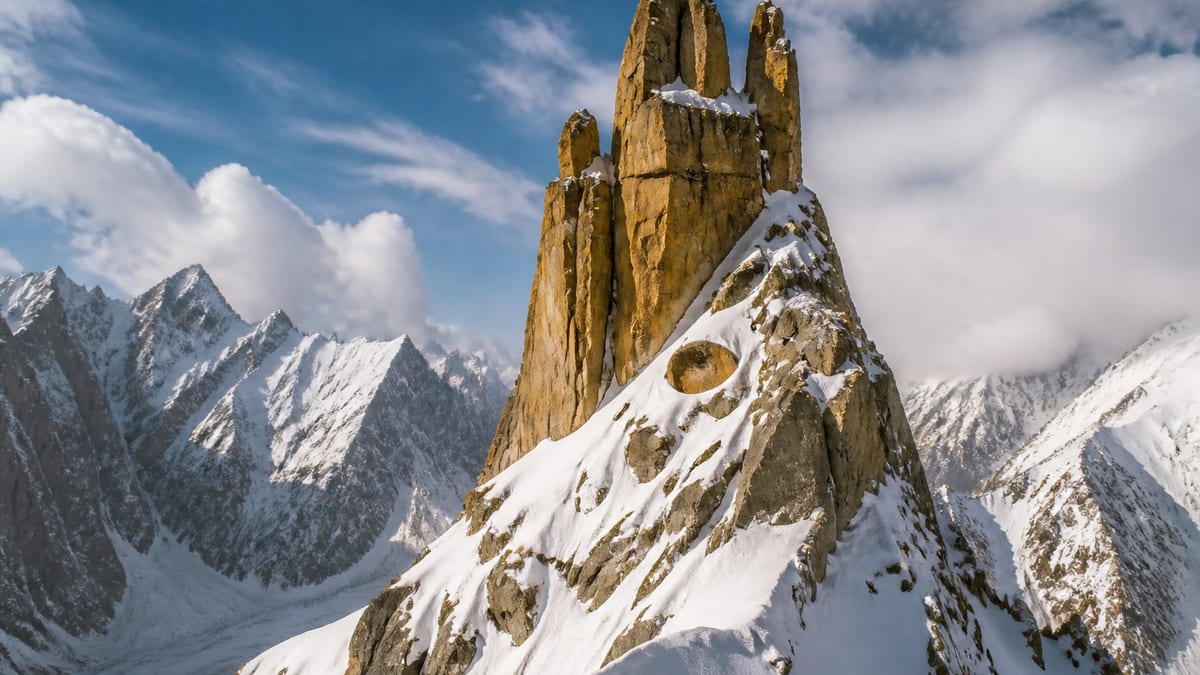
Scroll through the official table and you’ll find something that catches out careful readers: two rows with the identical name Golden Throne SE (Baltoro Kangri). In the Pakistan Online Visa System (NADRA) List of Peaks for Gilgit-Baltistan, snapshot dated 2026-08-26, one is recorded at 7,225 metres and the other at 7,240 metres. This page covers the 7,225-metre row. Its sibling, fifteen metres higher, has its own page.
When names collide like this, the only thing that separates the two records is the height. That makes this row a perfect case study for a skill every expedition needs: writing a clear, unambiguous agreement with your operator so that everyone is talking about the same objective, the same services and the same terms. The list itself gives no district, coordinates, route or grade for either row, and neither do we. When two rows share a name, the height and the contract have to match.
The 7,225 m row
- Name as printed: Golden Throne SE (Baltoro Kangri)
- Height: 7,225 m
- Identical-name sibling: 7,240 m, listed separately
- Entries higher: 73
- Entries lower: 30
- Exact ties at 7,225 m: none
- Location data: absent
The Golden Throne family on the list
| Row | Height | Gap to this row |
|---|---|---|
| Golden Throne SE (Baltoro Kangri) | 7,240 m | 15 m higher |
| Golden Throne SE (Baltoro Kangri) | 7,225 m | — |
| Golden Throne NE (Baltoro Kangri) | 7,180 m | 45 m lower |
| Golden Throne NW (Baltoro Kangri) | 7,115 m | 110 m lower |
The bracketed “Baltoro Kangri” suggests the rows are connected with that name, and the list also has separate Baltoro Kangri rows numbered I to V. How they relate on the ground isn’t stated, so we don’t map them.
Other rows nearby
| Entry | Height |
|---|---|
| Hachindar Chish – N | 7,233 m |
| Mandu Peak | 7,230 m |
| This row | 7,225 m |
| Kunyang Khhish – SE | 7,215 m |
| Yukshin Garden Sar | 7,200 m |
Why a duplicate name is a real risk
Imagine three emails. You write “Golden Throne SE”. Your operator replies with a quote for “Golden Throne SE”. The permit office receives an application for “Golden Throne SE”. Each person may be picturing a different row, and nobody notices until something doesn’t match. With identical names, the height has to travel with the name every single time: “Golden Throne SE (Baltoro Kangri), 7,225 m”.
A muddled booking, step by step
Here is how confusion usually creeps in. A climber reads an online trip report about “Golden Throne” and emails three operators asking for quotes. One operator assumes the SE row at 7,240 m, another the 7,225 m row, and a third prices a trekking trip to view the area. The climber compares the three quotes as if they described the same expedition and picks the cheapest. Weeks later, the permit paperwork shows a height nobody expected. None of this needs bad intent; it only needs a name that appears twice. The cure is dull but effective: put the exact row and height in the very first email and ask each operator to repeat it back in their quote.
Build the agreement around the row
Before money changes hands, ask your operator for a written agreement or detailed booking confirmation. The first line should identify the objective exactly as the official list does, including the height and the snapshot date. Everything else in the document depends on that line, so make it impossible to misread.
What the scope section should cover
A good agreement lists what is included and what isn’t. Typical headings include permit handling, ground transport, porters and their equipment, cooking and food at base camp, guiding, communications and emergency arrangements. For each item, the document should say who provides it and for how long. Vague phrases like “full support” deserve a follow-up question: full support of what, from where, until when?
Dates and changes
Write down the planned start and end dates, the number of days allowed for the climbing period, and what happens if weather or permission causes delays. Ask how extra days are charged and who decides when the team leaves the mountain. Agreeing on this calmly at home saves arguments at base camp.
Money matters
Ask for a breakdown that separates government fees from the operator’s own charges, and note which payments are refundable if the permit is delayed or the trip is cancelled. We don’t quote any figures here, because fees change and operators set their own prices; get current numbers directly from the authority and your operator.
People and welfare
The agreement should name the lead guide if possible and describe the support team. Ask how porters are equipped, insured and paid, and how loads are managed. A responsible operator will answer these questions readily. If answers are evasive, take that as information.
Emergencies in writing
Include a short section on what happens if someone is ill or injured: who makes the call to evacuate, how communication works and which insurance is expected to cover what. Add the Gilgit-Baltistan Tourist Police numbers, 1422 inside the region and 05811-930055 from outside, so they sit in the same document as your operator’s emergency contact.
Questions to send before signing
Short, direct questions get the clearest answers. Try these: Which exact row and height is this quote for? Which days are included, and what does an extra day cost? Who is the lead guide, and what is their licence status? Which fees go to the government and which to you? What is refundable if the permit is delayed? How will you contact us, and we you, during the trip? Keep the replies with the agreement. If any answer changes later, ask for the change in writing too.
Reading the agreement as a team
Every member of the expedition should read the final document, not just the organiser. Different people notice different gaps. One person might catch a missing day; another might ask about kit storage. Sign off only when everyone understands the terms.
Language and clarity
Agreements are often written in English, which may be a second language for one side or both. Short sentences and simple lists reduce misunderstandings. If something matters, such as a cancellation rule, ask for it to be stated in one plain sentence. If your operator prefers to explain terms by phone, follow the call with an email summarising what was agreed and ask them to confirm it.
Keeping the agreement alive on the trip
Carry a printed copy in the expedition folder. When plans change on the mountain, as they often do, note the change, the date and who agreed to it. A quick signature or a message from the lead guide is enough. At the end of the trip, these notes make settling final payments straightforward and fair to everyone, including the staff who worked the extra days.
Matching the agreement to the permit
When the permit arrives, compare its wording with the agreement. Name, height, dates and team members should match. If anything differs, raise it with your operator straight away. Fixing a mismatch at home takes an email; fixing it at a checkpoint can take days.
Checking your operator
Licensed operators are listed through official channels described in the Tourism Department FAQ. The hiring guide suggests further questions, and registering as a tour guide explains licensing. The official process for permits is set out in the permit application guide, with rules in trekking and mountaineering regulations.
Travel and timing
Road and air options to the region appear in getting to Gilgit-Baltistan and on the Skardu airport access page. Season planning starts with the best time to visit guide. Because the list gives no approach for this row, let your operator confirm both.
Packing and the agreement
Use the agreement to decide what you bring and what the operator supplies. Tents, cooking gear and ropes are common grey areas. Cross-check the scope section against the packing guide so you don’t carry duplicates or, worse, assume someone else is carrying something nobody packed.
Rules on the ground
Read the camping regulations and photography restrictions before travelling, and mention in the agreement who is responsible for waste removal from camps.
Frequently asked questions
What height does this Golden Throne SE row have?
7,225 metres in the NADRA snapshot dated 2026-08-26.
Why are there two Golden Throne SE rows?
The list includes two separate rows with identical names, at 7,225 m and 7,240 m. It doesn’t explain why.
How do I make sure I apply for the right one?
Always write the height with the name, for example “Golden Throne SE (Baltoro Kangri), 7,225 m”, on every message and form.
Where does the 7,225 m row rank?
Seventy-three listed entries are higher and thirty are lower.
How do the other Golden Throne rows compare?
NE is 7,180 m and NW is 7,115 m; the second SE row is 7,240 m.
Does the list say where this peak is?
No district, coordinates or route are given.
What should a booking agreement include?
The exact row name and height, dates, scope of services, payment and refund terms, staff welfare arrangements and an emergency plan.
Does this page list prices?
No. Fees and operator prices change; get them in writing from the authority and your operator.
What if the permit wording differs from the agreement?
Raise it with your operator immediately and resolve it before you travel.
What are the Tourist Police numbers?
1422 inside Gilgit-Baltistan and 05811-930055 from outside.
Source
Name and height come from NADRA’s Gilgit-Baltistan List of Peaks (Pakistan Online Visa System), snapshot 2026-08-26, alongside our live page. The list gives no district, route, grade or coordinates for this row.