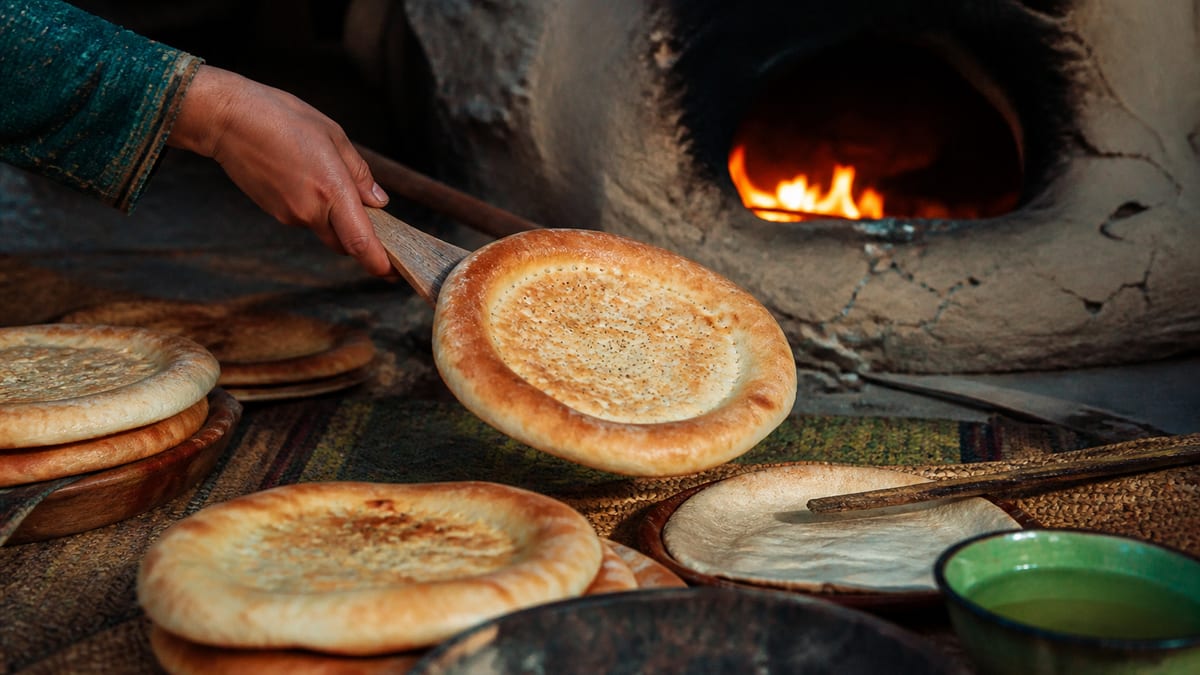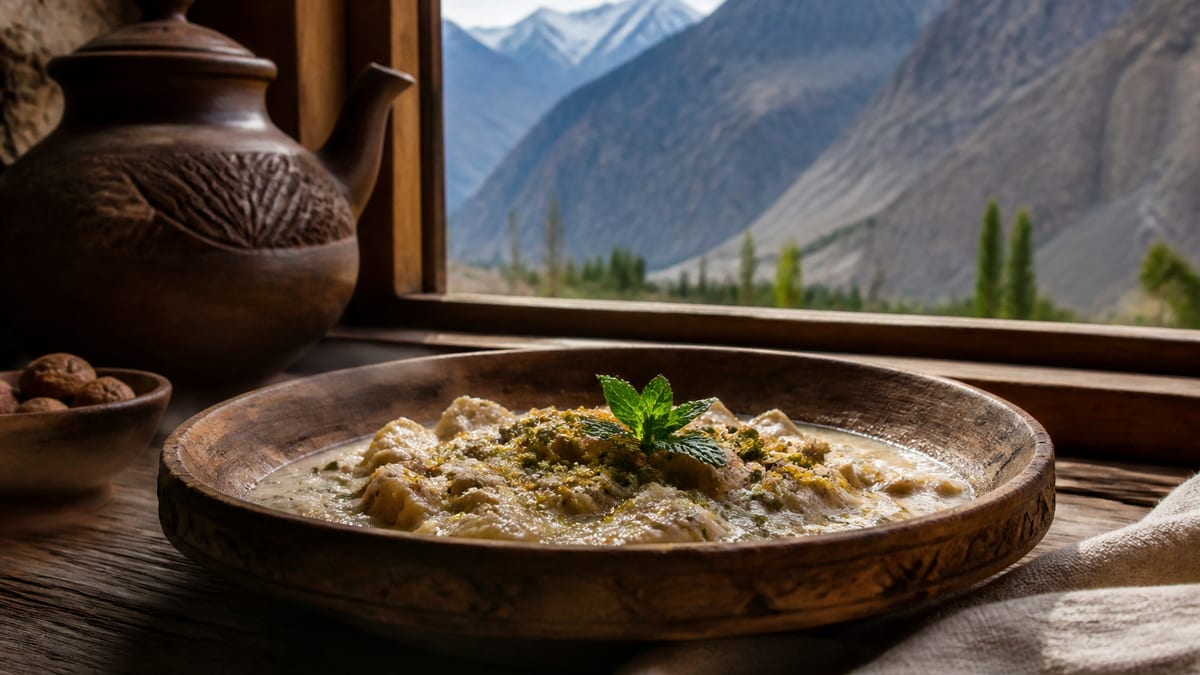
Chapshuro is one of the traditional dishes of Gilgit-Baltistan that travellers ask about — and the only one this website describes in two different ways. The tourism department’s culture page calls it a minced beef pie. Our Hunza destination page calls it a meat-filled bread. Both descriptions are published on this site today — and this page does not pretend otherwise.
What follows is not a recipe. Our sources don’t give one, and we won’t write one. This page sets out what each of our pages actually says about chapshuro, why the wording differs, where on a trip the dish is mentioned, and what you can sensibly ask a host or guide if you want to know more.
What the department records
The department’s culture page, “We All Are Culture”, accessed on 27 August 2026, names chapshuro among the traditional dishes of Gilgit-Baltistan. Its description is three words long — a minced beef pie.
That is the whole official record. The culture page doesn’t say which valley the dish belongs to, how it is cooked, when it is eaten, or what it is served with. Our traditional dishes page and the food section both repeat the same three words, and so does our culture overview.
What the destination pages say
Chapshuro is the only one of the department’s named dishes that appears as a “try this” tip on two of our destination pages.
| Page | What it says about chapshuro | What else it suggests |
|---|---|---|
| Hunza destination | “A meat-filled bread” | Diram phitti, described as wheat bread with apricot oil, and “anything made from apricots” |
| Skardu destination | Named, without a description | Butter tea and apricot soup |
| Department culture page (via our culture overview) | “A minced beef pie” | Five other named dishes |
So chapshuro is mentioned in connection with both Hunza and Skardu, which sit in different parts of the region and use different main languages. That is worth knowing — it means the dish is not presented on this site as belonging to a single valley.
Pie or bread? Why the wording differs
The two descriptions come from different kinds of page — written for different purposes.
- The culture page is a short department list. It gives each dish a quick label so that the six names can be read together.
- The Hunza destination page is a travel guide. Its food line sits in a “Culture and food” section beside advice to dress modestly in villages and to ask before photographing anyone. It describes the dish the way a visitor might meet it.
“Minced beef pie” and “meat-filled bread” are not necessarily in conflict. They may be two ways of describing the same thing, or they may reflect different versions. Our sources don’t say which — and we can’t confirm either reading. The culture page specifies beef; the Hunza page says “meat” without naming which. Neither describes the dough, the shape or the cooking method.
Rather than choose one label and quietly drop the other, this page reports both and attributes each. If the site later publishes a fuller, sourced description, this section will be updated to match.
What this page will not claim
- That chapshuro is always made with beef, or never with another meat.
- That it is baked, fried or cooked in any particular way.
- That it originated in Hunza, Skardu or anywhere else.
- That it is a festival food, a breakfast food or an everyday food.
- That any hotel, guesthouse or restaurant serves it.
Where chapshuro sits among the six named dishes
The department names six foods. Reading chapshuro alongside the others helps show what kind of list it is.
| Dish | Department description |
|---|---|
| Chapshuro | Minced beef pie |
| Gyaling / Gral | Thin wheat bread |
| Marzan | Wheat dough with apricot oil |
| Balay | Noodles with goat meat and broth |
| Namkeen tea | Named, no description |
| Prapo | Named, no description |
Chapshuro and Balay are the only two the culture page describes with meat. Gyaling and Marzan are both described as wheat-based. If you want to try a range of what the department names, those pairings are a reasonable way to think about it — but the list is not a set menu, and nothing on our pages says the dishes are served together.
Hunza and Skardu: the two places it is mentioned
In Hunza
The Hunza destination page places its food suggestions in the same section as language and conduct. It says central Hunza speaks Burushaski and Gojal speaks Wakhi, asks visitors to dress modestly in villages and ask before photographing anyone — and then suggests chapshuro, diram phitti and apricot foods. It points readers onward to the cultural heritage of Hunza for music, crafts and festivals.
That heritage article describes local food as one of the ways visitors can experience Hunza’s living culture — together with music, clothing, celebrations and village life. It suggests a visitor to Baltit Fort might continue into Karimabad and Altit, learn about local agriculture and “taste regional food”. It doesn’t name chapshuro, but it gives the setting in which the Hunza page’s food tip makes sense.
In Skardu
The Skardu destination page’s food line is shorter: “try butter tea, apricot soup and chapshuro.” It sits next to a culture line asking visitors to dress modestly, ask before photographing people — especially women — and learn a greeting in Balti. Our Balti page explains where that language is named on the site.
The Skardu page doesn’t describe chapshuro — so it neither supports nor contradicts the pie or bread description.
Questions worth asking locally
Because our pages say so little, the best source for detail is the person serving you. If chapshuro is offered, these are useful, respectful questions:
- What do you call this dish here? Is “chapshuro” the name used in this valley?
- Which meat is used in your household or kitchen?
- Is it usually made at home, or is it something people buy?
- Is it eaten on particular days or occasions, or at any time?
- Is it the same in Hunza and Baltistan, or does it change between valleys?
You’ll likely get different answers in different places — that’s normal. The culture overview on this site says each valley should be treated as its own host community, and the same applies at the table.
If you have dietary requirements, raise them politely and early. Our pages can’t tell you what is in a particular serving.
As a guest
The department FAQ’s conduct note is short: respect local culture, dress modestly, and remove shoes before entering a mosque or a local house. It’s set out on visitor customs and dress. The chapshuro page on this site repeats that note and adds, correctly, that it is “not a rule about this dish” — it’s a rule about the visit.
If you’d like to photograph food being prepared in a home, remember that both the Hunza and Skardu destination pages ask visitors to seek permission before photographing people. A kitchen usually has people in it — ask first.
If you plan to stay with a family, the FAQ says homestays are regulated by the tourism department and homeowners must hold a licence. See homestay regulations.
If you’re looking for it in a restaurant
This site doesn’t list restaurants that serve chapshuro, and we won’t guess. Our restaurant page records that restaurants need a tourism department licence, must comply with food safety regulations and are subject to local government inspections. See restaurant regulations. That licensing rule tells you about the business — not its menu. Ask at your accommodation or ask your guide.
How to use this page
Treat this page as a note on what our sources say — not as the last word on the dish. If you’re writing about chapshuro yourself, quote whichever description you use with its source: “a minced beef pie” (department culture page) or “a meat-filled bread” (our Hunza destination page).
For the bigger picture, start with the food section, then the culture section and the languages pages, which can help you thank your host in the right language.
Frequently asked questions
What is chapshuro?
The department culture page describes it as a minced beef pie. Our Hunza destination page describes it as a meat-filled bread. Both are published on this site.
Is chapshuro a pie or a bread?
Our sources use both words. We report both and don’t choose between them — neither source describes how the dish is made.
Is chapshuro made with beef?
The department culture page says minced beef. The Hunza destination page says “meat” without naming which. Ask your host what they use.
Which district is chapshuro from?
The culture page doesn’t assign it to a district. Our Hunza and Skardu destination pages both suggest trying it.
Do you publish a chapshuro recipe?
No. None of our sources gives preparation steps, so we don’t invent them.
Is chapshuro the same as diram phitti?
Our sources don’t say so. The Hunza page names them separately, describing diram phitti as wheat bread with apricot oil.
Where can I eat chapshuro?
This site doesn’t list restaurants that serve it. Ask your guesthouse, hotel or licensed guide locally.
Is chapshuro eaten at festivals?
None of our pages says so. Our festival pages mention shared meals and traditional food without naming dishes.
Can I photograph chapshuro being made?
Ask first. The Hunza and Skardu pages ask visitors to seek permission before photographing people.
What should I do when offered chapshuro in a home?
Follow your host’s lead. The FAQ asks visitors to dress modestly and remove shoes before entering a local house.