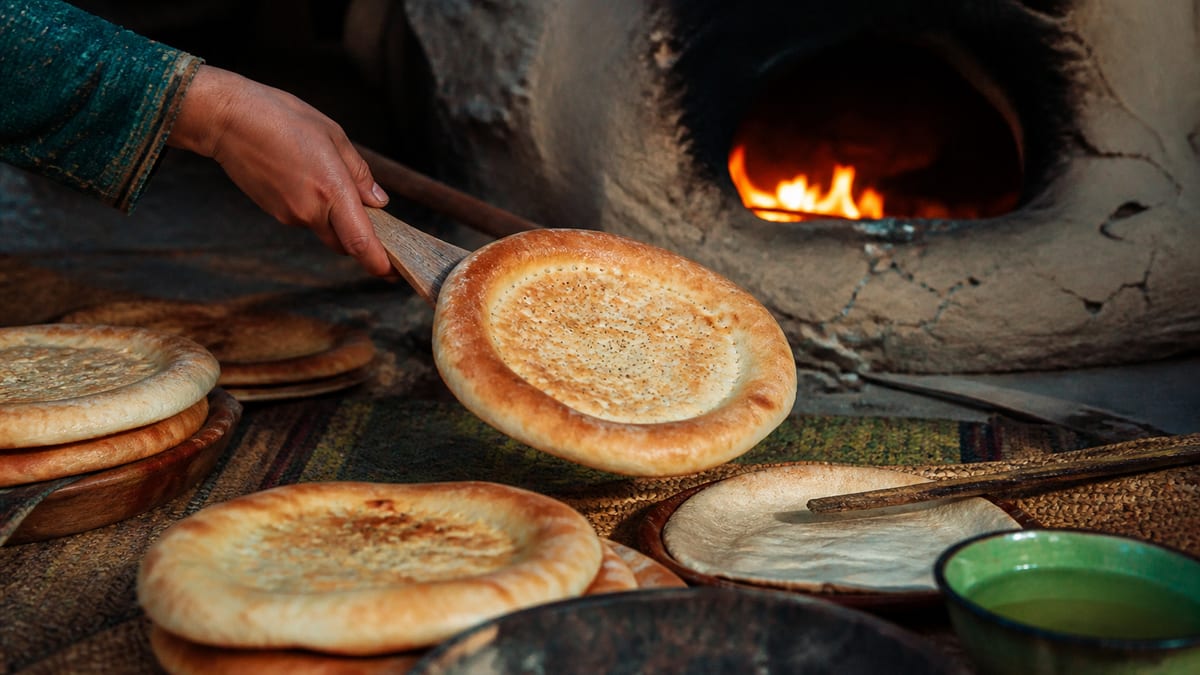
Gyaling is the simplest-sounding of the traditional dishes the tourism department names — a thin wheat bread. It is also the only one that comes with a second name. The department’s culture page says Gyaling is also written Gral, and our page title carries both.
This page is about that bread in the context a traveller actually meets it: at a guesthouse table, in a family home or on a long day between valleys. It keeps strictly to what our sources say. There is no recipe here, no flour ratio and no cooking method — none of our sources gives one.
What the department records
The department culture page, “We All Are Culture”, accessed on 27 August 2026, lists Gyaling among the traditional dishes of Gilgit-Baltistan and describes it as thin wheat bread, also written Gral.
That’s all it says. It doesn’t assign Gyaling to a district, describe when it’s eaten or say what it’s eaten with. Our traditional dishes page and culture overview repeat the same description.
Two names: Gyaling and Gral
“Also written” is a careful phrase. It tells you both names are in use for the same entry — but it doesn’t explain why.
Our sources don’t say:
- whether Gyaling and Gral come from different languages of the region;
- whether one is used in a particular valley and the other elsewhere;
- whether either spelling is more correct.
What the site does show is that Gilgit-Baltistan is linguistically varied. Our languages pages record Shina for Gilgit, Balti for Ghanche, Burushaski and Wakhi for Hunza, and Khowar among the languages named for Ghizer. With several languages in daily use, it wouldn’t be surprising for an everyday food to carry more than one name — but we can’t tell you which name belongs where.
If you’re writing about it: use “Gyaling (also written Gral)” on first mention, as the department does. Don’t attribute either name to a specific language unless you have a source that says so.
If you’re travelling: ask your host what they call it. You may hear a third name — that’s a good conversation, not a mistake.
Other breads named on this site
Gyaling is not the only bread mentioned on our pages. The others are worth knowing — mainly so you don’t confuse them.
| Where | What the page says | Same as Gyaling? |
|---|---|---|
| Hunza destination | Diram phitti, “wheat bread with apricot oil” | Not stated; named separately |
| Hunza destination | Chapshuro, “a meat-filled bread” | No: the department lists chapshuro as its own dish |
| Shimshal Valley | Guesthouses serve home-cooked Wakhi food “such as bread, lentils, potatoes, dairy and tea” | Not stated; the bread isn’t named |
| Department culture page | Marzan, “wheat dough with apricot oil” | No: listed as a separate dish |
The point of the table is caution. A thin wheat bread is a broad description, and a bread on a guesthouse table in Shimshal or Hunza may or may not be what the department means by Gyaling. Our sources don’t connect them — so we don’t either.
Gyaling and Marzan
Of the six dishes the department names, Gyaling and Marzan are the two described as wheat-based. Marzan is described as wheat dough with apricot oil. The culture page gives no further connection between them — read them as two separate entries.
Bread at the guesthouse table
The places on our site where visitors are most likely to eat simple home cooking are the remote valleys — family guesthouses and homestays.
- Shimshal. The Shimshal Valley page describes a remote Wakhi valley in Gojal, Upper Hunza, where accommodation is “simple and limited”: a few family guesthouses and homestays, with no booking websites. It names bread among the home-cooked food served. It advises staying at least two nights and, in July and August, asking your Hunza guesthouse to call ahead.
- Hushe. The Hushe Valley page says Hushe has basic family-run guesthouses and campsites, with “simple Balti meals”. It suggests trying balay, apricot jam and butter tea. It doesn’t mention a bread by name.
If you’re staying in either valley, the food is whatever the household cooks. Our pages can’t tell you whether Gyaling will be on the table — only that bread is part of what Shimshal’s guesthouses serve.
Before you book a family stay, read homestay regulations. The FAQ says homestays are regulated by the tourism department and homeowners must obtain a licence before offering accommodation.
On the road
Many days in Gilgit-Baltistan are long drives between districts. Our packing guide suggests carrying snacks and drinking water on long journeys, choosing simple travel-friendly foods, using a reusable water bottle rather than buying disposable plastic ones, and leaving no wrappers or bottles behind at tourist sites.
That advice doesn’t mention Gyaling or any named dish. But if a host offers you bread for the road, it’s the kind of simple, portable food the packing guide has in mind — carry your waste out with you.
Seasons and slow travel
Simple home food is easiest to meet when you slow down. Our pages give a few pointers on when — and how.
- Stay longer in one place. The Shimshal page recommends at least two nights, partly because the road takes most of a day each way. Its suggested village walks include talking to people over tea. A second night gives you a second meal — and a chance to ask the questions below.
- Winter in Hunza. The Hunza destination page says most guesthouses stay open from November to February, when Karimabad is cold and quiet. Quieter months can mean more time with your hosts — though our pages say nothing about winter menus.
- Hushe’s short season. The Hushe page says the valley is freezing and isolated from October to April, and that June to September is the time to go — so plan any family stay there for the open months.
- Heritage walks. The cultural heritage of Hunza article suggests combining Baltit Fort with Karimabad’s historic quarter and Altit, learning about local agriculture and spending time speaking with residents. That kind of unhurried day is where bread, tea and conversation tend to meet.
Questions to ask about Gyaling
You’ll learn more from one conversation than from any page on this site. These questions are practical — and polite:
- What do you call this bread here: Gyaling, Gral or something else?
- Is it made at home every day, or only sometimes?
- What is it usually eaten with?
- Is it the same bread in other valleys, or does it change?
- Is there a difference between this and diram phitti?
Listen more than you ask. Food talk in a home is part of hospitality — which the department culture page names as a living tradition alongside music, dance and crafts.
Conduct at the table
The department FAQ’s conduct note asks visitors to respect local culture, dress modestly and remove shoes before entering a mosque or a local house. Our visitor customs and dress page sets it out — and notes that a longer etiquette list would be guesswork.
So this page won’t tell you which hand to use, where to sit or whether to accept a second serving. Our sources don’t say — watch what the household does and follow their lead.
If you want photographs of bread being made, ask first. Our Hunza and Skardu destination pages both advise seeking permission before photographing people.
What this page doesn’t include
- A recipe. No source gives one.
- A district. The culture page doesn’t assign Gyaling to one.
- A language origin for either name. Not stated in our sources.
- Where to buy it. This site doesn’t list bakeries or restaurants. Restaurants need a tourism department licence and face local government inspections, according to our restaurant regulations page.
- Health claims. Nothing here says a bread is better or worse for you.
Where to go next
Read Gyaling alongside the other dishes on the food hub. For the people and languages behind the names, try the culture section and the language page for the valley you’re visiting, such as Wakhi for Shimshal or Balti for Baltistan.
Frequently asked questions
What is Gyaling?
The department culture page describes it as thin wheat bread.
Are Gyaling and Gral the same thing?
Yes. The culture page says Gyaling is also written Gral. It doesn’t explain why there are two names.
Which language does the name Gyaling come from?
Our sources don’t say. The region has several languages, but none of our pages links either name to one.
Which district is Gyaling from?
The culture page doesn’t assign it to a district.
Is there a Gyaling recipe on this site?
No. Only the department’s short description is used.
Is Gyaling the same as diram phitti?
Our sources don’t say so. The Hunza page describes diram phitti separately as wheat bread with apricot oil.
Is Gyaling related to Marzan?
Both are described as wheat-based, but the culture page lists them as separate dishes — and doesn’t connect them.
Will I be served Gyaling in a guesthouse?
We can’t promise that. The Shimshal page says guesthouses serve bread among home-cooked Wakhi food — but doesn’t name it.
Where can I buy Gyaling?
This site doesn’t list bakeries or restaurants. Ask your host or guide locally.
Is it fine to take bread on a long drive?
Our packing guide suggests carrying simple travel-friendly food and water, and leaving no waste behind.