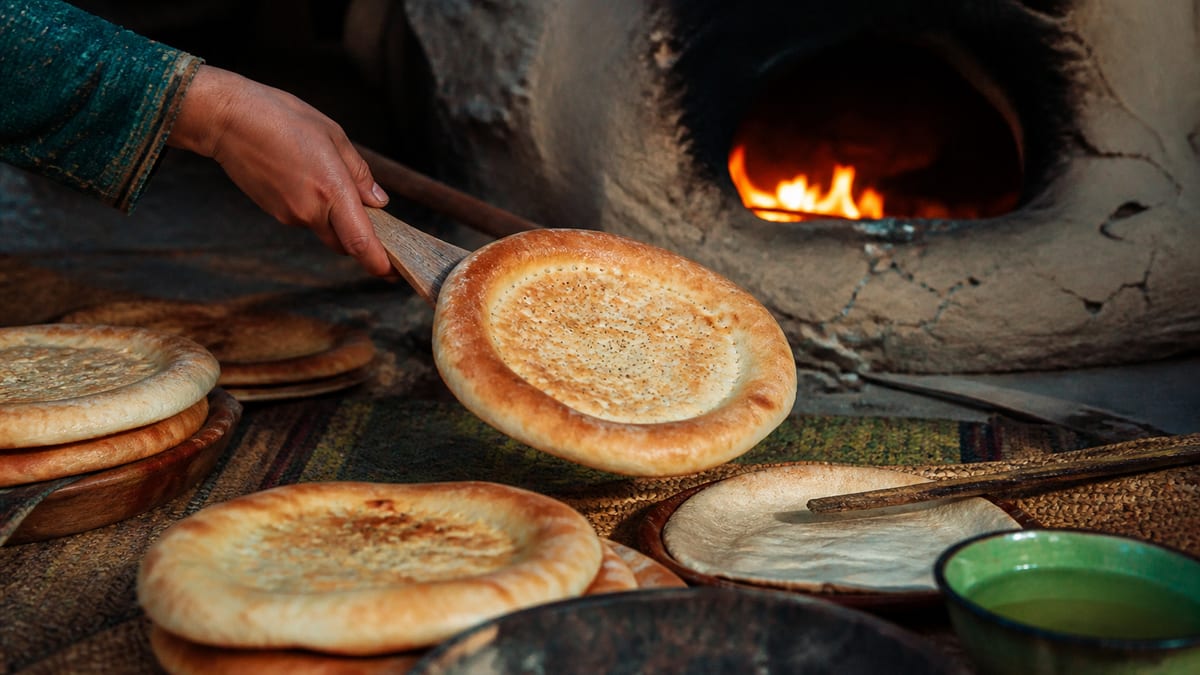
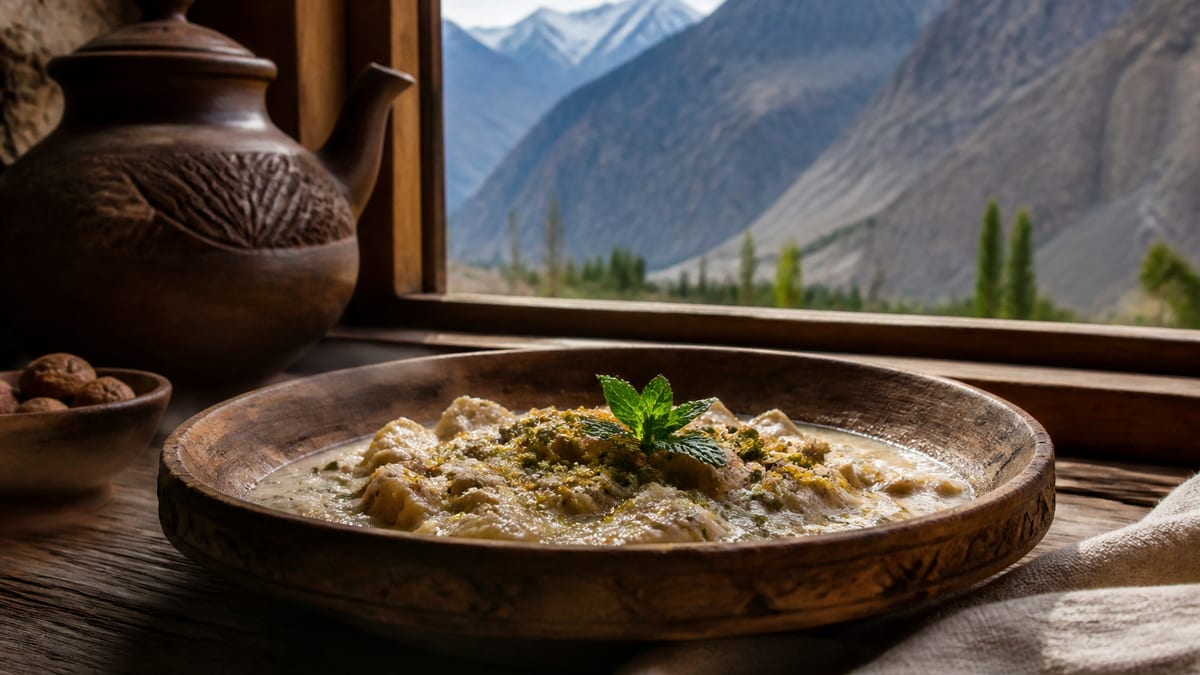
Marzan is one of the six traditional dishes the Gilgit-Baltistan tourism department names. Its description is short — wheat dough with apricot oil. That second ingredient is what makes the dish interesting to a visitor, because apricots run through almost every page this site publishes about Hunza, Shigar and Baltistan’s villages.
This page doesn’t give a Marzan recipe — none of our sources does. It covers what the department records, how the dish relates to the apricot orchards our destination pages describe, the seasons those pages mention, a naming question worth knowing about, and what to ask if you want to learn more on the ground.
What the department records
The department culture page, “We All Are Culture”, accessed on 27 August 2026, names Marzan among the traditional dishes of Gilgit-Baltistan and describes it as wheat dough with apricot oil.
It doesn’t say:
- which valley or district Marzan belongs to;
- how the dough is prepared or cooked;
- how the apricot oil is made or used;
- whether Marzan is everyday food or eaten on particular occasions.
Our traditional dishes page and culture overview repeat the same description and nothing more.
A naming question: Marzan and diram phitti
Our Hunza destination page suggests visitors try diram phitti, which it describes as “wheat bread with apricot oil”. That reads very close to the department’s description of Marzan as “wheat dough with apricot oil”.
Our sources don’t tell us whether these are:
- two names for the same dish in different languages or valleys;
- related dishes that share ingredients;
- or quite different foods that happen to sound alike in short descriptions.
So we list them separately and say so. The Hunza page names diram phitti without mentioning Marzan, and the culture page names Marzan without mentioning diram phitti. If you’re in Hunza and someone offers you either, ask what it’s called and how it differs from the other — that’s the only reliable way to find out.
Where apricots appear on this site
Marzan’s apricot oil connects it to a much larger theme on our destination and culture pages. None of these pages mentions Marzan — but together they show where apricots matter to the places you’ll visit.
| Page | What it says about apricots |
|---|---|
| Cultural heritage of Hunza | Hunza is “particularly associated with its orchards, including apricots, apples, cherries, mulberries, grapes, and other locally grown produce”, which appear “in fresh, dried, preserved, and traditional food forms” |
| Hunza destination | Suggests trying “anything made from apricots”; apricot and cherry blossom from mid-March to April; apricot and walnut trees turn gold in October |
| Skardu destination | Suggests trying apricot soup |
| Shigar destination | Apricots, grapes, peaches, pears and walnuts are among the fruits associated with the valley’s agriculture |
| Hushe Valley | Barley and apricot terraces around the village; suggests trying apricot jam |
That’s a consistent picture across Hunza and Baltistan: apricots are part of the farmed landscape and the food. It’s the context in which a dish made with apricot oil makes sense. But note what the pages don’t say. None of them describes apricot oil, how it’s produced or which villages make it — and we don’t add those details.
Planning around the apricot seasons
If apricot country is part of why you’re interested in Marzan, our pages give a few seasonal markers to plan around.
Blossom: mid-March to April
The Hunza destination page says apricot and cherry blossom reach Aliabad and Ganish first, Karimabad by early April and Gojal by late April. It describes this as one of the best times to visit — along with October.
Summer fruit
The Hunza page says mulberries ripen in June. It doesn’t give an apricot harvest date, and neither do our other pages — so we won’t give one. Ask locally which fruit is being picked, dried or preserved while you’re there.
Autumn: October
The Hunza page says poplars, apricot and walnut trees turn gold in October, nights get colder and crowds thin out.
Harvest celebrations
The cultural heritage of Hunza article describes Ginani as associated with the beginning of the agricultural harvest season in Hunza, and as a chance to see music, communal gatherings, traditional food and cultural practices. It doesn’t publish a date or a menu, and it doesn’t mention Marzan — so if you hope to see Ginani, check locally.
Our best time to visit guide covers the regional seasons in more detail.
Shigar and Baltistan’s orchards
Hunza gets most of the attention for apricots — but our Baltistan pages describe orchard country too.
The Shigar destination page describes fertile land watered by the Shigar River and surrounding mountain streams, with orchards and cultivated fields standing out against the dry mountains. It says the local community has preserved many elements of traditional Balti life, including language, food, agriculture and hospitality, and that visitors can explore traditional villages, historic buildings and local markets. The Shigar district page adds that in spring the fruit trees “create beautiful scenery”, that later in the year the valley becomes known for its agricultural produce, and that village walks show traditional houses, irrigation channels and fields.
Neither Shigar page names Marzan or apricot oil. They’re included here because they show apricots as part of Balti farming life — not only Hunza’s. Our pages say the warmer months from late spring through autumn suit sightseeing in Shigar.
If you’re based in Skardu, the Skardu destination page’s apricot soup suggestion and a day in Shigar’s orchard villages make a natural pairing — ask locally what’s being harvested, dried or cooked.
Orchards are working land
The Hunza heritage article and the Shigar pages both describe orchards as part of village life and agriculture — not as attractions laid out for visitors. When you walk through terraces and orchard lanes:
- stay on paths and don’t pick fruit unless you’re invited to;
- ask before photographing people working in fields; our Hunza and Skardu pages both advise asking before photographing people;
- dress modestly in villages, as the Hunza destination page and the department FAQ ask.
The FAQ’s conduct note is on visitor customs and dress. The first point in the list above is ordinary courtesy — rather than a published rule.
Questions to ask about Marzan
If you meet Marzan — or something that sounds like it — these questions will help:
- What is this called here? Is it Marzan, diram phitti or another name?
- Is the apricot oil made in this village or brought from elsewhere?
- Is this something people make often, or for special occasions?
- Is it made the same way in Hunza and in Baltistan?
- Which other apricot foods should I try while I’m here?
The last question is often the most rewarding. The Hunza page’s “anything made from apricots” is deliberately open — and your host will know what’s in season.
If you have a nut or fruit allergy, mention it clearly before you eat. Our pages can’t tell you what is in any particular dish.
Taking apricot products home
Our pages mention dried and preserved fruit (Hunza heritage article) and apricot jam (Hushe). They don’t list shops, markets or producers, and they don’t publish prices. If you want to buy apricot products, ask your guesthouse or guide where local households sell them. The Hunza heritage article notes that heritage tourism can provide economic opportunities for local communities when visitors use local guides, stay in locally operated accommodation, buy authentic handicrafts, eat at local restaurants and support community-based tourism services.
Remember that the FAQ recommends carrying cash — cards aren’t widely accepted. See local currency and cash.
What this page won’t tell you
- A recipe or method. Not in our sources.
- How apricot oil is made. Not in our sources.
- A district of origin. The culture page doesn’t assign one.
- Health or nutrition claims about apricots or apricot oil. We don’t make them.
- Where to eat Marzan. This site doesn’t list restaurants that serve it. Restaurants need a tourism department licence, according to our restaurant regulations page.
Related reading
Compare Marzan with the other wheat-based dish, Gyaling / Gral, and with chapshuro, which the Hunza page names in the same food tip as diram phitti. The food hub lists all six.
Frequently asked questions
What is Marzan?
The department culture page describes it as wheat dough with apricot oil.
Is Marzan the same as diram phitti?
Our sources don’t say. The Hunza page describes diram phitti as wheat bread with apricot oil — and names it separately.
Which district is Marzan from?
The culture page doesn’t assign it to a district.
Is there a Marzan recipe here?
No. Only the department’s description is used.
How is apricot oil made?
None of our pages describes it, so we don’t. Ask locally.
When is apricot blossom in Hunza?
The Hunza page says mid-March to April, reaching Karimabad by early April and Gojal by late April.
When are apricots harvested?
Our pages don’t give an apricot harvest date. Ask locally what’s being picked or dried during your visit.
Where else are apricots mentioned on this site?
On the Hunza heritage, Hunza, Skardu, Shigar and Hushe pages, as orchards, terraces, apricot soup and apricot jam.
Is Marzan served at Ginani?
Our Hunza heritage article mentions traditional food at Ginani but doesn’t name any dish.
Can I buy apricot products to take home?
Our pages mention dried and preserved fruit and apricot jam but list no shops. Ask your host — and carry cash.