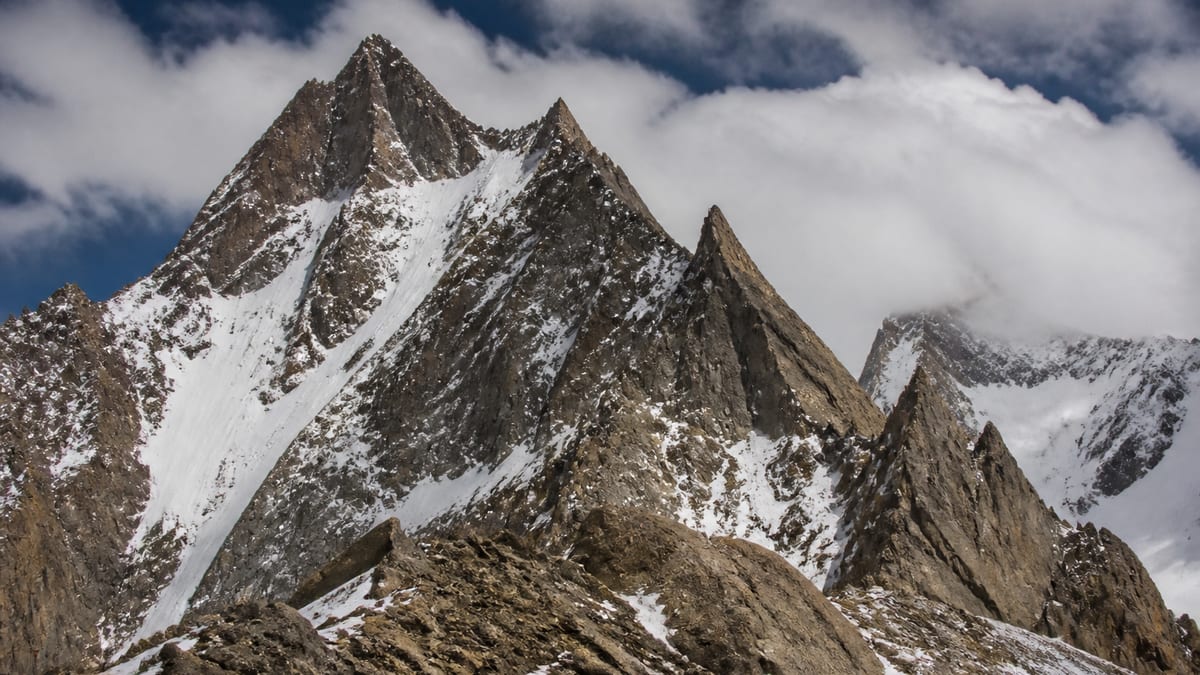
Most of Gilgit-Baltistan’s official peak list is made up of seven- and eight-thousand-metre giants. Kuk Sar Peak – IV is one of the few exceptions. The Pakistan Online Visa System (NADRA) List of Peaks, snapshot dated 2026-08-26, records it at 6,566 metres, and only three listed entries come in lower. For climbers who find the rest of the table intimidating, that makes it worth a closer look, though “lower” on this list still means a serious high-altitude mountain.
This page approaches Kuk Sar Peak – IV from the point of view of someone moving up from trekking or smaller summits. It covers the facts the record provides, compares the peak with its nearest neighbours by height, and then sets out a progression of skills, fitness and habits worth building before attempting any 6,500-metre objective. Peak facts come only from the NADRA table and the existing live page. We don’t publish routes, grades, coordinates, prices or ascent history. Being near the bottom of the list doesn’t make it a small mountain.
Summary
- Official entry: Kuk Sar Peak – IV
- Listed height: 6,566 m
- Height class: six-thousand-metre
- Listed entries higher: 100
- Listed entries lower: 3
- District: none assigned in the NADRA table
- Routes and coordinates: not stated
A note on the name
The entry carries the numeral IV, but it’s the only Kuk Sar entry on the official list. There’s no Kuk Sar I, II or III in the table. The record doesn’t explain the numbering, and this page won’t speculate about other peaks that might share the name. Use the full official form, “Kuk Sar Peak – IV”, on every document, so there’s no doubt which entry you mean.
Near the foot of the list
Here are the lowest listed entries with a stated height, plus the next one up:
| Entry | Listed height | Compared with Kuk Sar Peak – IV |
|---|---|---|
| Makrong Chhish | 6,590 m | 24 m higher |
| Kuk Sar Peak – IV | 6,566 m | — |
| Savoia Kangri | 6,550 m | 16 m lower |
| Yukshin Garden | 6,500 m | 66 m lower |
| Skyang Kangri – W | 6,150 m | 416 m lower |
Savoia Kangri, 16 metres lower, is the closest listed height. Makrong Chhish and Kuk Sar Peak – IV are separated by just 24 metres. Above Makrong Chhish, the next listed heights rise into the high six-thousands and then the seven-thousands.
“Lower” is relative
It’s tempting to see a peak near the bottom of this list as a beginner’s mountain. Be careful with that idea. At 6,566 m, the air holds less than half the oxygen available at sea level. Altitude illness, cold injuries and exhaustion are all real risks, and the official record says nothing about the technical difficulty of the climb. A peak can be modest in height and still demanding to climb. Ask your operator what this objective actually involves before deciding it suits you.
Building towards a 6,500-metre peak
If Kuk Sar Peak – IV would be your first big objective, think of preparation as a ladder. Each step builds the experience the next one needs.
Step 1: Multi-day trekking. Get comfortable walking for several days in a row, carrying a pack, sleeping in tents and coping with changing weather.
Step 2: Moderate altitude. Spend time above 4,000 m on treks, ideally more than once, and learn how your body responds. Note how quickly you acclimatise and which symptoms you tend to get.
Step 3: Basic mountaineering skills. Take a reputable course covering crampons, ice axe use, roped travel on glaciers and crevasse rescue. Practise until the movements feel automatic.
Step 4: A guided smaller summit. Climb a lower snow peak with a qualified guide, so you experience early starts, cold mornings and summit-day fatigue in a forgiving setting.
Step 5: Your first 6,000 m-plus objective. Only then step up, with a registered operator, licensed guides and a conservative plan.
Not everyone follows the ladder in order, and some steps take longer than others. The point is to arrive with real experience, not just enthusiasm.
Fitness without the jargon
You don’t need an elite training plan, but you do need consistent work over several months:
- Endurance: long walks or hikes, gradually increasing distance and pack weight.
- Leg strength: stairs, hill repeats, step-ups and squats.
- Core and balance: simple exercises that help when you’re tired on uneven ground.
- Recovery: proper sleep and rest days, so training builds you up rather than wearing you out.
If you have a health condition, talk to a doctor before you start training for altitude.
Habits that matter on a first expedition
The skills that keep first-timers safe are often unglamorous:
- Going slowly. Pace yourself so you could hold a conversation while climbing.
- Drinking regularly. Dehydration makes everything harder.
- Speaking up. Report headaches, nausea or unusual tiredness early.
- Listening to guides. On your first big peak, their experience outweighs your plans.
- Accepting a turnaround. A failed summit is disappointing; a serious accident is far worse.
What to expect emotionally
First expeditions are often more tiring, more uncomfortable and more boring in places than people expect. Long waits, cold nights and loss of appetite are normal. So are moments of real wonder. Go in with realistic expectations and a sense of humour, and you’ll enjoy it more whether or not you reach the top.
Common first-expedition mistakes
A few errors come up again and again with climbers new to big peaks:
- Rushing the approach because the first days feel easy, then suffering higher up.
- Bringing new boots that have never been worn on a long walk.
- Overpacking personal extras and underpacking warm layers.
- Hiding symptoms so as not to hold the group back.
- Fixating on the summit and forgetting that the descent needs energy too.
- Skipping rest days to make up time lost to weather.
Each one is easy to avoid with a little planning and honesty. Read the list again the week before you leave.
Choosing a mountaineering course
When picking a skills course before your first big peak, look for qualified instructors, small groups, plenty of hands-on practice on real snow and ice, and clear teaching on crevasse rescue. Ask what you’ll be able to do independently by the end, and whether the course includes a realistic practice day in full kit and poor weather.
Questions for your operator
When you contact registered operators, ask:
- Is Kuk Sar Peak – IV a reasonable objective for someone with my experience?
- What skills should I have before joining?
- How many guides per climber do you provide?
- How long is the expedition, and how many spare days are included?
- What happens if I’m not acclimatising well?
Good operators will be honest, even if that means suggesting a different objective.
Permits and the official process
Because Kuk Sar Peak – IV is on the government list, follow the formal route:
- Work with an operator registered with the Tourism Department or DTS; official FAQ answers say such operators are listed through NADRA/DTS.
- Read our guide to applying for trekking and mountaineering permits.
- Check the trekking and mountaineering regulations; licensed guides and porters are mandatory in restricted areas.
- Confirm your guide’s licence; see registering as a tour guide.
- Ask the authorities for current fees. We don’t publish them.
Travel to Gilgit-Baltistan
The NADRA table gives no district or coordinates for Kuk Sar Peak – IV. Confirm the approach with your operator. To reach the region, most visitors fly into Gilgit Airport or Skardu International Airport, or travel by road on the Karakoram Highway, with Babusar Pass and Shandur Pass as other options. Our guide to getting to Gilgit-Baltistan explains more.
Season
There’s no season in the record. Read about the best time to visit Gilgit-Baltistan, then agree dates with your operator using official weather advisories.
Packing
The official FAQ recommends warm clothes, sturdy shoes, sunscreen, sunglasses, insect repellent, a first-aid kit, a water bottle and energy bars. For a 6,500-metre peak, your operator’s technical list comes on top. Our packing guide has the basics. First-timers should test every item, especially boots, on training hikes before departure.
Staying safe and respectful
Keep the Tourist Police numbers with you: 1422 inside Gilgit-Baltistan and 05811-930055 from outside. Camp only where permitted under the camping regulations, follow the photography restrictions, and respect the customs of the communities you pass through.
Frequently asked questions
How high is Kuk Sar Peak – IV?
The NADRA List of Peaks records 6,566 metres in the 2026-08-26 snapshot.
Is it one of the lowest peaks on the list?
Yes. Only three listed entries with a stated height are lower.
Which peak is closest in height?
Savoia Kangri, at 6,550 m, 16 metres lower.
Are there Kuk Sar I, II or III entries?
No. Kuk Sar Peak – IV is the only Kuk Sar entry on the official list.
Is it suitable for beginners?
The record doesn’t describe difficulty. Any 6,500-metre peak needs real altitude and mountaineering experience; ask a registered operator.
Which district is it in?
The NADRA table doesn’t assign one. Confirm with your operator and the authorities.
Are routes or grades published?
No. They aren’t included in the official record.
How should I prepare for a first big peak?
Build up through multi-day treks, moderate altitude, a mountaineering course and a guided smaller summit.
Do I need a permit?
Yes. NADRA and Tourism Department/DTS procedures apply to listed peaks.
Who do I call in an emergency?
The Tourist Police: 1422 within Gilgit-Baltistan, or 05811-930055 from outside.
Source
List of Peaks (Gilgit-Baltistan) · Pakistan Online Visa System (NADRA) · Accessed 2026-08-26