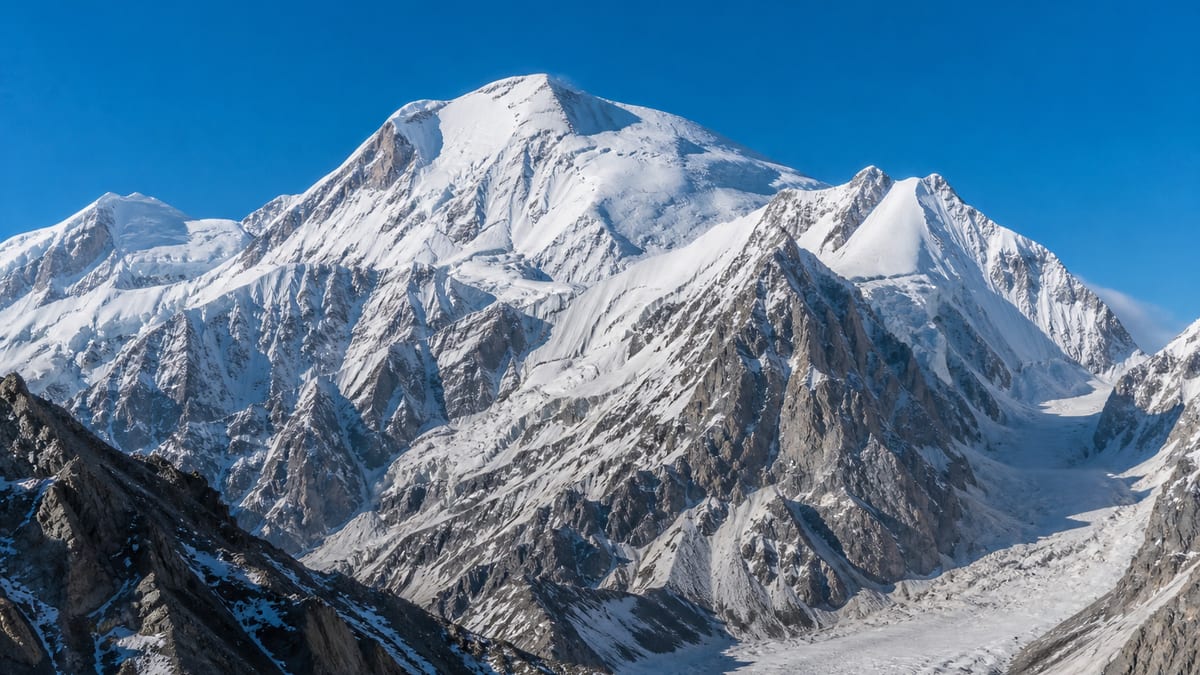
Most mountain guides end when the team reaches the summit or turns around. This one is about what happens next. Sia Kangri – N is recorded on the Pakistan Online Visa System (NADRA) List of Peaks for Gilgit-Baltistan, snapshot dated 2026-08-26, at 7,422 metres. Another row, Sia Kangri IV Central, carries exactly the same figure, and a third entry, Kunyang Khhish – W, sits just one metre higher at 7,423 metres. Thirty-five of the 104 entries with a height are listed above Sia Kangri – N and sixty-seven below.
Rows that look so alike are a gift to confusion, and confusion spreads fastest through trip reports, blog posts and social media written in a hurry after a long expedition. So this page focuses on the debrief: how to review your own trip honestly, and how to publish an account that helps the next team instead of misleading it. The official row gives no district, coordinates, route or grade, and we keep to what it says. What you write after the trip is as important as what you did on it.
The official entry
- Name: Sia Kangri – N
- Height: 7,422 m
- Tied with: Sia Kangri IV Central, 7,422 m
- One metre above: Kunyang Khhish – W, 7,423 m
- Ranked higher: 35 entries
- Ranked lower: 67 entries
- Location information: none
A tight cluster of numbers
| Entry | Height | Relation |
|---|---|---|
| Muchu Chhih | 7,453 m | 31 m higher |
| Kunyang Khhish – W | 7,423 m | 1 m higher |
| Sia Kangri IV Central | 7,422 m | same height |
| Sia Kangri – N | 7,422 m | — |
| Bajohagur Duanasir | 7,411 m | 11 m lower |
| Haramosh – I | 7,409 m | 13 m lower |
The two Sia Kangri rows share a name stem and a height, but the list keeps them separate and doesn’t explain their relationship. Treat them as different records unless an official source tells you otherwise.
Why the debrief matters
Expeditions generate hard-won knowledge: what worked, what went wrong, what nearly went wrong. Without a debrief, much of it evaporates within weeks. A structured conversation soon after the trip turns memories into lessons you, your partners and your operator can use again.
Hold it soon, but not too soon
Give everyone a day or two to rest, eat and sleep, then sit down together while details are still fresh. Tired people remember selectively and argue easily. A short break first makes the conversation calmer and more accurate.
Use a simple structure
Work through the trip in order: preparation, travel, approach, climbing period, descent and return. For each stage, ask three questions. What went well? What didn’t? What would we change next time? Write the answers down as you go. Keep the tone curious rather than critical; the aim is learning, not blame.
Separate facts from impressions
“We reached about 7,000 metres” is an impression unless someone recorded the height with a reliable device. “My watch showed 6,950 m at 11:40” is a fact, with its source. Mark each statement in your notes as measured, estimated or remembered. This habit matters even more when you write for the public.
Questions worth asking each person
Some prompts help quieter team members speak up. When did you feel most uncertain? What information did you wish you had earlier? Was there a decision you disagreed with but didn’t say so at the time? What would you keep exactly the same? Go round the group and let everyone answer before anyone responds. You may find that a choice the leader thought was obvious looked very different from further down the rope, and that difference is exactly what a debrief is meant to uncover.
Health after the trip
The debrief should include how everyone’s body is recovering. Note any frostbite, persistent cough, weight loss or lingering fatigue, and encourage anyone with symptoms to see a doctor and mention where they have been. Some problems from altitude and cold show up days later, and recording them helps you prepare better next time.
Near-misses deserve the most attention
The incidents that didn’t become accidents are often the most useful to discuss. A slip that was caught, a stove that nearly failed, a headache that someone ignored for too long. Talk about them openly, without judgement. They show where your systems were thinner than you thought.
Include the whole team
Guides, cooks and porters see things that visiting climbers miss. With your operator’s help, ask for their observations too, and thank them for their work. Their perspective can change how you plan the next trip, and asking shows respect for people whose labour made the expedition possible.
Writing a trip report people can trust
If you publish an account, begin with the exact official name and height: “Sia Kangri – N, 7,422 m, NADRA snapshot 2026-08-26”. With a tied row and a one-metre neighbour nearby, that single line prevents readers from mixing up three different records. Then describe what you did, clearly labelling dates, conditions and any measurements.
A template for your report
A clear structure makes a report easy to read and easy to check. Try these headings: objective (official name, height, source), team, dates, approach as advised by the operator, conditions observed, what happened each day, highest point reached and how it was measured, problems and how they were handled, and lessons. Finish with a short list of sources. Readers can then see at a glance what you saw yourself and what you learned from others. Keep personal opinions in a separate section so that they are clearly marked as opinions.
Avoid filling gaps with guesses
It’s tempting to add background colour: a first-ascent year, a route name, a district. Only include such details if you have a source, and cite it. If you don’t know, say so. A short, honest report is far more valuable than a long one padded with assumptions that the next team may rely on.
Be careful with routes and coordinates
Sharing a GPS track can help others, but it can also encourage underprepared people to follow a line they don’t understand, or reveal sensitive locations. Think about who will use the information. Some routes pass through areas with access restrictions; check with your operator before publishing detailed locations.
Photographs and permission
Pictures bring a report to life, but they come with responsibilities. Ask before publishing images of people, especially in villages, and respect the site’s photography restrictions guidance on subjects that shouldn’t be photographed at all. Caption images with the place and date as accurately as you can.
Correcting your own mistakes
If a reader points out an error, check it and update your report, noting what changed and when. Mountain information online is often copied without credit, so a correction at the source can stop a mistake from spreading further. Being willing to fix errors builds trust in everything else you write.
Feeding lessons back into planning
Turn the debrief notes into a short list of changes for next time: a gear item to replace, a training gap to fill, a question to ask your operator. File it with your permit records and agreements so it’s to hand when you start planning again. The permit application guide and trekking and mountaineering regulations will be your first stops on the next cycle.
Where to share it
Club newsletters, mountaineering forums and personal blogs all reach different readers. Wherever you post, keep the same core facts and the same official name and height, so that copies don’t drift apart. Link back to the original if you summarise it elsewhere, and update every version when you make a correction.
Telling your operator
A brief, honest message to your operator after the trip, covering what worked and what didn’t, helps them improve. Good operators welcome this. If something serious went wrong, put it in writing and keep a copy. The hiring guide explains what to expect from licensed operators, and registering as a tour guide covers guide licensing.
Planning travel and seasons for a return
If you plan to go back, revisit getting to Gilgit-Baltistan and the best time to visit guide with your debrief notes beside you, and update your kit list using the packing guide.
Leaving places as you found them
A good report can encourage responsible behaviour. Mention how you handled waste and camps, and point readers to the camping regulations. Include the Gilgit-Baltistan Tourist Police numbers, 1422 inside the region and 05811-930055 from outside, so future visitors find them easily.
Frequently asked questions
What height is listed for Sia Kangri – N?
7,422 metres in the NADRA snapshot dated 2026-08-26.
Which row shares that height?
Sia Kangri IV Central, also at 7,422 m.
Is Kunyang Khhish – W related?
The list doesn’t say. It is simply recorded one metre higher, at 7,423 m.
How does Sia Kangri – N rank?
Thirty-five entries are listed higher and sixty-seven lower.
Does the list say where the peak is?
No district, coordinates or route is recorded.
When should a team debrief?
After a day or two of rest, while memories are still fresh.
What should a trip report always include?
The exact official name, the height and its source, dates, conditions and clearly labelled measurements.
Should I publish my GPS track?
Think carefully about who might use it and check access rules with your operator first.
What if I find a mistake in my published report?
Correct it at the source and note what changed and when.
Who should be called in an emergency?
The Gilgit-Baltistan Tourist Police: 1422 inside the region, 05811-930055 from outside.
Source
Name and height come from NADRA’s Gilgit-Baltistan List of Peaks (Pakistan Online Visa System), snapshot 2026-08-26, plus our live page. No district, route, grade or coordinates are given for this row.