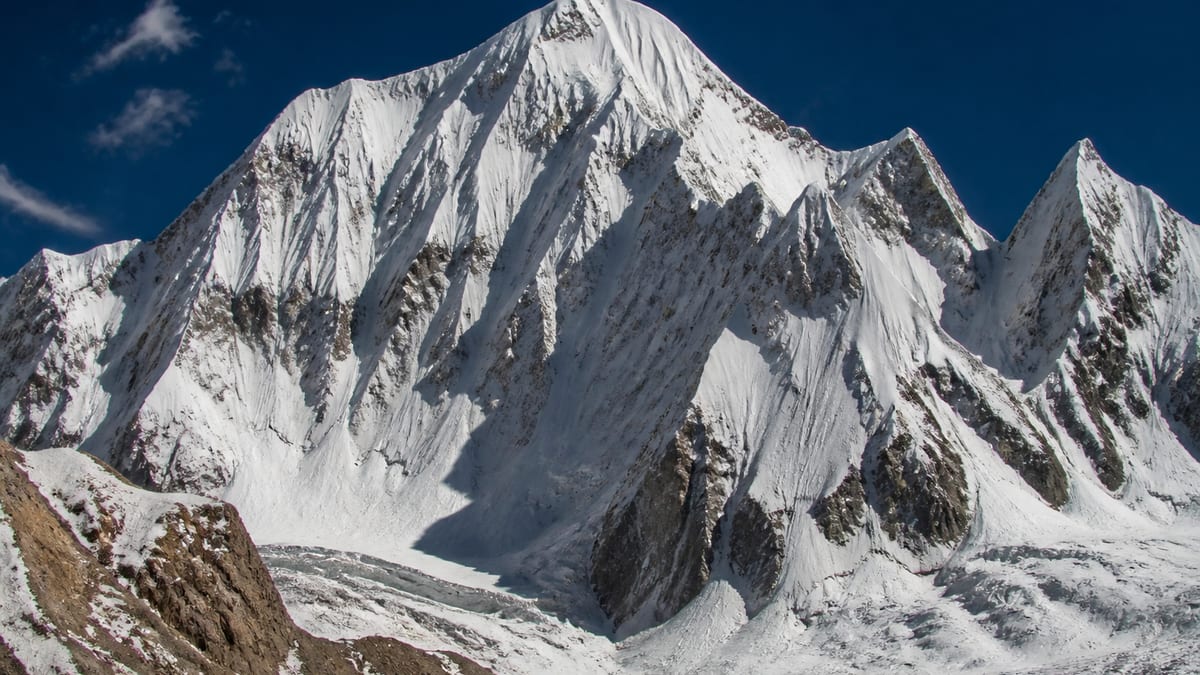
At 7,852 metres, Kunyang Khhish – E is one of the taller entries on the NADRA List of Peaks (snapshot dated 2026-08-26). Only nine rows on the list carry a greater height, and it shares its exact figure with Kunyang Chhis Main. At that altitude, appetite fades, thirst becomes unreliable, and melting snow for water can eat hours of every day. Climbers talk a lot about acclimatisation and weather, but the quieter question of what the team will eat and drink, and how much fuel that takes, shapes how strong everyone feels on summit day. This page sets out a planning framework for that question. It doesn’t prescribe a diet; your team doctor and leader should do that.
What the official list records
- Name: Kunyang Khhish – E
- Height: 7,852 m
- Same height as: Kunyang Chhis Main
- Other Kunyang rows: Kunyang Khhish – W at 7,423 m and Kunyang Khhish – SE at 7,215 m
- District, coordinates, grade, season: not provided
Notice the spellings: “Chhis” in the main row and “Khhish” in the others. Use each exactly as printed when you name it on a form. Food, water and fuel decide how strong the team feels on summit day.
Neighbouring heights
| Row | Height | Gap |
|---|---|---|
| Disteghil Sar Main | 7,885 m | 33 m higher |
| Distaghil Sar – II | 7,885 m | 33 m higher |
| Kunyang Khhish – E | 7,852 m | — |
| Kunyang Chhis Main | 7,852 m | same |
| Link Sar West | 7,821 m | 31 m lower |
Why food planning gets harder with height
Three problems tend to stack up as a team climbs:
- Appetite drops. Many people simply stop wanting to eat at high camps, even though their bodies are working hard.
- Thirst becomes a poor guide. Dry, cold air pulls water out with every breath, and people often drink less than they need.
- Water costs fuel. Above the snow line, nearly all drinking water starts as snow or ice that has to be melted on a stove.
None of these is solved by packing more food. They’re solved by planning what people will actually eat, when, and with what fuel.
Splitting the trip into food zones
A useful way to think about supplies is to divide the trip by where meals happen:
- Town and road: Ordinary meals, bought locally. The main job here is buying and packing for everything that comes after.
- Walk-in: Meals cooked by the team or its staff, carried by porters or animals. Volume and weight matter more than lightness.
- Base camp: A kitchen of some kind, more choice, more time. This is where climbers should rebuild their reserves between rotations.
- Upper camps: Every gram carried by climbers themselves. Food needs to be light, quick to prepare and, above all, something people will want to eat when they feel unwell.
Plan each zone separately. A menu that works at base camp often fails completely at the highest camp.
Questions for the upper-camp menu
Before buying anything for the high camps, the team should answer:
- What does each climber find easy to eat when nauseous or exhausted? Write it down by name, not by category.
- Which items need only hot water, and which need cooking?
- How much water does each meal and drink need, in total, per person per day?
- Does anyone have allergies, dietary rules or medical conditions that limit choice?
- Have the high-camp foods been tried at least once, on a long cold day, before the trip?
That last question catches more problems than any other. Novel food on a mountain is a gamble.
From water to fuel
Fuel is where food planning becomes logistics. A rough method, using your own figures rather than ours:
- Estimate litres of water per person per day at each upper camp, on your doctor’s advice.
- Multiply by the number of people and nights at that camp.
- Test how much fuel your stove uses to melt snow and bring that volume to a drink, in cold conditions, before you leave.
- Add a margin for wind, failed lighters, spills and storm days when the tent stays shut.
The answer becomes part of the load plan. Ask your operator how fuel can be bought and transported, since some fuel types can’t go on aircraft. Keep a written note of the figures you used, so the team can adjust them after the first rotation.
Packing and labelling upper-camp food
How food is packed matters nearly as much as what it is. At a high camp, in a cramped tent, with cold hands, nobody wants to sort through a loose sack of wrappers. A few habits help:
- Pack by day, not by item. One bag per person per day at each upper camp, labelled with the camp and day number.
- Remove excess packaging at base camp. It saves weight and leaves less rubbish to carry down.
- Put a list inside each bag. It tells the next person exactly what’s there, which matters if plans change and someone else eats it.
- Keep a spare day’s bag at each camp for storms, clearly marked so it isn’t eaten early.
- Carry all rubbish back down. Empty bags make good rubbish bags.
When a rotation ends, the quartermaster checks what was eaten and what came back untouched. Untouched food is useful information: it shows what people won’t eat at height, and the menu for the next rotation should change accordingly.
Adjusting after the first rotation
The first trip up the mountain is a test of the plan as much as of the climbers. Back at base camp, sit down and compare actual use against estimates for water, fuel and food. If the stove burned more fuel than expected, or someone drank far less than planned, fix the numbers now. Small corrections early prevent a serious shortfall later, when the team is highest and least able to improvise.
Base camp as a recovery station
Climbers who come down from a rotation to poor food lose ground. If base camp has a cook employed through your operator, talk to them early about what the team likes and what it struggles with. If the team is cooking for itself, give one person the job of quartermaster: tracking supplies, planning menus, and noticing who isn’t eating.
The quartermaster should also watch water at base camp. Streams near camp may carry waste from people or animals upstream. Treat drinking water accordingly, and follow the waste rules in camping regulations so you don’t become the problem for the next team.
Loads, porters and food weight
Food and fuel usually make up a large share of what porters carry. Agree load sizes and numbers in line with porter and mule hiring regulations, and remember that porters need food too: check with your operator how their provisions are arranged. Personal snacks and kit are covered in our packing list for Gilgit-Baltistan.
Permits and operator questions
The permit process for an objective at this height is set out in applying for trekking and mountaineering permits and the rules in trekking and mountaineering regulations. When interviewing operators via the hiring a tour operator checklist, add food-specific questions: who cooks, what is supplied at base camp, how fuel is sourced, and who is responsible for clean water.
Access and timing
The list gives no district or approach for this row. General travel into the region is described in getting to Gilgit-Baltistan, and regional seasons in the best time to visit Gilgit-Baltistan. Ask your operator to describe the approach stage by stage, because every extra day of walking is another day of food.
Health and safety
Poor eating and drinking can make altitude illness and cold injury more likely and harder to recognise. Agree with your doctor what signs should trigger a descent, and make sure everyone knows them. Keep a simple log at high camps: who ate, who drank, who didn’t. A climber who has barely eaten for two days is a safety concern, not just a hungry person.
For emergencies in the region, the Tourist Police are on 1422 and 05811-930055. Evacuation should be arranged in advance through your operator and insurer.
Respecting local communities
Buying food in valley villages can support local people, but supplies may be limited. Don’t strip a small shop of staples. Check photography restrictions before photographing markets or people, and read about the culture of Gilgit-Baltistan.
Frequently asked questions
How high is Kunyang Khhish – E?
The NADRA List of Peaks records it at 7,852 metres, the same figure as Kunyang Chhis Main.
How many listed peaks are higher?
Nine rows on the list carry a greater height. We quote this from the list rather than ranking it ourselves.
Is Kunyang Khhish – E the same summit as Kunyang Chhis Main?
They are separate rows on the official list. Confirm with the authority which row your permit should name.
How much food should I take?
That depends on team size, trip length and personal needs. Plan by zone and get advice from your team doctor.
Why does water planning matter so much?
At upper camps most water comes from melting snow, which costs fuel and time. Thirst is also less reliable at altitude.
How do I estimate fuel?
Test your stove melting snow in cold conditions, then scale by people, nights and litres per day, plus a margin.
Can I fly with stove fuel?
Some fuel types are restricted on aircraft. Ask your operator how fuel is bought and transported locally.
Who cooks at base camp?
That depends on your arrangement. Ask operators directly whether a cook is provided and what is supplied.
Is there an official approach route?
The list doesn’t give one for this row. Ask your operator for a stage-by-stage description.
Who do I contact in an emergency?
The Tourist Police lines are 1422 and 05811-930055. Have rescue cover arranged before departure.