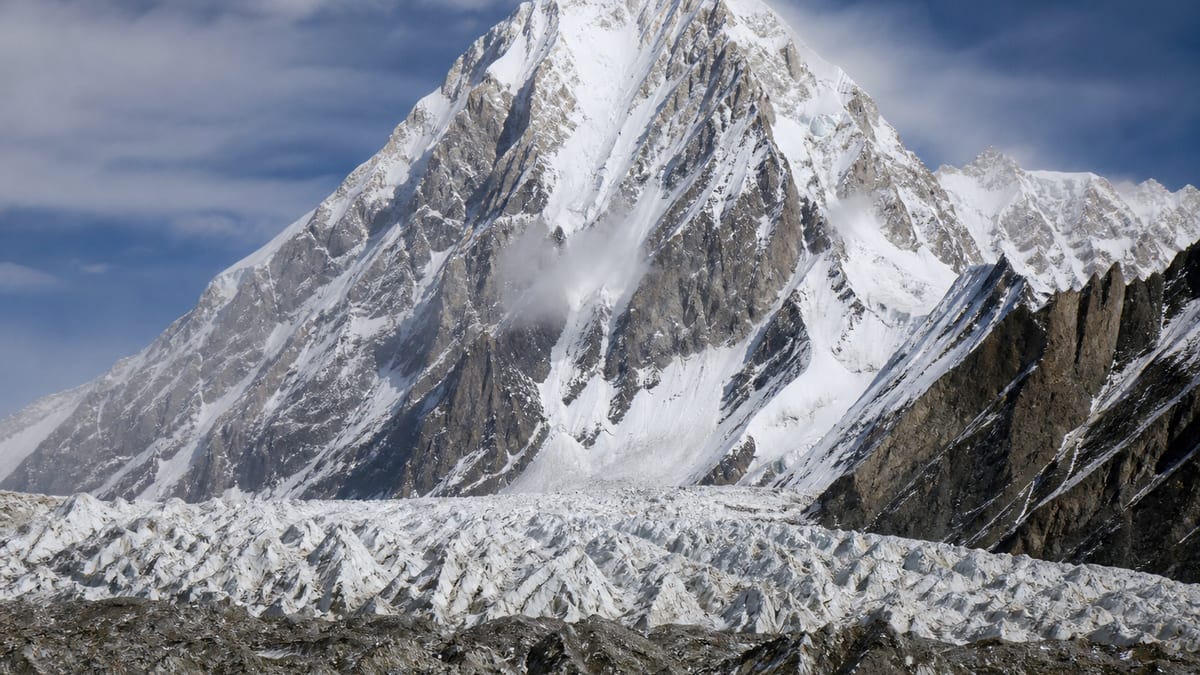
Batura – V closes a sequence that begins nearly 260 metres higher. On the Pakistan Online Visa System (NADRA) List of Peaks for Gilgit-Baltistan, snapshot dated 2026-08-26, it is listed at 7,531 metres, the lowest of five numbered Batura entries. Even so, 75 listed peaks stand below it and only 28 above, so it remains in the upper third of the list. The nearest entry from another family is Skyang Kangri – I, thirteen metres higher at 7,544 m.
The first part of this page places Batura – V within its family and among its height neighbours. The second part looks at a risk that affects everyone at this altitude: cold injury to hands and feet. Frostbite can end an expedition and cause lasting harm, yet many of the precautions are simple habits. This is general planning guidance, not medical advice. Peak facts come only from the NADRA list and the live page; routes, grades, coordinates, fees and ascent history are not included. Hands and feet are where cold injury shows up first, so we start there.
Official details
- Entry name: Batura – V
- Listed height: 7,531 m
- Peaks listed higher: 28
- Peaks listed lower: 75
- District: not specified in the NADRA table
- Routes and grades: not part of the entry
Fifth of five
| Official entry | Listed height | Above Batura – V by |
|---|---|---|
| Batura-I (written “Batura –I”) | 7,785 m | 254 m |
| Batura – II | 7,762 m | 231 m |
| Batura – III | 7,729 m | 198 m |
| Batura – IV | 7,594 m | 63 m |
| Batura – V | 7,531 m | — |
Batura – IV is the closest sibling, 63 metres higher. The roman numeral V is easily misread as a letter or confused with IV in handwriting, so write it clearly and add the height on every form.
Neighbours from other families
- Shishpar Sar: 7,611 m
- Skyang Kangri – I: 7,544 m (13 m higher, the nearest)
- Pumari Chhish – N and Pumari Chhish – W: 7,492 m
- Malubiting NW: 7,458 m
- Malubiting – W and Muchu Chhih: 7,453 m
All of these appear in the live page’s list of entries within one hundred metres.
Why cold injury deserves planning
At high altitude, the body protects its core by reducing blood flow to the hands and feet. Add wind, damp gloves, tight boots, dehydration and exhaustion, and fingers and toes become vulnerable quickly. Frostbite often develops without much pain, so climbers may not notice until damage is done. Preventing it is far easier than treating it, especially when help is far away.
Layering for hands
Most climbers use a layered system rather than a single glove:
- Thin liners for tasks that need dexterity
- Insulated gloves for general use
- Warm mitts for the coldest conditions, since mitts keep fingers together and warmer
- Spares kept dry in an inner pocket
Practise working with each layer at home, including handling equipment, so you’re not tempted to remove gloves on the mountain.
Keeping feet warm
Boots should fit with the socks you’ll wear, leaving room to wiggle toes; tight boots restrict circulation. Keep spare socks dry, change damp socks quickly, and dry liners overnight inside your sleeping bag. Loosen laces slightly at rest stops to let blood flow. Ask your operator what boot type they recommend for the objective.
Everyday habits that protect extremities
- Eat and drink regularly. A fuelled, hydrated body keeps extremities warmer.
- Keep moving fingers and toes during stops.
- Avoid tight straps around wrists and ankles.
- Don’t touch cold metal with bare skin.
- Protect from wind, which strips heat fastest.
- Check each other. Ask partners how their fingers and toes feel, and look at faces for pale patches.
Warning signs
Early signs include numbness, tingling, pale or waxy skin, and fingers that stop working properly. If you notice these, tell your guide straight away, get out of the wind, and warm the area gently as your guide advises. Don’t rub affected skin and don’t ignore the problem in the hope it will pass. Severe or worsening symptoms may mean descending.
Warming up safely
Once in shelter, warm hands in armpits or against the stomach and feet against a partner’s warm skin, if your guide advises. Avoid direct heat from stoves, which can burn numb skin without you feeling it. Follow your guide’s instructions and your pre-trip medical advice.
Planning with your doctor
Before the trip, ask your doctor about cold injury, especially if you have circulation problems, previous frostbite or take medication that affects blood flow. Bring any recommended treatments, and include this information in the medical details you share with your operator.
Hands while working
Many cold injuries happen during routine tasks: adjusting crampons, clipping into ropes, setting up tents or cooking. Plan these tasks so bare skin is exposed for as short a time as possible. Lay out what you need before removing gloves, work quickly, then cover up again and warm your hands before continuing. Thin liners let you do many jobs without fully exposing skin. Practise these routines at home in the cold, wearing your expedition gloves, until they’re second nature.
Night-time care
Feet and hands can cool overnight, especially if you go to bed damp or dehydrated. Change into dry socks before sleeping, keep tomorrow’s liners and inner boots inside your sleeping bag so they’re warm in the morning, and eat a small snack before bed to help your body produce heat. If your feet are cold when you lie down, warm them before sleeping rather than hoping they’ll warm up by themselves.
Face and ears
Cold injury isn’t limited to hands and feet. The nose, cheeks, chin and ears are exposed to wind and can freeze quickly. Use a face mask, neck gaiter or balaclava in strong wind, and check each other’s faces for pale or waxy patches. Remove metal piercings that can conduct cold. Apply a barrier balm if your guide recommends it.
Early starts and summit days
Pre-dawn starts are often the coldest part of the day. Warm your hands and feet before leaving the tent, put on dry socks and gloves, and eat and drink something warm. Keep spare mitts and hand protection where you can reach them easily. If you can’t feel your toes or fingers after the first hour despite moving, tell your guide; it may mean the conditions are too severe or that something needs adjusting.
Learning from experience
After each day, notice what worked: which gloves kept you warm, when your feet got cold, what you would change. Share those lessons with the team. Cold management is a skill that improves with attention, and every expedition teaches something new about your own body.
Checking each other
At the end of each day, take a few minutes in camp to look at each other’s fingers and toes in good light. Partners often notice early colour changes that the owner has missed. Make it routine, not a sign of worry. Report anything unusual to your guide straight away, and don’t rub numb or discoloured skin; follow their advice on rewarming. Encourage teammates to speak up about cold hands without fearing they’ll slow the group. A brief pause to warm up is far better than an injury that ends someone’s trip on Batura V, or affects them for months afterwards at home.
Clearance for Batura – V
With five numbered Batura rows on the NADRA table, the numeral is the detail that matters on forms: write “Batura – V” and 7,531 m every time. Arrangements go through an operator on the NADRA/DTS registers, and our checklist for selecting a company explains what to verify. The permit how-to walks through applications, while the official rules digest confirms licensed guides and porters are required in restricted areas. Ask about your porters’ cold-weather gear too: their hands and feet face the same risks as yours. Credentials can be checked via our page on licensed guides, and fees should be confirmed with officials.
Arriving with warm extremities
Long, cold road journeys can chill feet before you ever set foot on a trail. The NADRA row offers no district or coordinates, so the operator chooses the approach. Gilgit Airport and Skardu’s airport take flights; the Karakoram Highway, Babusar Pass and Shandur Pass take road traffic, as our transport overview describes. Travel in your warm socks and keep gloves in your daypack, not the hold.
Season and hand-and-foot kit
The record carries no season; see our timing overview. The official FAQ’s basics are warm clothes, sturdy shoes, sunscreen, sunglasses, insect repellent, first aid, a bottle and energy bars. For this page’s theme, add liner gloves, mitts, spare socks and well-fitted boots. Our kit guide has the rest.
Wider hazards
Cold injury rarely arrives alone: it often accompanies altitude illness, storms, a forced bivouac or a crevasse rescue. Plan for avalanche, rockfall and sudden weather as well. For help, the Tourist Police answer on 1422 within Gilgit-Baltistan and 05811-930055 from outside. Observe the camping regulations and photography rules.
Frequently asked questions
What is the listed elevation of Batura – V?
7,531 metres in the NADRA snapshot dated 2026-08-26.
Is it the shortest of the Batura rows?
Yes. It is the fifth and lowest of the numbered Batura entries.
Which listed summit is nearest in height?
Skyang Kangri – I, at 7,544 m, thirteen metres higher.
How does it rank overall?
Twenty-eight entries sit above it and seventy-five below.
How much lower is it than Batura-I?
254 metres. Batura-I (written “Batura –I”) is listed at 7,785 m against 7,531 m here.
Does NADRA give a district?
Not in this row. The operator and permit authorities can confirm.
Are lines or grades recorded?
No. Just the name and the elevation.
Why do mitts beat gloves for warmth?
Fingers share heat inside a mitt, while gloves separate them and expose more surface to the cold.
Is a permit needed?
Yes. Listed peaks fall under NADRA and Tourism Department/DTS procedures.
What number should I call for help?
Tourist Police: 1422 in the region, 05811-930055 from anywhere else.
Source
List of Peaks (Gilgit-Baltistan) · Pakistan Online Visa System (NADRA) · Accessed 2026-08-26