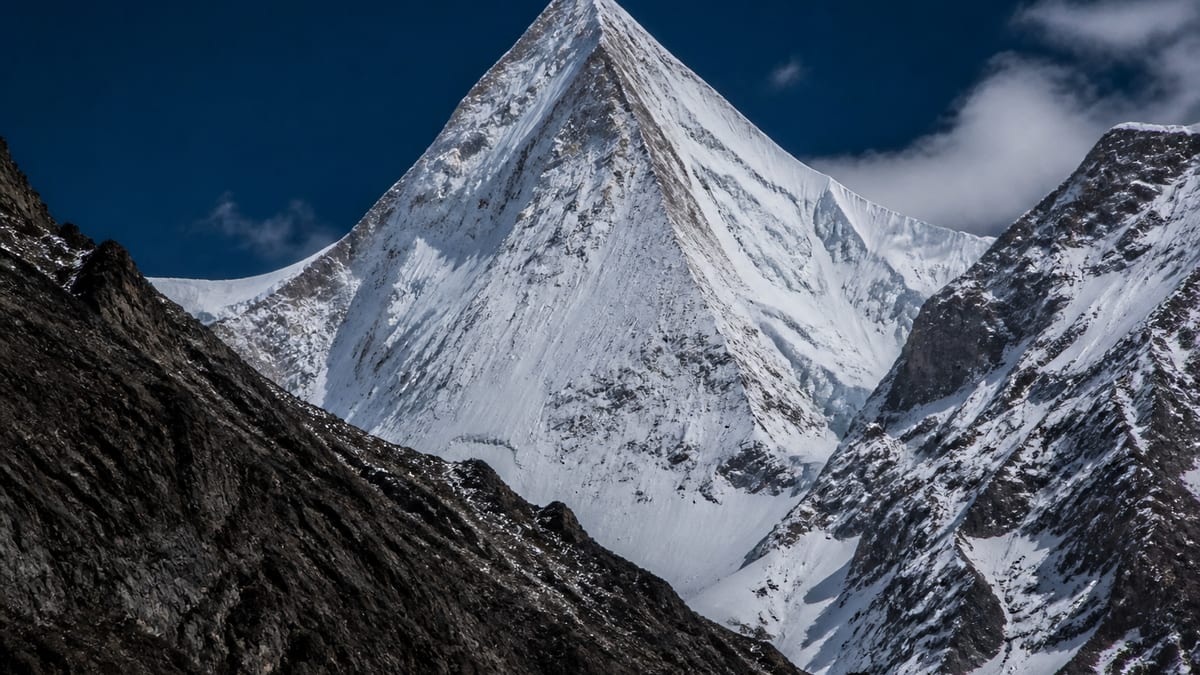
Five rows on the official table begin with the word Malubiting, and the eastern one sits at the bottom of that family. The Pakistan Online Visa System (NADRA) List of Peaks for Gilgit-Baltistan, snapshot of 2026-08-26, records Malubiting – E at 7,124 metres. Its relatives stand well above it: Malubiting NW at 7,458 metres, Malubiting – W at 7,453 metres, Malubiting Central at 7,260 metres and Malubiting- LC at 7,233 metres. Eighty-three elevation-listed entries outrank Malubiting – E and twenty fall below it. By a single metre, its closest neighbour is Yazghil dome – S at 7,123 metres, a row from another family entirely.
With five related names, the first task is identification, and the table below helps with that. After it, this page turns to a subject every visitor to Gilgit-Baltistan should think about before arriving: how to behave as a guest. Mountain journeys pass through villages, farms and homes, and the welcome visitors receive depends on how earlier visitors behaved. These are general courtesies, offered with humility; your guide will know local customs far better. Peak facts are taken only from the NADRA list and our live page, neither of which records a district, coordinates, route, grade or ascent history. How you behave in a village shapes the welcome the next visitor gets.
Key facts from the record
- Name as written: Malubiting – E
- Height: 7,124 m
- Entries above: 83
- Entries below: 20
- Family position: lowest of five Malubiting rows
- Closest row: Yazghil dome – S, 7,123 m
- District and route: not given
The Malubiting family in order
| Official entry | Listed height | Compared with Malubiting – E |
|---|---|---|
| Malubiting NW | 7,458 m | 334 m higher |
| Malubiting – W | 7,453 m | 329 m higher |
| Malubiting Central | 7,260 m | 136 m higher |
| Malubiting- LC | 7,233 m | 109 m higher |
| Malubiting – E | 7,124 m | — |
The spread is large: more than three hundred metres between the eastern row and the north-western one. Writing only “Malubiting” on a form is therefore meaningless. Include the direction letter and the height every time, as in “Malubiting – E, 7,124 m”.
Unrelated rows at almost the same height
| Official entry | Listed height | Difference |
|---|---|---|
| Gasherbrum-V | 7,133 m | 9 m higher |
| Malubiting – E | 7,124 m | — |
| Yazghil dome – S | 7,123 m | 1 m lower |
| Bularang Sar | 7,120 m | 4 m lower |
| Golden Throne NW (Baltoro Kangri) | 7,115 m | 9 m lower |
Why guest behaviour matters
To a visitor, a village is a stop on the way to the mountains. To the people who live there, it is home, with its own rhythms, beliefs and expectations. Mountain tourism depends on the goodwill of these communities, who often provide porters, cooks, food and shelter. Respectful behaviour keeps that goodwill alive for the next team, and it makes your own journey richer.
Dress with care
Modest clothing is widely appreciated in Gilgit-Baltistan. Covering shoulders and legs in villages is a simple courtesy, for men and women alike. Mountain clothing makes this easy; save shorts and vest tops for remote high camps if at all. When unsure, ask your guide and follow local example.
Greetings and conversation
A smile and a greeting go a long way. Learn a few words of greeting from your guide and use them. Let conversations develop naturally, and be patient with language barriers. Ask questions about daily life with genuine interest rather than treating people as curiosities.
Hospitality and how to receive it
You may be offered tea or food. Accepting graciously, even a small amount, is usually polite; your guide can tell you how to decline if you must. Eat and drink with your right hand where that is the custom. Never waste offered food openly.
Photographs and privacy
Always ask before photographing people, homes or religious sites, and accept refusals without fuss. Our page on photography restrictions also explains legal limits. Never photograph women without clear consent, and be especially careful around children.
Religious places and times
Mosques and shrines are places of worship, not attractions. Enter only if invited, remove shoes where required, and keep voices low. Be mindful of prayer times and of fasting periods, when eating or drinking openly in front of others may be unwelcome.
Gifts and money
Giving sweets or money to children can encourage begging and create problems for families. If you want to help, ask your guide or operator about appropriate ways to support the community. Pay fairly for services and goods, and don’t haggle aggressively over small sums.
Land, crops and animals
Walk on paths, close gates, and keep clear of crops and irrigation channels, which are vital to farming families. Give way to livestock and herders. Ask before camping near fields or houses, and follow the camping regulations everywhere.
Learning before you go
Our introduction to the culture of Gilgit-Baltistan is a good starting point. The more you understand, the less likely you are to cause offence and the more likely you are to make real connections.
Noise, alcohol and behaviour
Many communities in Gilgit-Baltistan are conservative, and loud behaviour, public displays of affection or open drinking can cause real offence. Keep celebrations low-key and private, especially near villages. Ask your guide before playing music in camp if others are nearby. Behaving quietly costs nothing and shows that you understand you are a visitor in someone else’s home.
Listening more than speaking
Some of the most memorable moments on a trip come from simply listening: a porter describing his family, a farmer explaining the season, a child showing off a few words of English. Show interest without prying. Avoid political debates or sensitive religious topics unless someone clearly invites the conversation, and even then, listen more than you speak.
Shopping locally and fairly
Buying supplies, crafts or snacks in local shops puts money directly into the community. Pay the asked price when it is reasonable, carry small notes so traders aren’t forced to find change, and thank people. If you’re unsure what’s fair, ask your guide quietly rather than bargaining hard over trivial differences.
Leaving a good impression
The next visitor’s welcome is shaped by yours. Leave campsites cleaner than you found them, keep promises such as sending photographs, and say goodbye properly. A simple, sincere thank-you to the people who hosted or helped you is the best souvenir to leave behind.
Children and gifts
Children are often curious about visitors. Be friendly, but avoid handing out sweets, pens or money, which can encourage begging and disrupt schooling. If you want to help, ask your guide whether a school or community group would welcome a considered donation made through proper channels. Always ask parents before photographing children, and accept a no without argument. Respect for families matters more than any picture.
Learning a few words
A few words of greeting and thanks in the local language go a long way. Ask your guide or porters to teach you, and practise them. Mistakes usually draw smiles rather than offence, and the effort shows respect.
Mosques and prayer times
Walk quietly past mosques, never enter without invitation, and pause conversations or photography near prayer. Your guide will tell you what’s customary in each village you pass.
Dress and modesty
Wear loose clothing that covers your shoulders and legs in villages, whatever the heat. Women travellers may want to carry a light scarf. Dressing modestly shows respect and attracts fewer awkward stares.
The correct row on your permit
Because five Malubiting rows exist, the application must say “Malubiting – E” with 7,124 m. The permit application guide explains the official process, and trekking and mountaineering regulations describe registration and licensed guides. Ask your operator to confirm the letter on the approved document.
Arriving with respect
The journey itself passes through communities. Our guide to reaching Gilgit-Baltistan and Skardu airport access outline the options. Since the record gives no district, your operator will confirm the starting valley and any local customs to observe there.
Season and modest packing
Seasonal patterns are covered in the best time to visit guide. Use the packing guide and add loose, covering clothes for village days, plus a scarf that can serve several purposes.
Safety and courtesy together
Courtesy and safety support each other: a community that trusts visitors helps them. If something goes wrong, contact the Gilgit-Baltistan Tourist Police on 1422 or 05811-930055 and your operator.
Choosing a respectful operator
Ask operators how they treat staff and engage with communities. Our hiring guide suggests questions, and registering as a tour guide explains licensing.
Frequently asked questions
What is the official height of Malubiting – E?
The NADRA snapshot dated 2026-08-26 records 7,124 metres.
How many Malubiting rows are there?
Five: NW (7,458 m), W (7,453 m), Central (7,260 m), LC (7,233 m) and E (7,124 m).
Which is the closest entry by height?
Yazghil dome – S, at 7,123 metres, one metre lower.
How does Malubiting – E rank overall?
Eighty-three entries are higher and twenty lower.
Does the record name a district?
No. There is no district, coordinates or route.
What should I wear in villages?
Modest, covering clothing. Follow your guide’s advice and local example.
Is it rude to refuse tea?
Accepting a little is usually polite. Ask your guide how to decline gracefully if needed.
Can I give sweets to children?
It’s better not to. Ask your operator about appropriate ways to support communities.
Is a permit needed?
Yes, naming Malubiting – E and its height correctly.
Who should I call in an emergency?
The Gilgit-Baltistan Tourist Police: 1422 or 05811-930055.
Source
Pakistan Online Visa System (NADRA) List of Peaks for Gilgit-Baltistan, snapshot 2026-08-26, and our live page. No district, route, grade or coordinates are given.