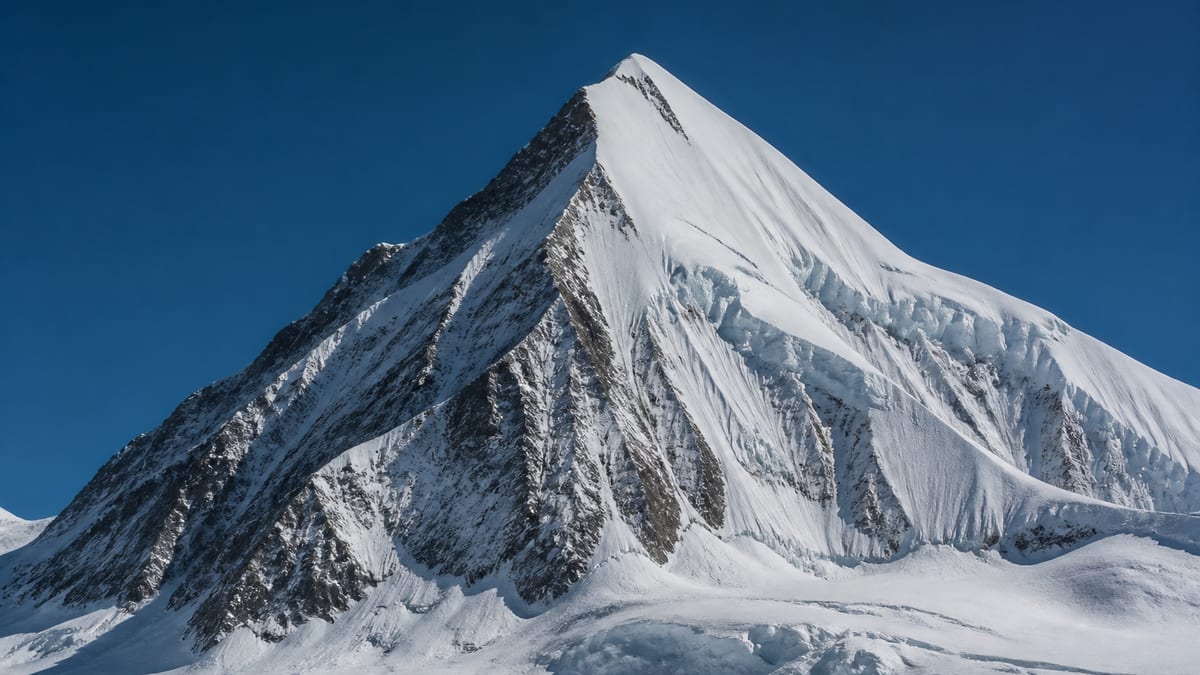
Three rows on the government permit list carry the Urdok name, and the one numbered II is the tallest of them. The Pakistan Online Visa System (NADRA) List of Peaks for Gilgit-Baltistan, snapshot dated 2026-08-26, records Urdok Kangri –II at 7,358 metres. That is 58 metres above both Urdok – I and Urdok Kangri –I, which share an identical 7,300 m figure, and a single metre above Skyang Kangri – M. Forty-five listed entries are higher and 58 lower.
Below, we first sort out the Urdok family and the crowded height band around it, then move on to a practical theme: caring for equipment. Gear that fails at altitude can turn an inconvenience into an emergency, and much of that risk can be removed with checks and habits that cost very little. Peak facts are taken only from the NADRA record and the live page; routes, grades, coordinates, fees and ascent history are deliberately not included. A small repair kit and a few habits can save a big day later.
What the entry records
- Official name: Urdok Kangri –II (note the spacing, copied from the list)
- Listed height: 7,358 m
- Entries higher: 45
- Entries lower: 58
- District: not stated by NADRA
- Routes, grades and coordinates: not part of the record
The Urdok entries side by side
| Official entry | Listed height | Compared with Urdok Kangri –II |
|---|---|---|
| Urdok Kangri –II | 7,358 m | — |
| Urdok Kangri –I | 7,300 m | 58 m lower |
| Urdok – I | 7,300 m | 58 m lower |
Two features of this family deserve care. First, Urdok – I and Urdok Kangri –I share the same height, so the height can’t tell them apart; only the exact wording does. Second, the official punctuation places the dash directly against the numeral (“–II”, “–I”), unlike many other entries that put spaces around it. Copy the name exactly as NADRA prints it. When you mean this page’s peak, write “Urdok Kangri –II, 7,358 m” and nobody can confuse it with its siblings.
A one-metre neighbour from another family
Skyang Kangri – M is listed at 7,357 m, just one metre lower than Urdok Kangri –II. The names are different, but the near-identical heights mean that a list sorted by height places them side by side. Other close entries from the full table include Skil Burm at 7,360 m, two metres higher, and Skyang Kangri – II at 7,345 m.
The live page’s list of entries within one hundred metres also names Bajohagur Duanasir (7,411 m), Haramosh – I (7,409 m), Istoro Nal (7,389 m), Karun Kuh (7,350 m), Kunyang Khhish – W (7,423 m), Baltoro Kangri-I (7,312 m) and Diran/Minapin (7,273 m).
Why equipment care deserves a plan
At seven thousand metres, you depend on your equipment for warmth, shelter, movement and communication. A broken zip, a cracked buckle or a stove that won’t light are small problems at home but serious ones in a storm high on a mountain. Cold makes plastics brittle, batteries weak and fingers clumsy, so failures tend to happen exactly when they’re hardest to fix. Regular care catches many problems early.
Before you leave home
- Test everything. Pitch the tent, light the stove, wear the boots on long walks, and check that every clip and strap works.
- Check fit. Boots, harness and crampons need to fit together and fit you, with the clothing you’ll actually wear.
- Label it. Mark your gear clearly, especially items that look the same as everyone else’s.
- Make a list. Write down what you’re taking and tick it off at each stage of the journey.
- Ask your operator. They will provide a technical equipment list and can say what is supplied and what you must bring.
A simple repair kit
A small repair kit can rescue many situations. Common contents include strong tape, a needle and thread, spare cord, a few cable ties, tent pole repair sleeves, spare buckles and a multi-tool. Ask your operator what they carry as a team and what you should bring personally. Know how to use each item before you need it, ideally by practising at home.
Daily checks on the mountain
Make a habit of quick checks each day:
- Look over boots, crampons and straps for wear or damage.
- Check the tent’s poles, guy lines and zips before settling in.
- Make sure the stove is clean and working before the evening melt.
- Dry gloves, socks and liners whenever you can.
- Keep batteries and electronics warm, inside clothing or sleeping bags.
It takes minutes and prevents most nasty surprises.
Keeping things dry
Wet gear loses warmth and weighs more. Use waterproof bags inside your pack, keep spare layers sealed until needed, and brush snow off clothing before entering the tent. Damp items can sometimes be dried inside a sleeping bag overnight, though that is less comfortable. Moisture management is one of the quiet skills that separates comfortable climbers from miserable ones.
Sharing and lending gear
On a team, people often share equipment such as stoves, tents and ropes. Agree who is responsible for each shared item, who carries it, and who checks it. If you lend something, make sure you get it back before it’s needed. Confusion about shared kit is a common source of both friction and risk.
After the trip
Clean, dry and inspect everything when you get home, before putting it into storage. Note what worked, what failed and what you missed. Replace damaged items now rather than discovering the damage at the start of the next trip.
Tents and shelter
Your tent is your home on the mountain and your refuge in a storm. Pitch it carefully every time, even when tired: guy lines tight, door facing away from the prevailing wind if your guide advises, and snow stakes or anchors secure. Clear snow from the walls during heavy falls so the fabric doesn’t strain or collapse. Never cook in a closed tent without the ventilation your operator recommends, because stoves can produce dangerous fumes. Before breaking camp, shake out the tent and check poles for bends or cracks.
Stoves and fuel
The stove melts snow for water, so if it fails, the whole team is in trouble. Learn how to clean and maintain it, carry spare parts if your operator suggests, and handle fuel carefully to avoid spills. Keep the stove on a stable base, out of the wind, and away from tent fabric. Check how much fuel remains each evening and make sure it matches the days ahead.
Clothing as equipment
Clothing is safety equipment, not just comfort. Inspect zips, seams and cuffs for wear before departure and during the trip. A failed zip on an outer jacket can let wind and snow in exactly when you need protection most. Carry a small repair patch suitable for your shell fabric, and know which layers you would sacrifice for repairs if necessary.
When gear fails anyway
Sometimes no amount of care prevents a failure. Decide in advance how the team would respond to losing key items: a stove, a tent, a crampon, a glove. In many cases the safest answer is to descend. Talk it through with your guide so that nobody tries to improvise a risky solution under pressure high on Urdok Kangri –II.
Paperwork for an Urdok objective
Gear lists get attention months ahead; permit forms often get it weeks ahead, which is backwards. Because three Urdok rows sit on the official table, a sloppy entry is easy to make, so copy “Urdok Kangri –II” and 7,358 m straight from the NADRA list onto every document. Your booking should run through an operator who appears on the NADRA/DTS registers; our note on choosing a registered company explains what to check. The permit application walkthrough shows the sequence of forms, and the regulations summary confirms that licensed guides and porters are mandatory in restricted zones. Licences can be cross-checked against our page on guide registration. Fees change, so get the current figure in writing from the authorities rather than relying on old trip reports.
Moving people and kit into the mountains
Fragile items suffer most on the way in, not on the climb. Since NADRA gives no district or coordinates for this summit, your operator decides the approach. Flights land at Gilgit Airport or at Skardu International, and road travellers use the Karakoram Highway, Babusar Pass or Shandur Pass; our overview of routes into the region compares them. Pad stove parts and pole sections inside soft clothing, keep the repair pouch in hand luggage, and photograph your full kit before handing bags to porters or vehicles.
Timing and kit lists
There’s no season attached to the official row. Our timing guide describes broad patterns, and your operator will fix dates. The official FAQ’s basic list (warm layers, strong footwear, sunscreen, sunglasses, insect repellent, first aid, a bottle and energy bars) is only a starting point here; add the technical list and your repair kit, and see our general packing advice.
When equipment problems become safety problems
A torn glove at base camp is an annoyance; the same tear above high camp can mean frostbite. Altitude illness, avalanches, hidden crevasses, rockfall and sudden storms are all made worse by failing kit, so treat repairs as risk management. In an emergency the Tourist Police answer on 1422 inside Gilgit-Baltistan and 05811-930055 from elsewhere. Respect the camping rules and camera restrictions, and pack broken buckles, spent cartridges and torn fabric out with you.
Frequently asked questions
What height does NADRA give Urdok Kangri –II?
The snapshot of 2026-08-26 lists it at 7,358 metres.
How many rows carry the Urdok name?
Three: this one at 7,358 m, plus Urdok Kangri –I and Urdok – I, both at 7,300 m.
How can Urdok – I and Urdok Kangri –I be told apart?
Only by spelling. Their listed heights are identical, so the name is the sole difference.
What sits nearest in height?
Skyang Kangri – M, from a different family, a single metre lower at 7,357 m.
Where does it fall in the ranking?
Forty-five rows stand above it and fifty-eight below.
Does the table say which district it’s in?
It doesn’t. Your operator and the permit office can confirm the area.
Will I find a route description in the record?
No. The row holds a name and an elevation, nothing about lines or grades.
What should a field repair pouch hold?
Typical items are tape, needle and strong thread, cord, cable ties, a pole sleeve, spare buckles and a multi-tool. Ask your operator to review it.
Is a permit required for this summit?
Yes. As a listed peak it falls under NADRA and Tourism Department/DTS procedures.
Who do I phone if something goes wrong?
The Tourist Police: 1422 from within the region, 05811-930055 from outside it.
Source
List of Peaks (Gilgit-Baltistan) · Pakistan Online Visa System (NADRA) · Accessed 2026-08-26