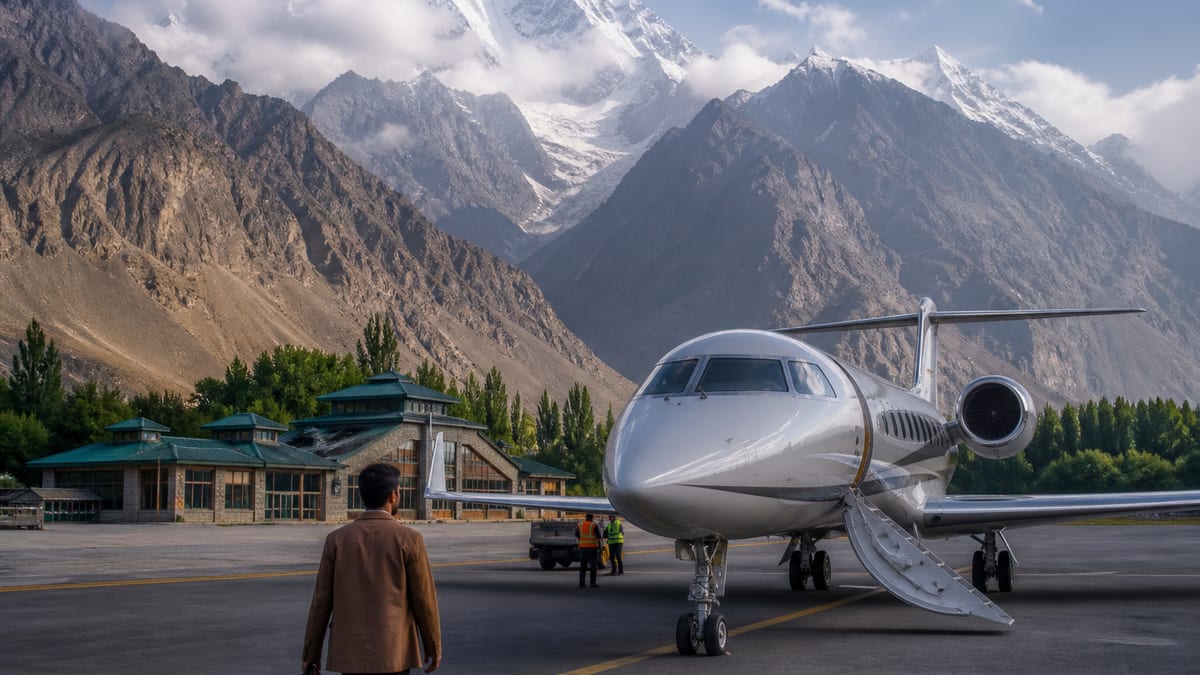
Mashabrum Hotel Skardu appears on the Gilgit-Baltistan tourism department’s lodging listings, and our directory associates it with Skardu District. The listing confirms the name and the district — nothing more. It doesn’t describe rooms, facilities, rates or reviews, and it doesn’t give an exact address, so we don’t either. Think of this page as how Skardu works as a base for Baltistan’s big mountains, before and after a trek, and what to ask a Skardu hotel when your plans lean on flights, jeeps and permits. Confirm every detail with the property before you book.
A name borrowed from the mountains
The hotel’s name echoes Masherbrum, one of the great Karakoram peaks of Baltistan. Masherbrum is also spelled Mashabrum and is known to climbers as K1. It towers over the head of Hushe Valley in Ghanche, east of Skardu. Our Hushe Valley guide describes the moment the peak comes into view on the drive up from Khaplu — piece by piece, until its south face fills the valley. You can read more on our Masherbrum page.
We don’t know whether the hotel is named after the mountain, and the name tells you nothing about where the property is or what it offers. What it does point to is the kind of traveller Skardu has always attracted: people heading for the high peaks.
Why Skardu is the base for Baltistan’s high peaks
Skardu is the capital of Skardu District and of the Baltistan Division. According to our Skardu guide, the town sits at about 2,500 m, where the Indus and Shigar rivers meet. Almost every big journey in Baltistan passes through it:
- The Baltoro and K2. Treks to K2 Base Camp start with a six-to-eight-hour jeep ride from Skardu to Askole, through the Shigar Valley and up the Braldu gorge.
- Hushe and Masherbrum. The road east runs to Khaplu in Ghanche, then up the jeep track to Hushe village, the trailhead for Masherbrum Base Camp, K6, K7 and the Charakusa Glacier.
- The Gondogoro La exit. Trekkers who cross from Concordia over the Gondogoro La come down into Hushe, then back to Skardu.
- Deosai. In summer, Deosai National Park is reached by 4×4 from Skardu via Sadpara Lake.
For most visitors, then, Skardu isn’t the destination. It’s where you arrive, sort the last details, wait for the weather and come back to recover. Choosing a stay here is less about views and more about logistics.
Before the trek: arrival days in Skardu
Flying in
The flight from Islamabad takes about an hour, but our Skardu guide warns that the approach is flown visually through the mountains — so cloud can ground flights, sometimes for days. Leave at least two spare days at each end of a Skardu trip, and don’t book an onward international connection close to a Skardu flight. Our Skardu International Airport access page explains how the airport fits into a Baltistan itinerary, and airports serving Gilgit-Baltistan covers the alternatives.
Coming by road
By road, Skardu is four to five hours from Gilgit on the Jaglot–Skardu road through the Indus gorge, or about 635 km from Islamabad with an overnight stop. Drive the gorge in daylight. Many expedition teams fly one way and drive the other, so they’ve got a fallback if flights are grounded. See getting to Gilgit-Baltistan and road approaches via the KKH, Babusar and Shandur.
Acclimatising in town
At around 2,500 m, Skardu is a sensible place to spend a night or two before going higher. Use the time for gentle outings: Kharpocho Fort above the bazaar for sunset over the Indus, an easy drive to the Kachura lakes, or Shigar town and its restored fort. Drink plenty of water and don’t rush.
Permits, operators and porters
Skardu is where many groups meet their operator, check kit and finalise permits. The rules depend on the route. Our K2 Base Camp guide notes that foreigners need a licensed Pakistani operator to arrange a restricted-zone permit and park fee, while Hushe village itself needs no permit, though treks beyond it go through a licensed operator. Read our guides on applying for trekking and mountaineering permits, hiring a tour operator, trekking and mountaineering regulations and porter and mule hiring regulations before you arrive.
A simple buffer plan for a trek through Skardu
Every trip is different, but a pattern that works for many trekkers looks like this:
- Day 1: arrive in Skardu. Settle in, meet your operator and check that permits are in hand.
- Day 2: acclimatise and shop. Take a gentle outing to Kharpocho Fort or the Kachura lakes, and buy any last supplies in the bazaar.
- Day 3: spare day. Keep this free in case your flight was delayed or a jeep road is closed. If everything’s on time, rest.
- The trek. Leave at dawn for Askole or Hushe.
- Return: two nights minimum. One night to recover, one to sort luggage, settle accounts with your operator and wait for the flight.
Tell your hotel about this pattern when you book. It’s much easier to adjust a booking that was planned with flexibility in mind.
After the trek: coming back down
Ask anyone who’s come back from the Baltoro or Hushe what they wanted most, and it’s usually the same list: a hot shower, a proper meal, a quiet room and a working phone signal. Skardu is where you get them. It’s also where you dry out tents, repack, pay off porters through your operator and wait for a flight that may or may not leave.
A few practical points for the return:
Your dates will shift. Trek exits change with weather, river crossings and how the group is moving. Ask the property how flexible it can be on arrival dates, and whether you can change a booking at short notice.
You may come back exhausted. After two or three weeks above 4,000 m, many people sleep for a day. A quieter location may matter more than being near the bazaar.
Storage helps. If you’re leaving city clothes or extra luggage behind while you trek, ask whether the property can store bags and for how long.
Plan the flight home generously. Book the flight out with a buffer, and remember that cancellations can stack up in cloudy spells.
Choosing where to stay in Skardu
Skardu has a wide range of lodging, from small guesthouses to hotels and resorts. Mashabrum Hotel Skardu is one of several properties named on published lodging lists. Others in our directory include Mountain Lodge Skardu, Dewanekhas Hotel & Restaurant Skardu and Shangrila Resort Skardu beside Lower Kachura Lake. Browse the full hotels directory or our accommodation options overview.
A few questions help narrow it down:
- Are you on an expedition timetable? Then flexibility, storage and help with transport matter most.
- Are you a day-tripper? Then easy access to the Shigar, Kachura and Sadpara roads, and early breakfasts for Deosai, matter more.
- Are you flying? Our Skardu guide puts the airport about 9 km from town. Ask how long the transfer takes and whether the property can arrange it.
Being on a list doesn’t tell you whether a place fits your trip. Contact a few properties, compare their answers, and decide on that basis.
Seasons in Skardu
April to May. Blossom in the villages, cool days and few crowds. The high plateaus are still snowbound.
June to August. Peak season. Deosai opens, the K2 and Hushe treks are running, and Skardu fills with expedition teams. Book early and reconfirm.
September to October. Clear skies, golden poplars and fewer visitors — often the best balance of weather and quiet.
November to March. Severe cold, with roads and flights often disrupted. Ask any property specifically whether it’s operating and how rooms are heated.
Our best time to visit Gilgit-Baltistan guide has more.
Balti culture in Skardu
Skardu sits at the heart of Baltistan, and its people speak Balti, a Tibetic language. Urdu is widely understood. Many of the guides, cooks and porters who make Karakoram expeditions possible come from Balti villages such as Hushe and Askole. Try local food while you’re here: marzan, gyaling gral and salty namkeen tea are good places to start. Dress modestly, ask before photographing people, and read our pages on visitor customs and dress and local currency and cash. Cards are rarely accepted in the villages.
Questions to ask before you book
- Where exactly is the property, and how long is the drive to the airport and to the bazaar?
- What room types are available for your dates, and what’s the full rate?
- Is hot water available all day, and how are rooms heated in cooler months?
- Can you store luggage while you trek, and is there a charge?
- How flexible are arrival and departure dates if a trek or flight changes?
- Can the property help arrange airport transfers or vehicles towards Shigar, Khaplu or Deosai?
- Is there backup power and reliable internet?
Get answers in writing and reconfirm shortly before you arrive. Our hotel and guest house regulations page outlines the rules registered properties follow.
Frequently asked questions
Where is Mashabrum Hotel Skardu?
Our directory associates Mashabrum Hotel Skardu with Skardu District in Baltistan. We don’t publish an exact address, so confirm the location and directions with the property before you travel.
Is Mashabrum Hotel Skardu named after Masherbrum?
We don’t know. The name echoes Masherbrum (K1), the Karakoram peak above Hushe Valley in Ghanche, which is also spelled Mashabrum. Ask the property if you’re curious.
Is Skardu a good base for K2 and Hushe treks?
Yes. Skardu is the starting point for jeeps to Askole on the K2 route and to Khaplu and Hushe for Masherbrum, and most trekkers return there afterwards.
How many spare days should I allow in Skardu?
Our Skardu guide suggests two spare days at each end, because cloud often grounds flights and trek exits can shift.
Do I need a permit to stay in Skardu?
No. The town and nearby sights need no permit. Treks into restricted zones, such as the Baltoro towards K2, require permits arranged through a licensed operator.