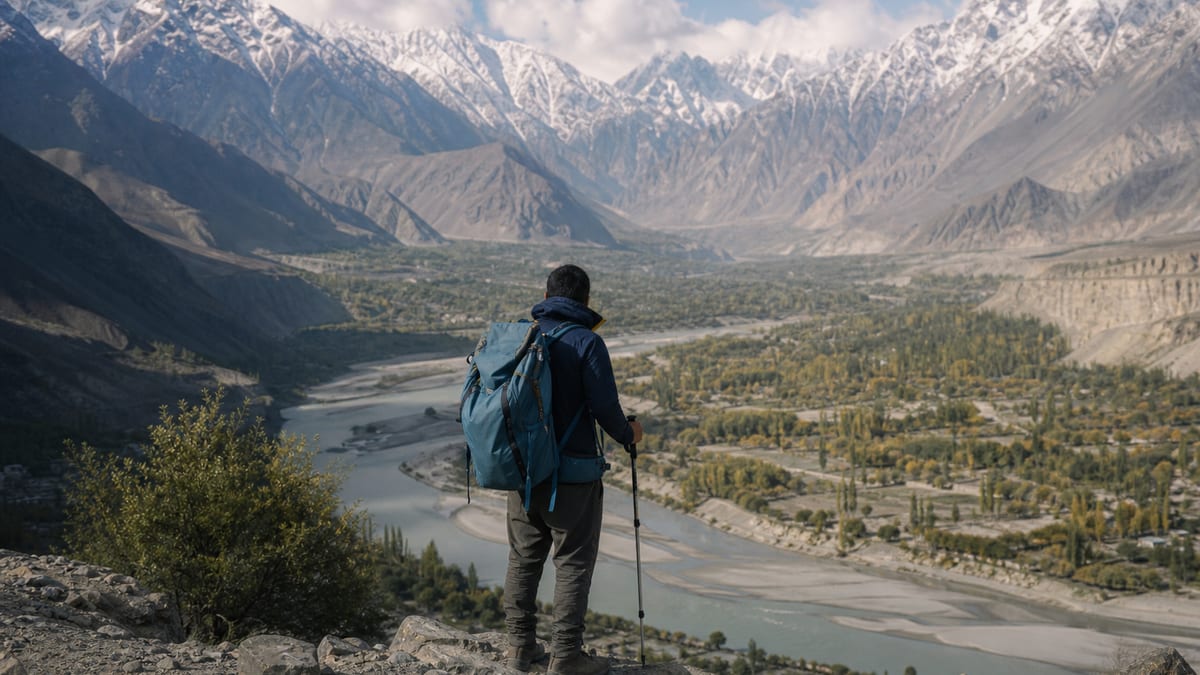
GB Rovers sits on the registered tour operator list published by the Directorate of Tourists Services (DTS) Gilgit-Baltistan, under licence reference DTS-GB-007. The official list stops at the name and the number. It doesn’t spell out which routes the company runs, what vehicles it uses, what it charges, or where its office is — and we don’t guess. If you’re thinking of hiring GB Rovers, get in touch with the company yourself and lock every detail down in writing before you pay a rupee.
This page aims to be more useful than a licence number on a directory card. Most people who look up an operator with a name like this are sketching a road trip through the north — a few valleys, a couple of passes, plenty of driving. Below we walk through how those overland journeys actually work in Gilgit-Baltistan, what to ask any operator before you commit, and where to dig deeper on this site.
What the official listing confirms
The listing comes from the Registered Tour Operators list kept by the Directorate of Tourists Services, part of the Tourism, Sports, Culture, Archaeology & Museums Department of the Government of Gilgit-Baltistan. We last checked it on 27 August 2026.
Here’s the honest split:
- It confirms: the business name as printed, and that the name sat on the DTS list with reference DTS-GB-007 when we read it.
- It does not confirm: that the company is trading today, which services it offers, its prices, its safety record or customer experience.
The department’s FAQ says tour operators must hold a tourism department licence, comply with safety standards, provide trained and licensed guides and follow department guidelines. You can read that rule on our tour operator regulations page. The legal basis is the GB Travel Agencies & Tour Operators Act, 2020, one of three Acts summarised in tourism sector acts and regulations.
A listing is a starting point for your own checks, not a recommendation from us. This site doesn’t sell tours, take bookings or endorse operators.
Why road trips in Gilgit-Baltistan need real planning
It’s easy to underestimate the north when the map makes it look compact. In practice, Gilgit-Baltistan is ten districts — Gilgit, Hunza, Nagar, Ghizer, Diamer, Astore, Skardu, Shigar, Kharmang and Ghanche — joined by long mountain roads where weather, landslides and roadworks can cost you half a day. Our districts overview shows how spread out they are.
Three things quietly shape any overland itinerary:
- Elevation changes fast. Our best time to visit guide notes that Chilas, in the lower Indus valley at about 1,265 m, averages around 28°C in July, while Gulmit in Upper Hunza, at about 2,465 m, averages around −5.5°C in January. You can drive between climates in a day.
- Passes have seasons. The high passes decide what’s possible in a given month. A winter trip can’t include a Khunjerab day.
- Roads are slow. A distance that looks short on a map can take most of a day on a mountain road. A good operator plans around that instead of squeezing in more stops.
The three road approaches
The tourism department’s FAQ names three personal-transport approaches into the region: the Karakoram Highway, Babusar Pass and Shandur Pass. Our road approaches page covers them, and getting to Gilgit-Baltistan explains the wider picture, including flights.
Karakoram Highway (KKH)
Think of the KKH as the year-round spine of the region — linking the lowlands with Chilas, Gilgit and Hunza, and running on to the Chinese border at Khunjerab Pass. It’s the route most overland trips use for at least one direction. It also has well-known landslide stretches. Read our KKH landslides alert before you leave and ask your operator how they handle a blocked section.
Babusar Pass
Babusar Pass, at 4,173 m, links the Kaghan Valley with Chilas. Our seasonal guide says it typically opens in late May or early June and closes in late October or November with the first heavy snow, and it’s for daylight travel only. Don’t plan a night crossing, and don’t treat late May as a fixed date.
Shandur Pass
Shandur Pass, at around 3,700–3,800 m, links Ghizer with Chitral. The Shandur Polo Festival is held there in the first week of July in most years, so that week is a festival trip, not a quiet crossing.
Classic overland corridors inside the region
Treat these as geographic patterns, not packages. We don’t know which of them, if any, GB Rovers offers. Use them to frame your conversation with any operator.
The Hunza and Khunjerab corridor
Gilgit north along the KKH to Hunza Valley, Attabad Lake and on to Khunjerab. Our seasonal guide gives Khunjerab (4,693 m) a tourist window of roughly 1 May to 31 October or early November, weather permitting. Add Nagar across the river if you have the time.
Skardu, Shigar and Khaplu
Fly or drive to Skardu, then branch out to Shigar Valley, the cold desert, Kachura Lake and east to Ghanche. The Skardu airport access page explains why spare days matter: flights are often cancelled in cloud.
Ghizer and the western lakes
West from Gilgit into Ghizer for Phander Lake, Khalti Lake and, in summer, Shandur.
Astore and Deosai
South-east to Astore, Rama Lake and Deosai National Park. Our Astore page warns that Deosai access and Astore lake days aren’t always on the same road, so ask your operator exactly which road and which overnight you’ll use.
Vehicles and drivers: what to ask
Transport is usually where a road trip succeeds or falls apart. The site’s hiring a tour operator guide stresses that a vehicle suited to city sightseeing may not suit every remote valley, and that a driver’s experience on your specific routes matters.
Ask any operator:
- What vehicle, exactly? Car, van, 4×4 or jeep, and why it suits your route.
- Who’s driving? Has the driver worked these particular roads before?
- What’s included? Fuel, driver’s meals and lodging, tolls and parking.
- What about jeep-only sections? Some tracks use local jeeps only. At Fairy Meadows, for example, our Fairy Meadows guide says private vehicles must stop at Raikot Bridge and local union jeeps go on from there.
- Daylight rules? Will the driver refuse to cross Babusar or drive mountain roads after dark? A good answer is yes.
For the rules that apply to transport businesses, see taxi and transport regulations.
Building in buffer days
Every overland plan in Gilgit-Baltistan needs a bit of slack. A landslide on the KKH, a cancelled Skardu flight or an early snowfall on a pass can push the whole itinerary back. Our travel smart, stay safe page and the travel safety guidance both make the same point: don’t push on when conditions are unsafe.
A practical rule: for every three or four days of driving, keep one day free. If you don’t need it, you get an extra day in Hunza or Skardu. If you do, it saves your trip.
Questions to ask GB Rovers, or any operator
Before you book, put these in writing and keep the replies:
- Can you confirm your DTS registration and the licence number DTS-GB-007?
- Which districts and routes does the quote cover, day by day?
- What are the driving hours each day?
- Which hotels or guesthouses are planned, or at least what category?
- Is a guide included, and is that guide licensed?
- What’s included in the price, and what will I pay locally?
- What happens if a road or pass closes, or a flight is cancelled?
- What’s the cancellation and refund policy?
- Who do I call during the trip if something goes wrong?
- Can I see the full itinerary and terms in writing before I pay?
How a company answers practical questions tells you more than its brochure. Vague answers about inclusions, or a price that shifts after you agree, are warning signs. The tourism department’s guidance on hiring registered operators for international visits explains where the official lists live.
Cash, connectivity and conduct on the road
On long drives through remote valleys you can’t lean on cards or a phone signal. Our local currency and cash page explains why you should carry rupees. Respect visitor customs and dress, ask before taking portraits, and check the photography restrictions near sensitive areas. Pack for two climates on one drive; our packing guide has the list.
If you ever need help on the road, the tourist police contact guide explains who to call.
Where to go next
- Compare other names on the registered tour operators directory.
- Read the Gilgit-Baltistan travel overview.
- Browse destinations and places to shape your route.
Frequently asked questions
Is GB Rovers a registered tour operator in Gilgit-Baltistan?
GB Rovers appears on the DTS Gilgit-Baltistan registered tour operator list with licence reference DTS-GB-007, as checked on 27 August 2026. Ask the company to confirm that its registration is still current before you book.
What services does GB Rovers offer?
The official list doesn’t say, and we don’t publish services we can’t verify. Ask the company directly which routes, vehicles and inclusions it offers, and get the answer in writing.
Does this website book tours with GB Rovers?
No. Gilgit-Baltistan Tourism is an information site. We don’t sell tours, take payments or endorse operators. Contact the operator yourself.
Which road routes lead into Gilgit-Baltistan?
The tourism department’s FAQ names three personal-transport approaches: the Karakoram Highway, Babusar Pass and Shandur Pass. The KKH is the year-round route; Babusar and Shandur are seasonal.
When is Babusar Pass open for a road trip?
Babusar (4,173 m) typically opens in late May or early June and closes in late October or November with the first heavy snow. It’s for daylight travel only, so plan your crossing for the morning.
Can a road trip include Khunjerab Pass in winter?
No. Khunjerab (4,693 m) is open to tourist traffic roughly from 1 May to 31 October or early November, weather permitting. A winter visit to Hunza doesn’t make a Khunjerab day possible.
How many days does an overland trip in Gilgit-Baltistan need?
It depends on how many districts you want to see. Allow realistic driving days, plus at least one spare day for every three or four days on the road for landslides, weather or cancelled flights.
What vehicle do I need for remote valleys?
That depends on the route. Some destinations need a 4×4, and a few tracks are restricted to local union jeeps. Ask the operator which vehicle they’ll use for each leg and why.
What should I check before paying a tour operator?
Confirm the DTS licence, a day-by-day itinerary, a full list of inclusions and extras, accommodation names or categories, and the cancellation and refund policy, all in writing.
What happens if a road closes during my trip?
Ask the operator before you book. A responsible operator should put your safety ahead of the schedule, explain the alternative route or delay, and tell you how any extra costs or refunds will be handled.
Source: Registered Tour Operators (Directorate of Tourists Services, Gilgit-Baltistan), Tourism, Sports, Culture, Archaeology & Museums Department, Government of Gilgit-Baltistan. Accessed 27 August 2026. Route and season details are from this site’s own guides; confirm current conditions before you travel.